
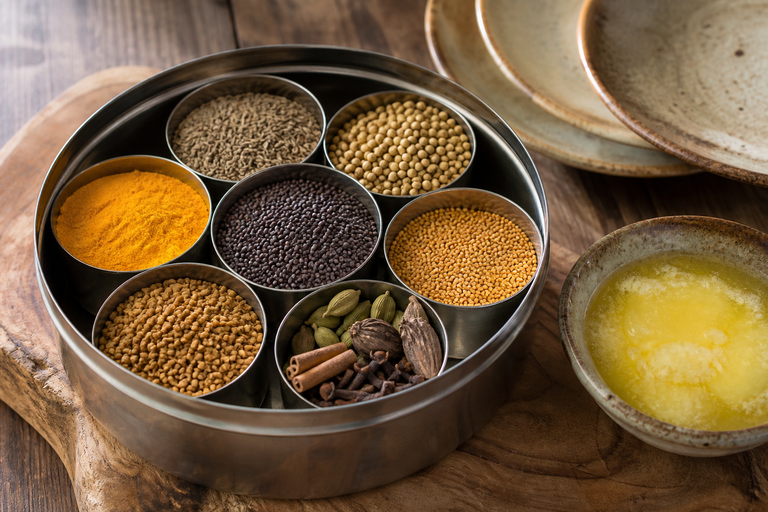
A masala dabba earns its place on the counter next to the salt and the pressure cooker: seven steel cups under one lid, releasing that wave of cumin and turmeric the moment you lift it. One cup gives heat. One gives colour. One is crushed between the fingers at the end. What follows is a cup-by-cup guide for a home cook who already roasts their own jeera and wants to understand what each spice is actually doing in the pot.
These eight cover almost every regional Indian dish a home cook reaches for on a weeknight: Punjabi dals, Bengali fish, Goan curries, Tamil sambar, a Sunday biryani. Skip any one of them and most of the canon falls apart. They are ordered roughly the way they enter a dish, from the first crackle in hot ghee to the pinch added at the end.
A note on technique before the list
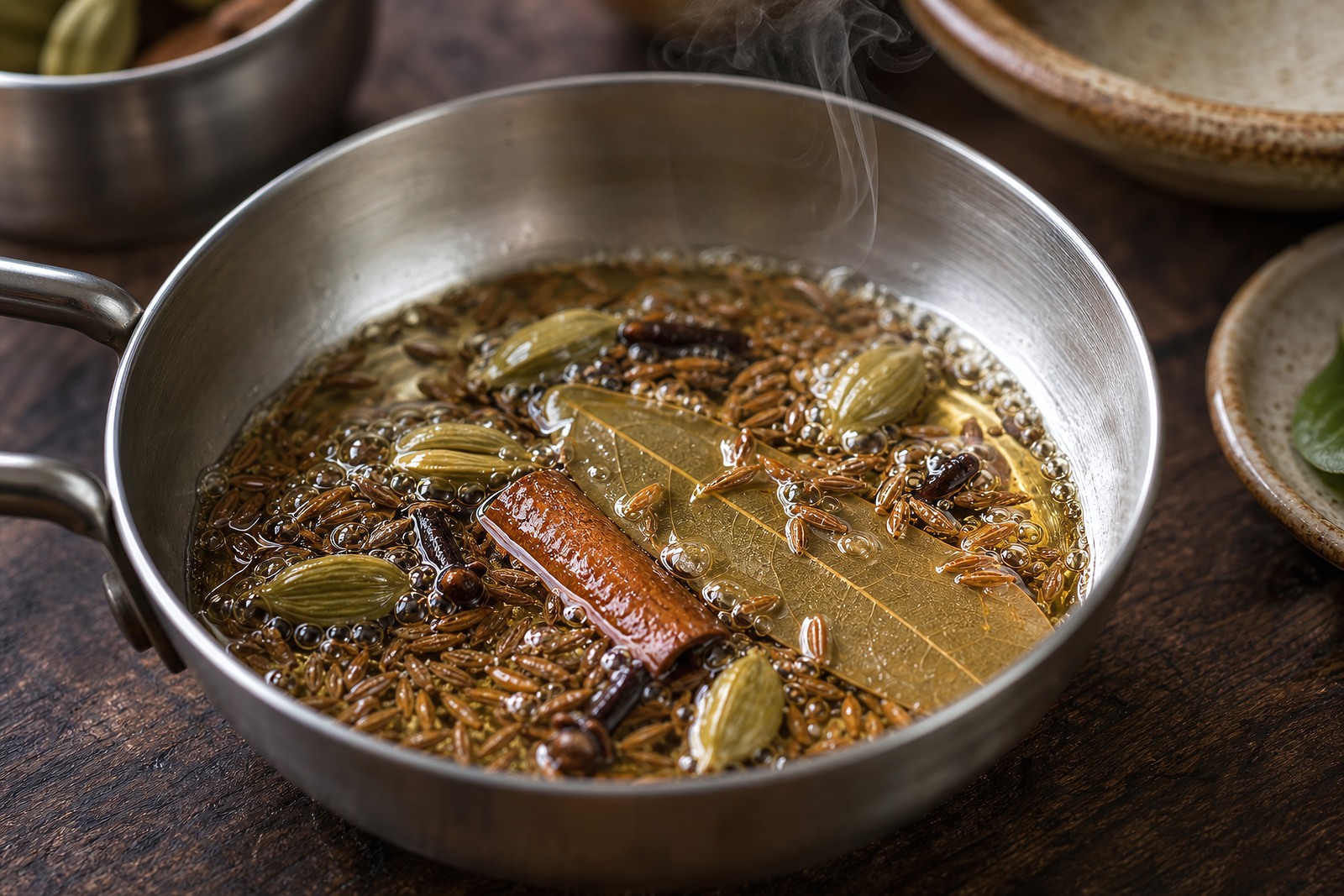
Three things change what a spice does. Whole or ground decides whether you get a slow, perfumed release or an immediate hit of flavour. Bloomed in fat (tadka, also called chaunk or vaghar) means dropping whole or ground spice into hot ghee or oil at 350F (175C) for 20 to 40 seconds so the fat-soluble aromatics come out. Dry-roasted in a heavy pan, no fat, until just darker and fragrant, deepens nutty notes and is what you do before grinding fresh masala.
Most Indian dishes use at least two of these in the same pot. That is the whole game.
1. Cumin (jeera): the earthy backbone
Cumin is the sound your dal starts with. Whole seeds dropped into hot ghee crackle within 10 seconds and turn a shade darker, releasing a warm, slightly bitter, almost meaty aroma. Toasted whole, it anchors a Punjabi dal tadka or a jeera rice. Ground and stirred into a masala paste during bhuna (the long fry of onion, ginger, garlic, tomato), it becomes the earthy floor a curry stands on.
- Suits: dals, rice, raitas, almost every North Indian gravy.
- Use whole at the start of a tadka, ground in the middle of a curry base.
- If a dal tastes flat, you under-toasted the jeera.
2. Coriander (dhania): the sweet binder
Coriander seed is the spice that rounds the others off. On its own it tastes citrusy and faintly sweet, almost like dried orange peel. In a curry it does not shout. It fills the space between cumin’s earth and chile’s heat so the dish reads as one flavour instead of three. Most Punjabi gravies run two parts ground coriander to one part cumin by volume.
- Suits: tomato-based curries, kormas, chicken curry, chana masala.
- Use: almost always ground, added with the tomatoes so it cooks for at least 8 minutes.
- If a curry tastes harsh or sharp, you need more dhania, not more salt.
3. Turmeric (haldi): colour, and a bitterness you must cook out
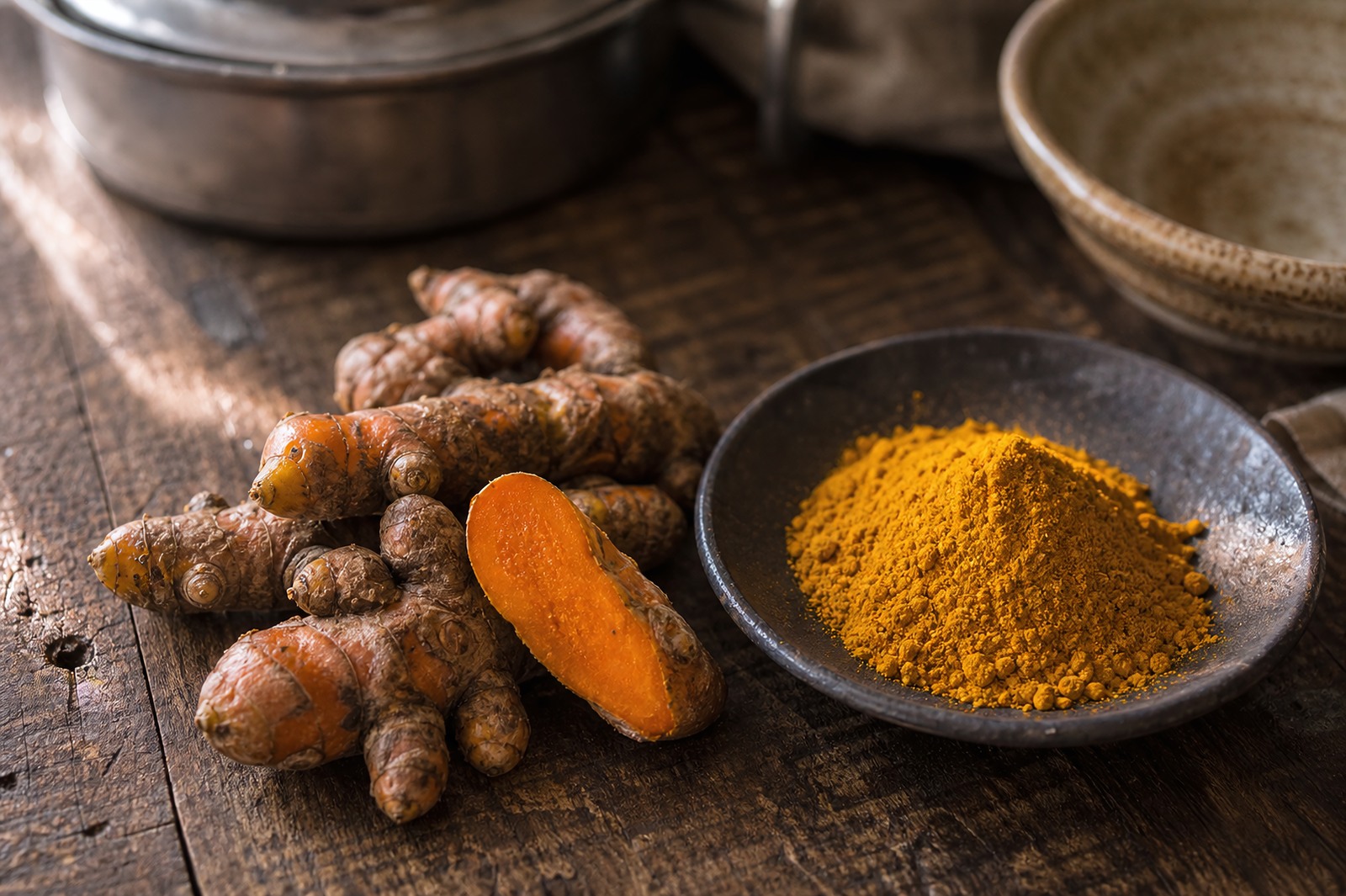
Haldi is the yellow in your kitchen. Half a teaspoon turns a pot of dal the colour of late afternoon light. Raw, it tastes bitter and a little metallic. That flavour has to be cooked out, which is why you add turmeric to hot oil or to the onion fry, never at the end. Give it at least 60 seconds in fat before any liquid hits the pan.
- Suits: every dal, most curries, marinades for fish and chicken.
- Use: ground, bloomed in oil with the onions or stirred into a wet masala.
- Turmeric that tastes raw was added too late, or to a pan that was not hot enough.
4. Mustard seeds (rai): the pop that defines South Indian tadka
In a Tamil sambar or a Maharashtrian dal, the tadka begins with mustard seeds, not cumin. Black or brown rai hits hot oil at 350F (175C) and pops within 15 seconds, going from pungent and sinus-clearing to sweet and nutty. The pop is the cue. If they have stopped jumping, the curry leaves and dal go in next.
- Suits: South Indian dals, sambar, rasam, coconut-based curries, pickles.
- Use: whole, always in a tadka. Never grind raw mustard into a hot curry; it turns bitter fast.
- If your sambar tastes flat, your mustard seeds did not pop fully.
5. Fenugreek (methi): the bitter-maple note
Methi is the spice that makes a butter chicken taste like butter chicken. Dried fenugreek leaves (kasuri methi) crushed between your palms and stirred in during the last two minutes give a slightly bitter, slightly sweet, maple-syrup-and-celery note that is hard to name but easy to miss when it is missing. Fenugreek seeds, used whole in tadka or ground into sambar powder, are stronger and more medicinal.
- Suits: butter chicken, methi dal, sambar, Goan fish curry.
- Use: kasuri methi at the end, off the heat. Seeds early, sparingly.
- A quarter teaspoon of fenugreek seeds is plenty for a pot for four. More tastes like cough syrup.
6. Cardamom (elaichi): green for perfume, black for smoke
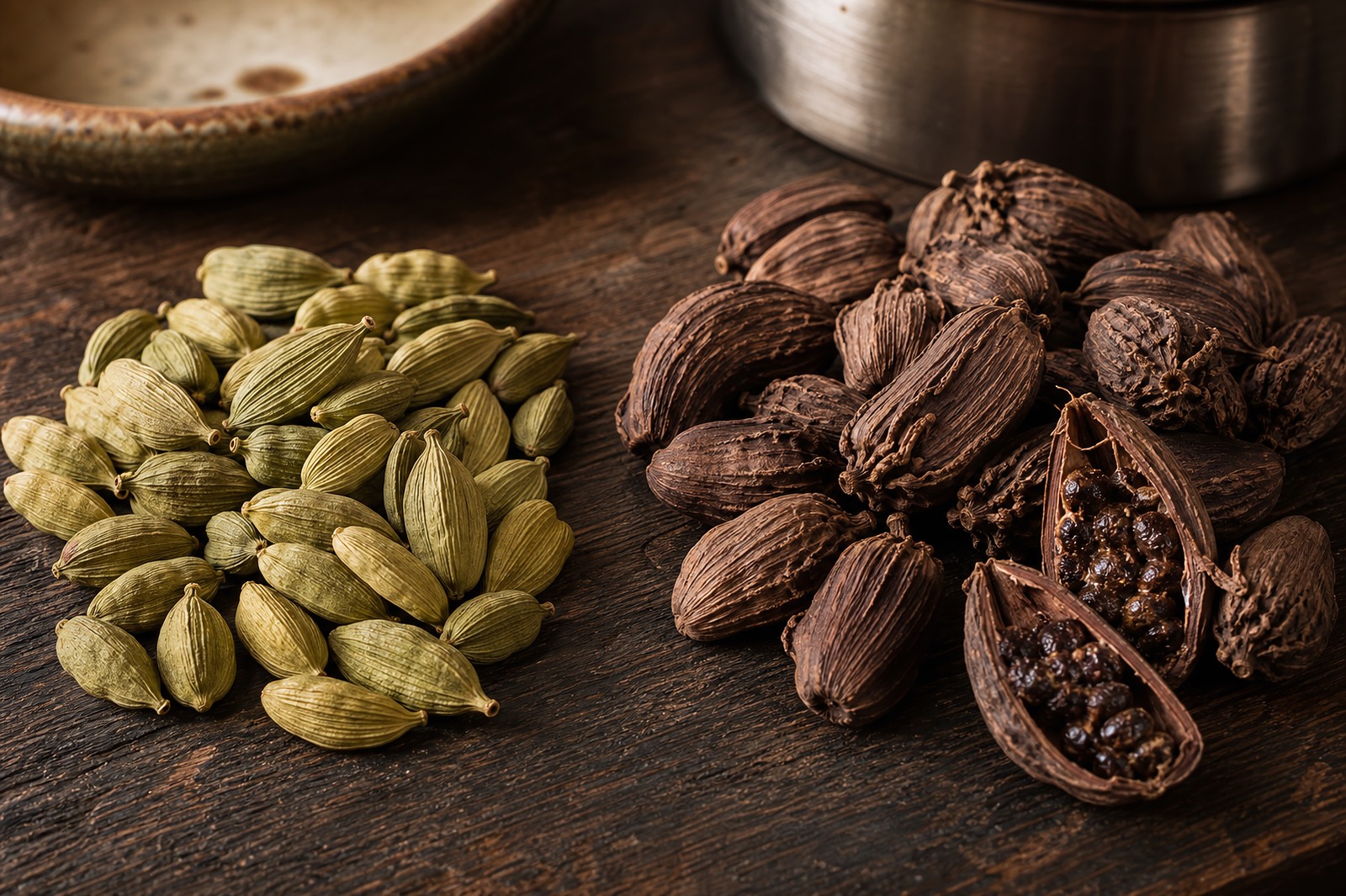
Green and black cardamom are not the same spice and not interchangeable. Green elaichi is floral, cool, almost eucalyptus; it perfumes biryanis, kheer, chai, and kormas. Black elaichi is smoky, camphor-heavy, and built for long-cooked meat: rogan josh, nihari, dum biryani. Both go in whole, bruised lightly, at the start with the onions.
- Suits: green in sweet and creamy dishes; black in slow-cooked lamb and dum-style rice.
- Use: whole pods, 3 to 5 per dish for four. Fish them out before serving if you remember.
- A biryani without green cardamom smells like a pulao. A korma made with black cardamom tastes wrong.
7. Cloves (laung): small, sharp, easy to overdo
Cloves carry an enormous amount of flavour in a tiny bud. One clove per person is a workable rule of thumb. They give garam masala its sharp, slightly numbing top note and warm a biryani from underneath. Whole cloves go in with the onions or into the rice as it steams. Ground cloves are best reserved for blended masalas measured by the gram.
- Suits: biryani, pulao, garam masala, slow-cooked meat, masala chai.
- Use: whole, early. Two or three for a pot of dal; four to six for biryani for four.
- If a curry tastes like a dentist’s office, you used one too many cloves.
8. Cinnamon (dalchini): the warm finisher
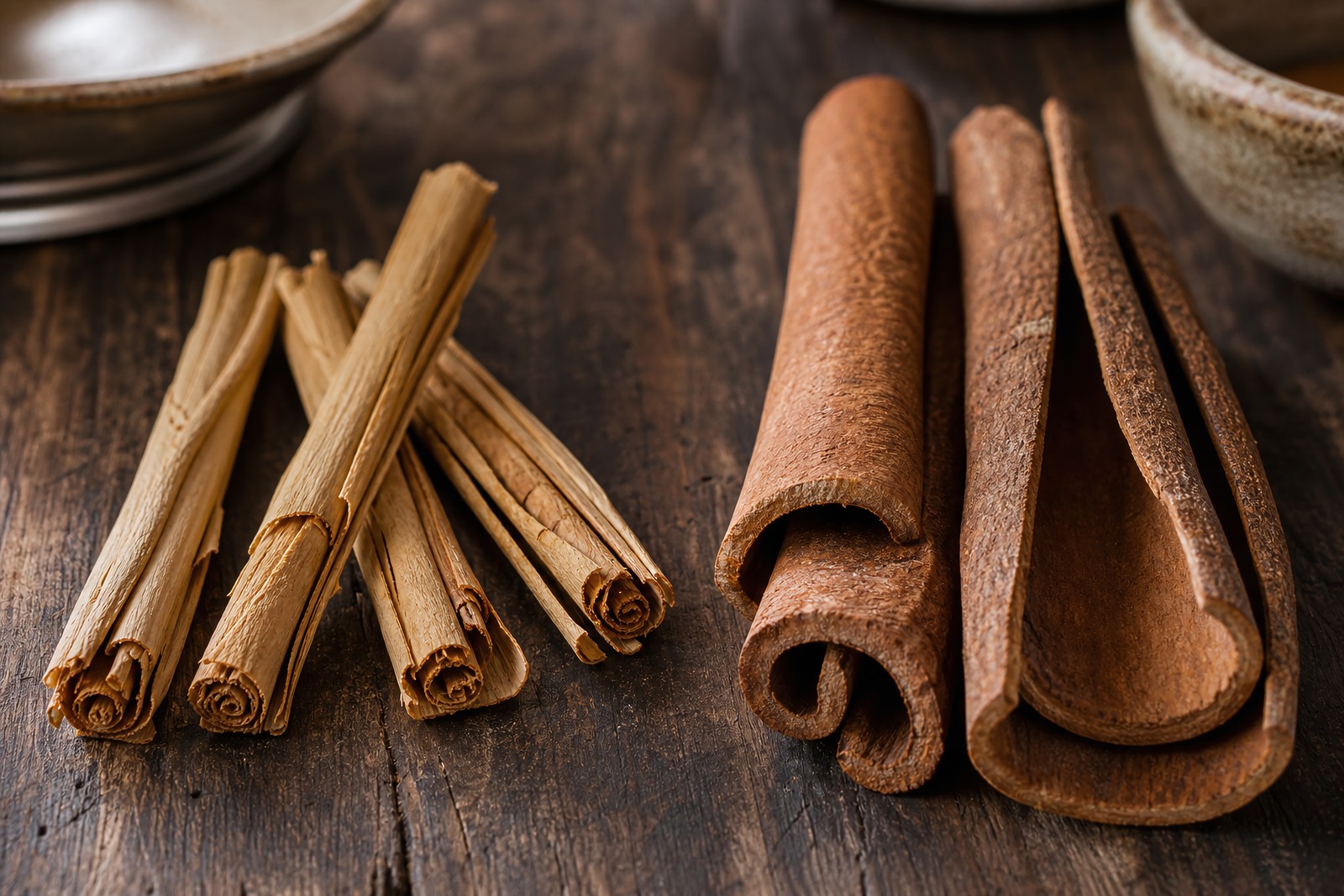
True cinnamon (Sri Lankan) is delicate and floral; cassia, the thicker, harder bark sold across most of India, is hotter and woodier. Indian cooking almost always uses cassia, broken into 1-inch pieces and dropped into hot ghee with cloves and cardamom at the start of a biryani or a meat curry. It is the warm undertone you notice only when it is missing.
- Suits: biryani, pulao, garam masala, lamb curries, chai.
- Use: whole bark, early. One 2-inch piece for a pot for four.
- Ground cinnamon belongs in your masala blend, not loose in a curry; it will turn the gravy muddy.
Building a masala dabba
A standard steel dabba has seven cups under one lid. A common working set: whole jeera, whole rai, turmeric, red chile powder, ground coriander, garam masala, and salt. Whole coriander, fenugreek, cardamom, cloves, and cinnamon keep better in small glass jars in a dark cupboard, because whole spices hold their oils for 6 to 12 months and ground spices fade in 2 to 3.
Buy whole where you can. Toast and grind small batches every few weeks in a clean coffee grinder. Keep the dabba away from the stove, because steam is the enemy. If you are still reaching for a jar of generic curry powder, it is worth understanding why a powder cannot stand in for a freshly built paste once you have a working dabba.
The pattern across all eight is the same: heat plus fat plus time. Cumin and mustard want a fast crackle. Turmeric wants 60 seconds to lose its bitterness. Coriander wants to simmer with the tomatoes. Cardamom, clove, and cinnamon want a long, slow ride with the onions. Kasuri methi wants the last two minutes and nothing more.
On a weeknight, this turns into a simple dal: jeera and a slit green chile in ghee, a pinch of haldi, a ladle of cooked toor dal, salt, a squeeze of lemon. Eat it with hot phulka, a spoon of plain rice cooked the way it should be, and a small bowl of cucumber raita on the side.