
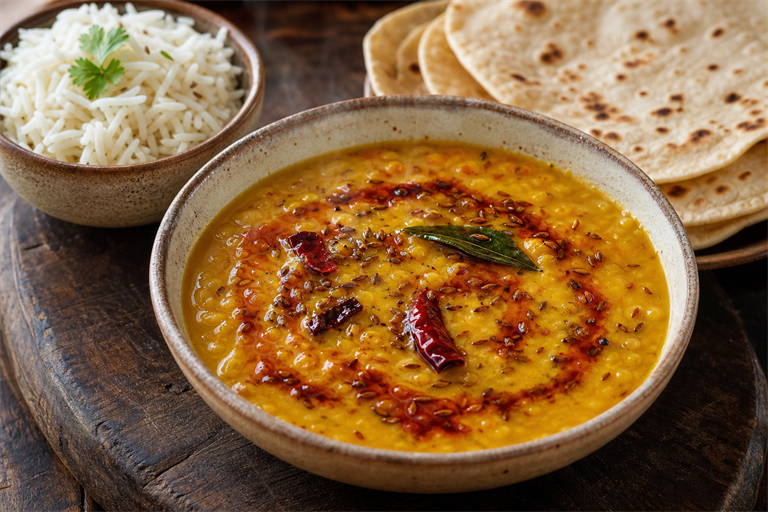
Dal tadka begins with sound. Whole cumin dropped into hot ghee crackles within seconds, and warm spice, garlic, and curry leaves take over the kitchen. That short blooming step sets the character of the whole pot.
The dal she made most nights was dal tadka, the Punjabi dhaba classic that has quietly become the everyday lentil of North Indian homes. Two pots do the work. Soft pressure-cooked dal in one, screaming-hot ghee tempering in the other, poured over the dal at the moment of serving. The whole dish lives or dies on the temperature of that ghee.
Arhar dal, a small steel tadka ladle, and a pressure cooker do the work here. What follows is the method, step by step.
| Yield | 4 servings |
| Prep time | 15 minutes |
| Cook time | 30 minutes |
| Total time | 45 minutes |
| Difficulty | Easy |
Why most homes blend two or three lentils
Most Indian homes do not stop at one lentil. Toor (arhar) gives body and a nutty depth. Moong adds creaminess and cooks faster. Masoor breaks down into a silky pink-grey base. A blend is what your aunt actually does, even if she calls it one dal.
| Lentil | What it gives | Pressure cook time | Best for |
|---|---|---|---|
| Toor / arhar | Body, nutty depth | 4 whistles / 18 min | Classic dhaba-style |
| Moong (split) | Creamy, sweet | 3 whistles / 12 min | Lighter weeknight dal |
| Masoor (split red) | Silky, breaks down | 2 whistles / 10 min | Quick comfort dal |
The lentil blend here is 150 g toor and 50 g moong. The toor carries the dish. The moong rounds it.
What you’ll need
For the dal
- 150 g toor (arhar) dal
- 50 g split moong dal
- 750 ml water (plus 100 ml more for adjusting)
- 1/2 tsp turmeric
- 1 tsp salt (start here, adjust later)
- 1 small tomato, chopped (optional but traditional)
For the tadka
- 45 ml ghee (3 tbsp)
- 1 tsp whole cumin seeds
- a pinch of hing (asafoetida)
- 2 dried red chiles, broken in half
- 4 garlic cloves, sliced thin
- 1 tsp grated ginger
- 1 green chile, slit
- 8-10 fresh curry leaves
- 1/2 tsp Kashmiri red chili powder
- 1 tsp kasuri methi (dried fenugreek leaves)
To finish
- juice of half a lemon
- 2 tbsp chopped cilantro
Equipment
- Pressure cooker (stovetop or electric)
- Small tadka pan or steel ladle for the tempering
Cooking the two pots
-
Rinse the dal in cold water three or four times until the water runs almost clear. Soak for 15 minutes if you have it. This shortens the cook and gives a smoother finish.
-
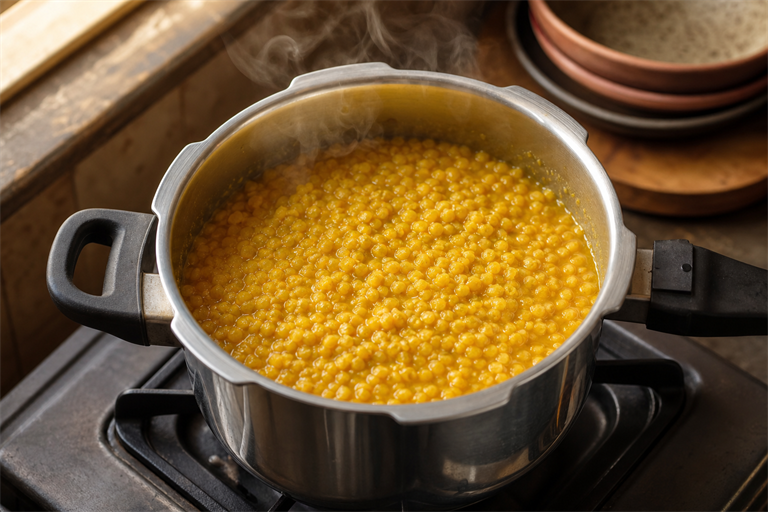
Tip the drained dal into the pressure cooker with 750 ml water, the turmeric, and 1 teaspoon salt. Add the chopped tomato if using. Cook on high until you get 4 whistles, around 18 minutes, then turn off the heat and let the pressure drop naturally.
-
Open the cooker and whisk the dal hard for 30 seconds with a hand whisk or wooden spoon. The grains should break down into a loose porridge. If it looks too thick, add 100 ml hot water and simmer 2 minutes; you want pourable, not pasty.
-
Taste for salt now, before the tadka goes in. Add another 1/2 teaspoon if needed. Tadka brings aroma, not seasoning. Leave the dal on a low flame so it stays hot.
-
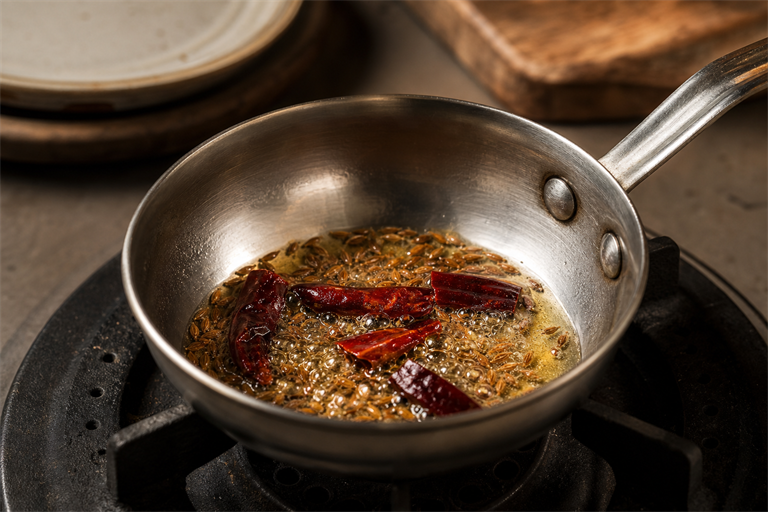
Heat the ghee in a small tadka pan over medium-high until it shimmers. A single cumin seed dropped in should float up and sizzle within a second. That is around 180C (355F). Too cool and the spices steep. Too hot and they burn black in three seconds.
-
Drop in the cumin seeds. They will crackle and darken slightly within 10 seconds. Add the pinch of hing, then the broken red chiles. The chiles should puff and turn a deeper red, not black, in about 5 seconds.
-
Add the sliced garlic. Stir constantly for 20-30 seconds until the edges turn pale gold, not brown. Add the ginger and slit green chile, then the curry leaves; they will spit and curl. Pull the pan off the heat.
-
Off the heat, stir in the Kashmiri chili powder. It blooms in the residual ghee and turns the fat a deep red without scorching. This is the colour of restaurant dal at home.
-
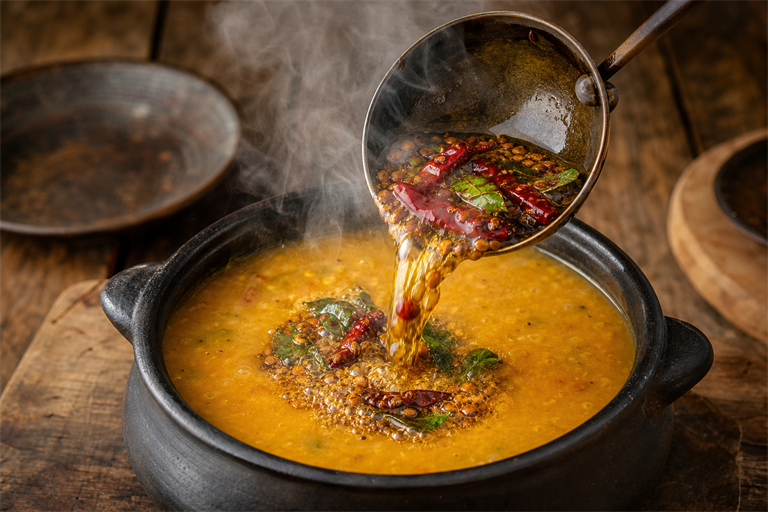
Pour the tadka straight over the simmering dal. It should hiss loudly. Cover the pot for 2 minutes so the aromas marry into the lentils.
-
Crush the kasuri methi between your palms over the pot. Add the lemon juice and chopped cilantro. Stir once. Serve immediately.
A few points worth keeping in mind
- For a Punjabi dhaba-style double tadka, sauté 1 small chopped onion and 1 chopped tomato in 1 tablespoon ghee until jammy. Stir that into the dal at step 4. Then do the whole-spice tadka on top at step 9. Save it for weekends, not weeknights.
- Hing is non-negotiable in a Punjabi dal. It does the work of onions when you don’t have time. A pinch is plenty; too much and the dal tastes of old socks.
- If the cumin turns black before the garlic goes in, the ghee was too hot. Throw it out and start again. Thirty seconds of burnt cumin will haunt the whole pot.
- Salt the lentils at the start, not at the end. Lentils seasoned from the inside taste round; lentils salted only at the end taste flat under the aroma.
- Leftover dal thickens overnight in the fridge. Loosen with hot water, not milk, and refresh with a tiny new tadka of cumin and ghee before serving.
What to serve with dal tadka
Serve it with jeera rice and a hot phulka smeared with ghee, plus a wedge of raw onion and lime pickle on the side. On a colder evening, steamed basmati and a bowl of dahi make the plate feel complete. That is dinner.
If you like the idea of a weeknight built around one anchor dish and a few small supporting plates, the Japanese ichiju sansai framework lays out the same logic from a different kitchen. And for a similar deep dive into a pantry of foundational flavours, the five fermented foundations of Korean cooking map out jang and kimchi the way this post maps out lentils. If you want another long-simmered, spice-forward project for the weekend, Padang-method beef rendang is a natural next step.