
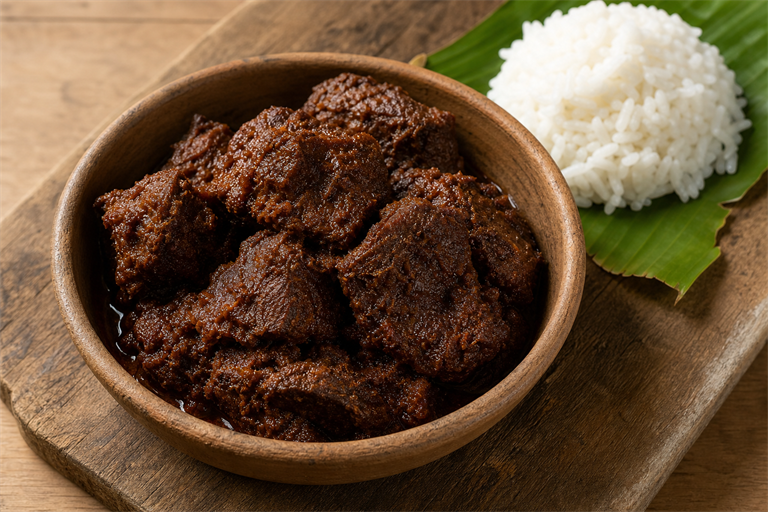
Proper rendang, cooked the Padang way in West Sumatra, comes out of a pot that has been on the stove since morning and is often not ready until around four in the afternoon. By then the beef is almost black, the spice clinging to it like wet bark. When the lid lifts, the smell is toasted coconut, lemongrass, and something close to caramelised onion. There is no sauce on the plate. That is the part most people get wrong at home.
Rendang comes from the Minangkabau people of West Sumatra. It is built on a wet spice paste called bumbu and around two litres of coconut milk per kilogram of beef, cooked down in three distinct stages: kuah (soupy), kalio (thick golden gravy), and finally rendang (dry, dark, oil-glossed, with the spices toasting onto the meat). Most English-language recipes stop at the kalio stage and call it rendang. The difference is roughly two hours and a small act of patience.
| Yield | 6 servings |
| Prep time | 30 minutes |
| Cook time | 3 hours 30 minutes |
| Total time | 4 hours |
| Difficulty | Intermediate |
Ingredients
For the bumbu (spice paste)
- 12 shallots, peeled (about 200 g)
- 8 garlic cloves, peeled
- 6 long red chillies, seeds in if you want heat
- 4 bird’s eye chillies (optional, for serious heat)
- 40 g fresh galangal, peeled and sliced
- 30 g fresh ginger, peeled and sliced
- 15 g fresh turmeric, peeled (or 1 tsp ground turmeric)
- 4 candlenuts (or 6 macadamia nuts as a substitute)
- 1 tsp ground coriander
- 1 tsp salt
For the pot
- 1.2 kg beef chuck or beef shin, cut into 4 cm cubes
- 3 stalks lemongrass, bruised and tied in a knot
- 6 kaffir lime leaves (substitute: 4 bay leaves plus the zest of 1 lime, added at the kalio stage)
- 2 salam leaves or 1 turmeric leaf, if you can find one (skip rather than substitute; bay is not a stand-in here)
- 1 cinnamon stick
- 2 star anise
- 1.2 L coconut milk (two 400 ml cans full-fat, plus one can topped up with water)
- 400 ml coconut cream
- 50 g kerisik (toasted desiccated coconut, pounded; recipe in the notes)
- 2 tsp palm sugar (gula merah), grated
- Salt to taste, starting at 1 tsp
Equipment
- Heavy wide pot or enamel Dutch oven, at least 5 L
- Mortar and pestle, or a small food processor
- Wooden spatula with a flat edge (you will scrape the bottom often)
Instructions
-
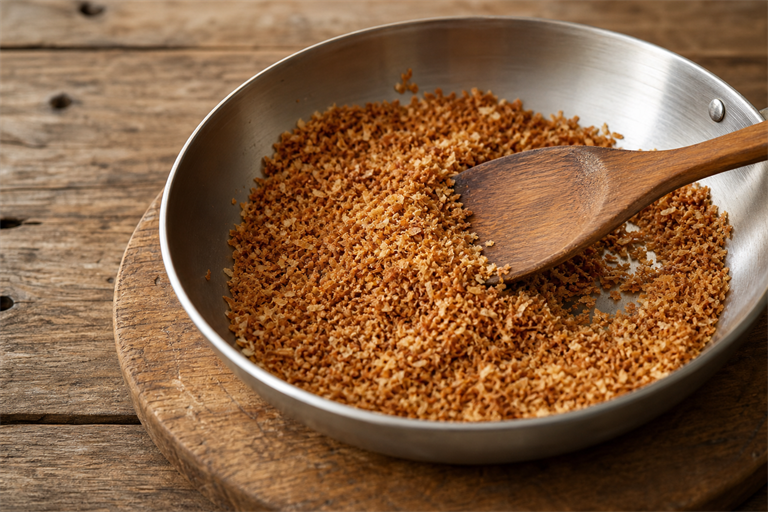
Make the kerisik. Toast 80 g of unsweetened desiccated coconut in a dry pan over medium-low heat for 10–12 minutes, stirring almost constantly, until it turns a deep golden brown and smells like a praline. Pound it in a mortar until it goes oily and clumps. You want roughly 50 g for the pot. Do not skip this step. Kerisik is what gives rendang its dark colour and its nutty backbone.
-
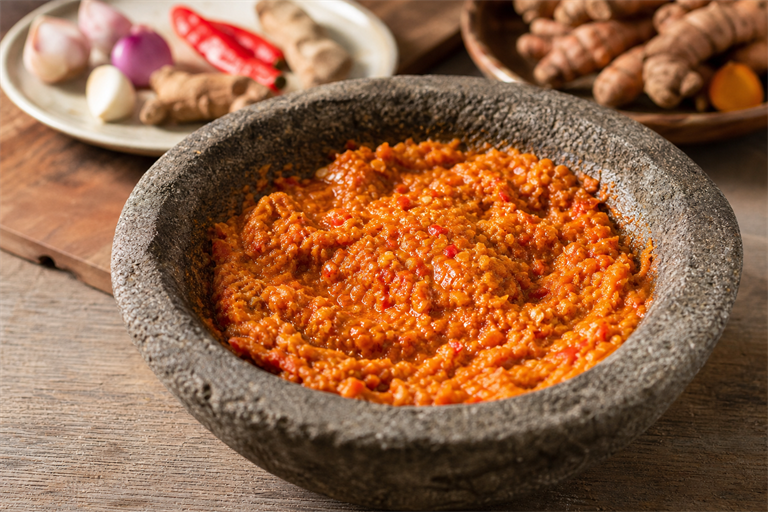
Make the bumbu. Blend the shallots, garlic, chillies, galangal, ginger, fresh turmeric, candlenuts, coriander, and salt into a coarse paste. Add a splash of the coconut milk if your processor needs help. The paste should be wet but not soupy, about the texture of thick hummus.
-
Cook the bumbu. Heat the pot dry over medium heat, then add the paste with no oil. Stir constantly for 8–10 minutes, until the raw shallot smell is gone and the paste turns a shade darker. The coconut fat that will release later does the frying; adding oil now makes the finished dish greasy.
-
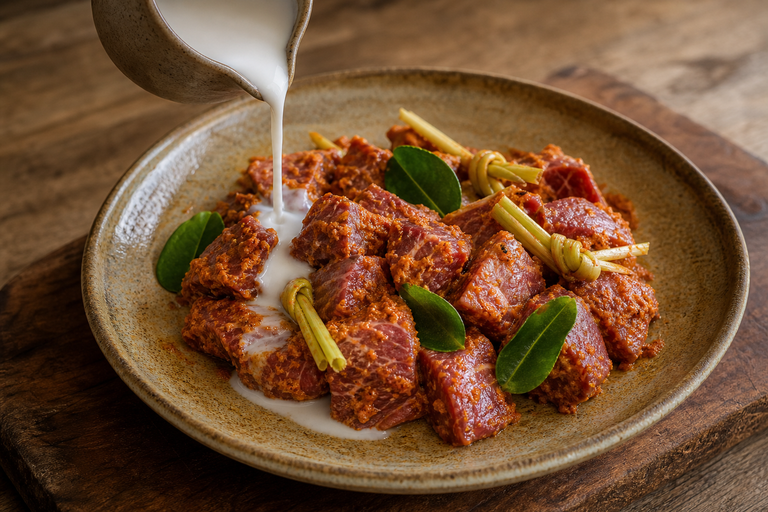
Add the beef raw. Do not sear it first. Tip in the cubes, the lemongrass, kaffir lime leaves, salam or turmeric leaf, cinnamon, and star anise. Stir to coat every piece in the paste. Pour in the coconut milk and the coconut cream. The liquid should just cover the meat. Bring it to a gentle simmer, never a rolling boil, or the coconut milk will split into greasy curds.
-
Stage one is kuah, about 45 minutes. Simmer uncovered, stirring every 10 minutes so nothing sticks. The sauce is thin and pale yellow, almost like a soup. Taste at the 40-minute mark and add 1 tsp of salt and the palm sugar. The beef is still firm at this point.
-
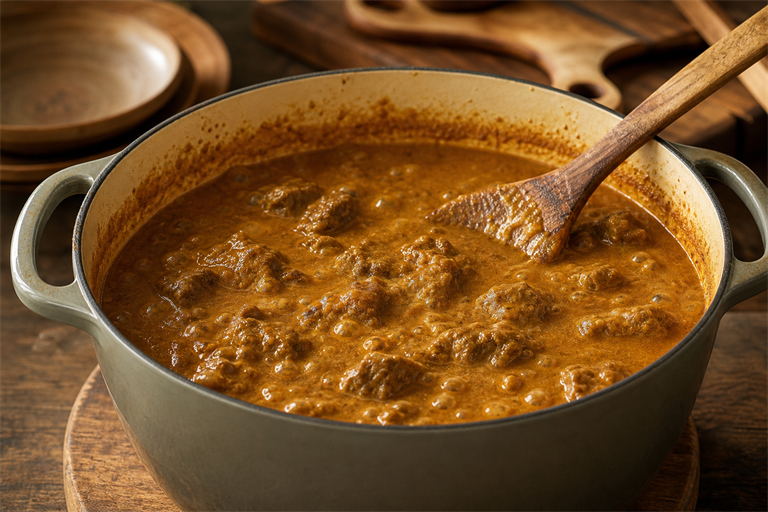
Stage two is kalio, about 60 to 75 minutes more. The liquid reduces by half and turns a deep golden brown. The bubbles get bigger and slower. If you stopped here, you would have kalio: delicious, but a different dish. Stir more often now, every 5 minutes, as the bottom begins to catch.
-
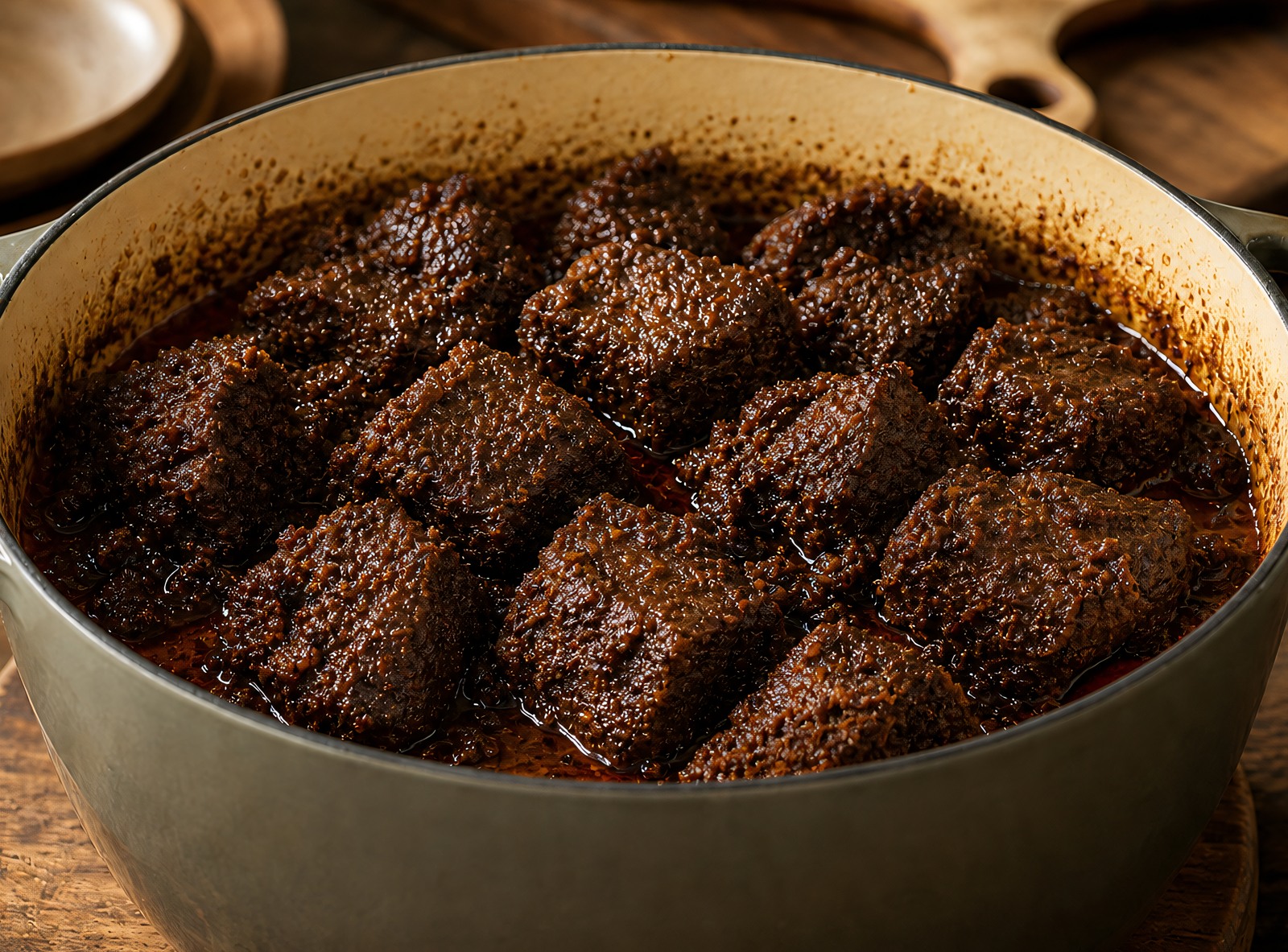
Stage three is rendang, about 60 to 90 minutes more. Stir in the kerisik. Lower the heat to medium-low. You are watching for the oil break: the coconut fat will separate from the solids and pool around the edges of the pot, glossy and orange. That is the signal that the toasting phase has begun. Keep stirring. The paste will darken from gold to mahogany to almost black. The beef stops releasing liquid and the spices start to cling to it like a crust.
-
Judge by the look, not the clock. Rendang is done when there is no visible sauce, only the meat coated in dark, oily spice, and the bottom of the pot is dry enough that the spatula leaves a clear track for two seconds. Taste a piece. The beef should pull apart with light pressure but still hold its cube shape.
A few things worth getting right
A 1.2 kg piece of beef chuck holds its shape through the long reduction. Rendang can split at the kalio stage, around the 90-minute mark, if the heat is allowed to climb. Two minutes of hard, steady stirring usually brings the emulsion back, and a pot that darkens more than expected at this point is a good sign, not a bad one.
If your coconut milk splits during the long cook, raise the heat slightly and stir hard. It usually re-emulsifies. If it does not, you boiled it too aggressively earlier; the dish is still edible but will be oilier.
No fresh galangal? Use 1 tablespoon of galangal paste from a jar. Powdered galangal is not the same plant in flavour and is best skipped.
No turmeric leaf and no salam leaf? Leave them out. A bay leaf is closer in shape than in taste, and it will push the dish toward European stew territory.
Beef chuck gives the cleanest result. Shin is richer but needs the full cook time or it stays chewy. Brisket works. Do not use a lean cut like topside, which goes stringy by hour three.
Day-two rendang is better than day-one. The spices settle into the meat overnight. In Padang, a finished pot keeps at room temperature for several days because the dish is essentially confit in coconut oil. At home, refrigerate and reheat gently.
What to serve with it
A mound of plain jasmine rice, a spoon of sambal, and a small pile of sliced cucumber and tomato. In Padang it would arrive with a dozen other small dishes on a tray, but at home one rice, one rendang, one sharp fresh thing is the right balance. If you want a lighter counterpoint another night, a clean-flavoured Cantonese steamed fish is about as far from this dish as Asian cooking gets, and a useful palate reset.
Taste before you serve. You are checking four things in this order. Salt first (start with another quarter teaspoon if the meat tastes flat). Then a faint sweetness from the palm sugar in the background. Then the heat from the chillies, which should warm the back of the throat, not the front of the tongue. And finally that deep toasted-coconut richness from the kerisik. If it tastes thin, you stopped at kalio: put it back on the heat for another 20 minutes. If it tastes harsh, a pinch more palm sugar will round it out. Good fish sauce is not part of this dish. Salt and the kerisik do that work.
Rendang sits in a small club of long-cook regional dishes — alongside things like the clear, hours-long Hanoi-style pho bo broth or low-and-slow American barbecue traditions — where the real cooking happens in the last hour, and the only way to learn the finish is to stand at the pot.