
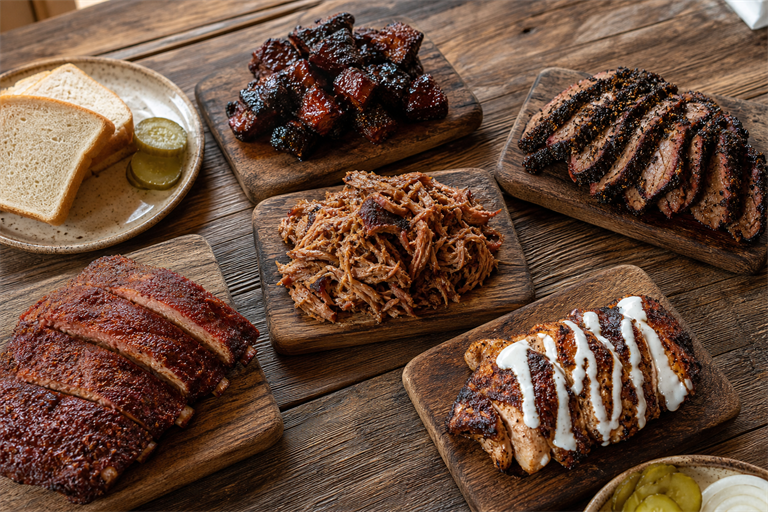

Ask a seasoned pitmaster what kind of BBQ they make, and the honest answer is often “the kind that takes all day.” That answer works fine on Saturday morning with a thermometer in hand. It does not work when you are standing in front of a butcher on Friday afternoon trying to decide what to put on the smoker tomorrow.
The five great American BBQ regions, Texas, Memphis, the Carolinas, Kansas City, and Alabama, are really five different clocks. Each one starts with a different cut, a different wood, a different rub, a different sauce, and each one asks for a different chunk of your weekend. Think of this as a map for picking which one you cook tonight, not a history lesson.
The five regions at a glance
| Region | Signature meat | Wood | Rub | Sauce | Cook time (home smoker) | Internal temp |
|---|---|---|---|---|---|---|
| Central Texas | Beef brisket (packer, 12–14 lb / 5.4–6.3 kg) | Post oak | Salt and 16-mesh black pepper, 1:1 | None at the table | 10–14 hrs at 225–250F (107–121C) | 203F (95C), probes like warm butter |
| Memphis | Pork spare ribs (St. Louis cut) | Hickory | Paprika, brown sugar, garlic, onion, mustard powder | Dry or thin tomato-vinegar on the side | 5–6 hrs (3-2-1 method) at 225F (107C) | 198–203F (92–95C), bend test |
| Eastern Carolina | Whole hog or pork shoulder (8–10 lb / 3.6–4.5 kg bone-in butt) | Hickory and oak | Salt, black pepper, red pepper flakes | Cider vinegar, red pepper, sugar, salt | 12–14 hrs at 225F (107C) for shoulder | 203F (95C), pulls clean from the blade |
| Western Carolina (Lexington) | Pork shoulder only | Hickory | Salt, pepper, paprika | Lexington dip: vinegar, ketchup, sugar, pepper | 10–12 hrs at 225F (107C) | 203F (95C) |
| Kansas City | Burnt ends (point of brisket), ribs, anything | Hickory, oak, fruitwood blend | Sweet paprika, brown sugar, chili, celery salt | Thick molasses-tomato, sweet and tangy | 12–14 hrs total (brisket + 2 hrs for burnt ends) | 203F (95C), then cubed and glazed |
| North Alabama | Whole or split chicken, sometimes pork | Hickory or pecan | Salt, pepper, paprika, light brown sugar | White sauce: mayo, cider vinegar, black pepper, horseradish | 2.5–3.5 hrs at 275F (135C) | 165F (74C) breast, 175F (79C) thigh |
The criteria that actually matter at home are sitting right in those columns. What cut can your butcher get you. What wood does the hardware store actually carry. How many hours do you have. Do the people at your table want sauce on the meat, or beside it. Answer those four and the region picks itself.
Central Texas: beef, post oak, and a black pepper bark
Texas brisket is the longest commitment on the list. A 12-pound packer at 225F (107C) takes 10 to 14 hours, including a stall around 165F (74C) where the internal temperature flatlines for two or three hours while moisture evaporates off the surface. The rub is the famous “dalmatian”: equal parts kosher salt and coarse 16-mesh black pepper, nothing else. Post oak burns clean and steady, and it gives the bark its dark color without the bitter edge hickory can throw on a long cook.
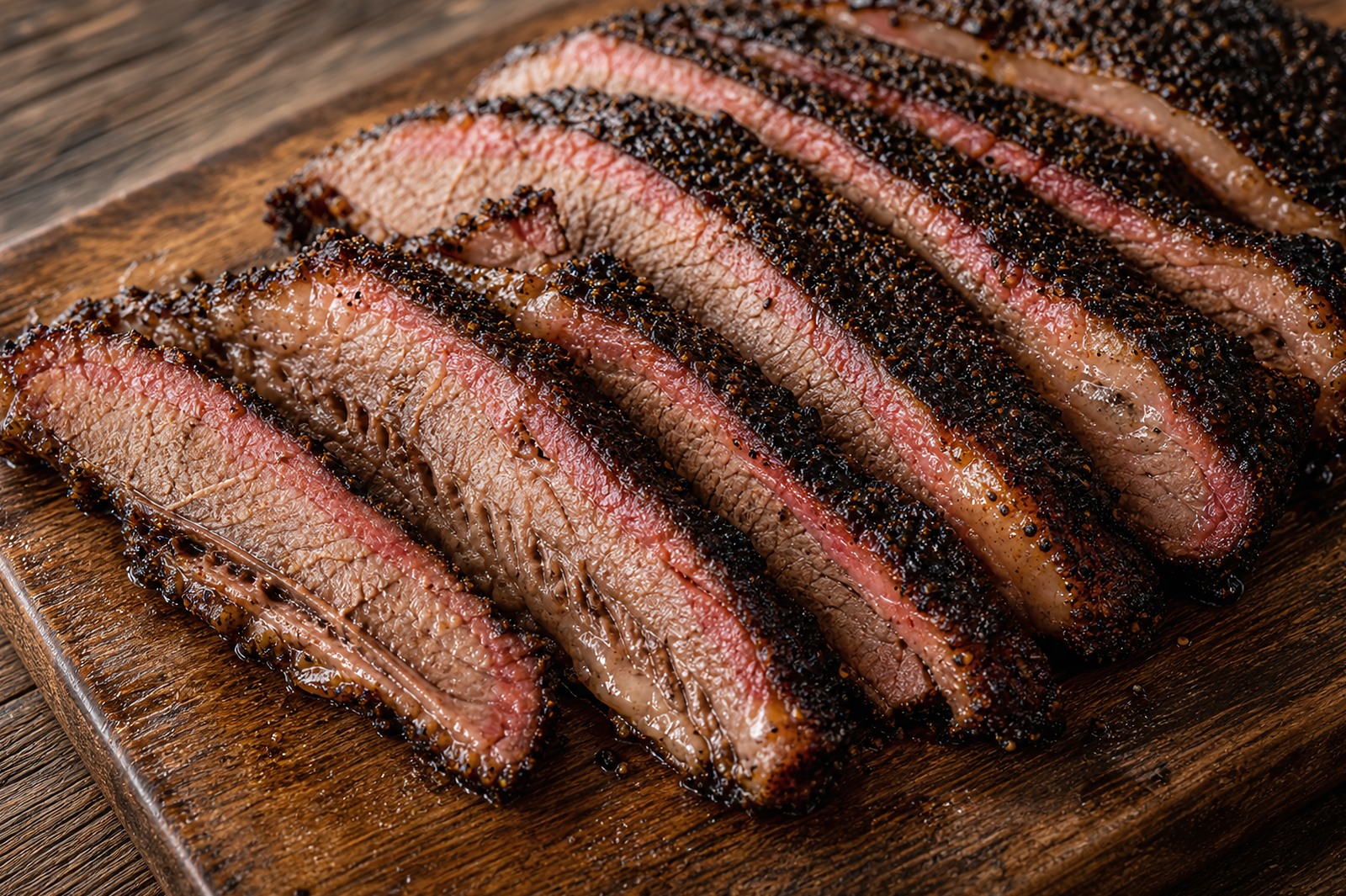
The check at the end is not a number. You probe the flat through the thickest part, and it should slide in with no resistance, the way a knife goes through a stick of softened butter. That usually happens between 200F (93C) and 205F (96C). Then it rests, wrapped in butcher paper and a towel, in a dry cooler for at least an hour. Two is better.
A 13-pound packer can hit the stall around 162F near the four-hour mark, and the probe may not read butter-soft until 204F close to ten hours in. The clock is rarely the same twice.
Memphis: pork ribs, dry or wet, and the hickory sweet spot
A rack of St. Louis-cut spare ribs is the most forgiving thing on this list, and the best entry into regional BBQ. The Memphis approach gives you a choice the other regions do not. Dry, with the rub doing the work. Or wet, with a thin tomato-vinegar mop brushed on in the last 30 minutes.
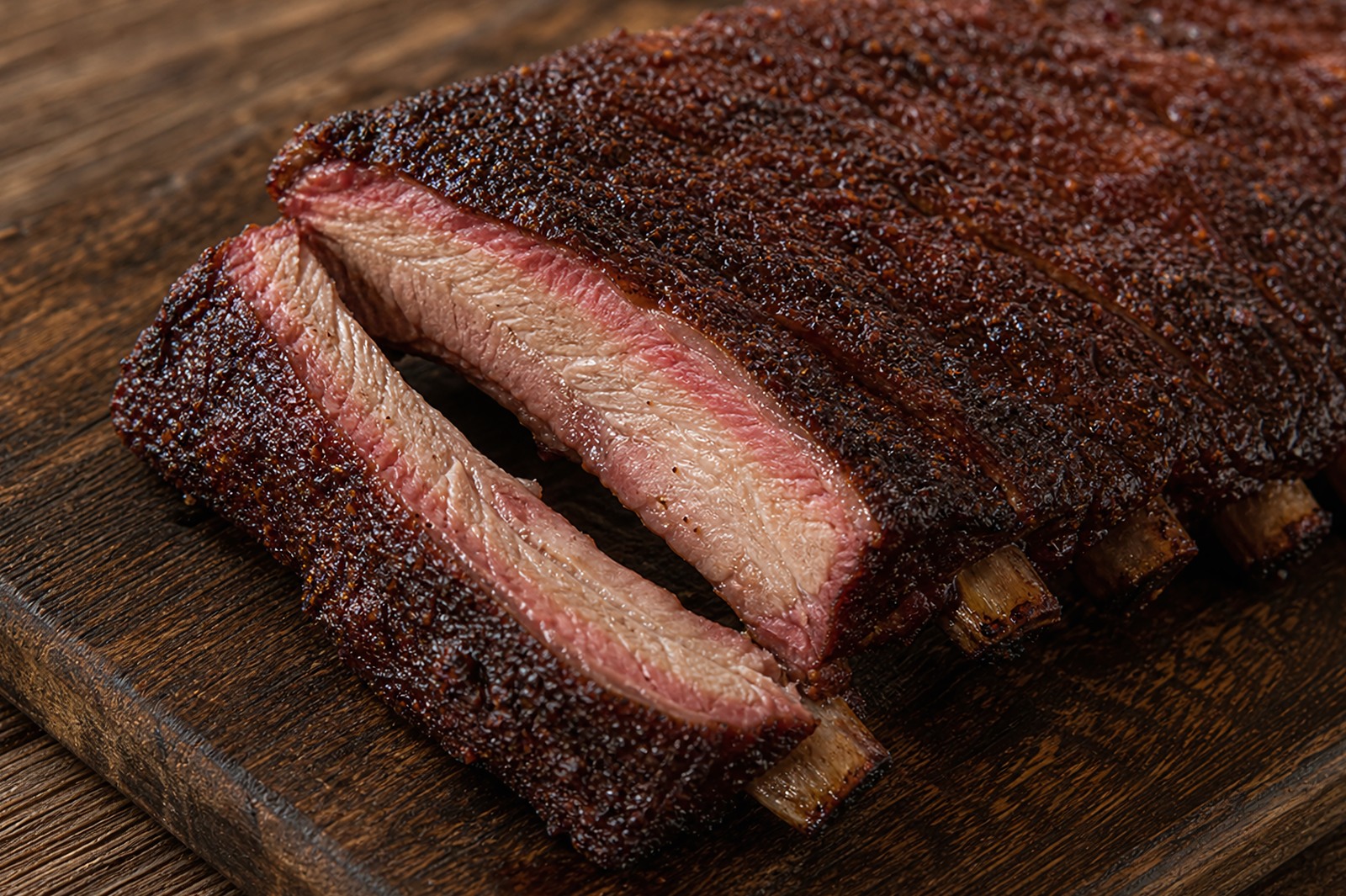
The 3-2-1 method on a backyard smoker at 225F (107C) is the home cook’s standby: 3 hours of smoke uncovered, 2 hours wrapped in foil with a splash of apple juice, 1 hour unwrapped to firm the bark. The bend test tells you when they are done. Pick the rack up with tongs in the middle, and the bark should crack across the top.
Carolina: vinegar, whole hog, and the east-west line
The Carolinas are two different cuisines that share a state line. Eastern Carolina cooks the whole hog and dresses the chopped meat with a thin cider vinegar sauce sharpened with red pepper flakes and a little sugar, no tomato at all. Western Carolina, anchored in Lexington, cooks only the pork shoulder and uses a “dip” that adds ketchup to the vinegar base, turning the sauce a thin orange.
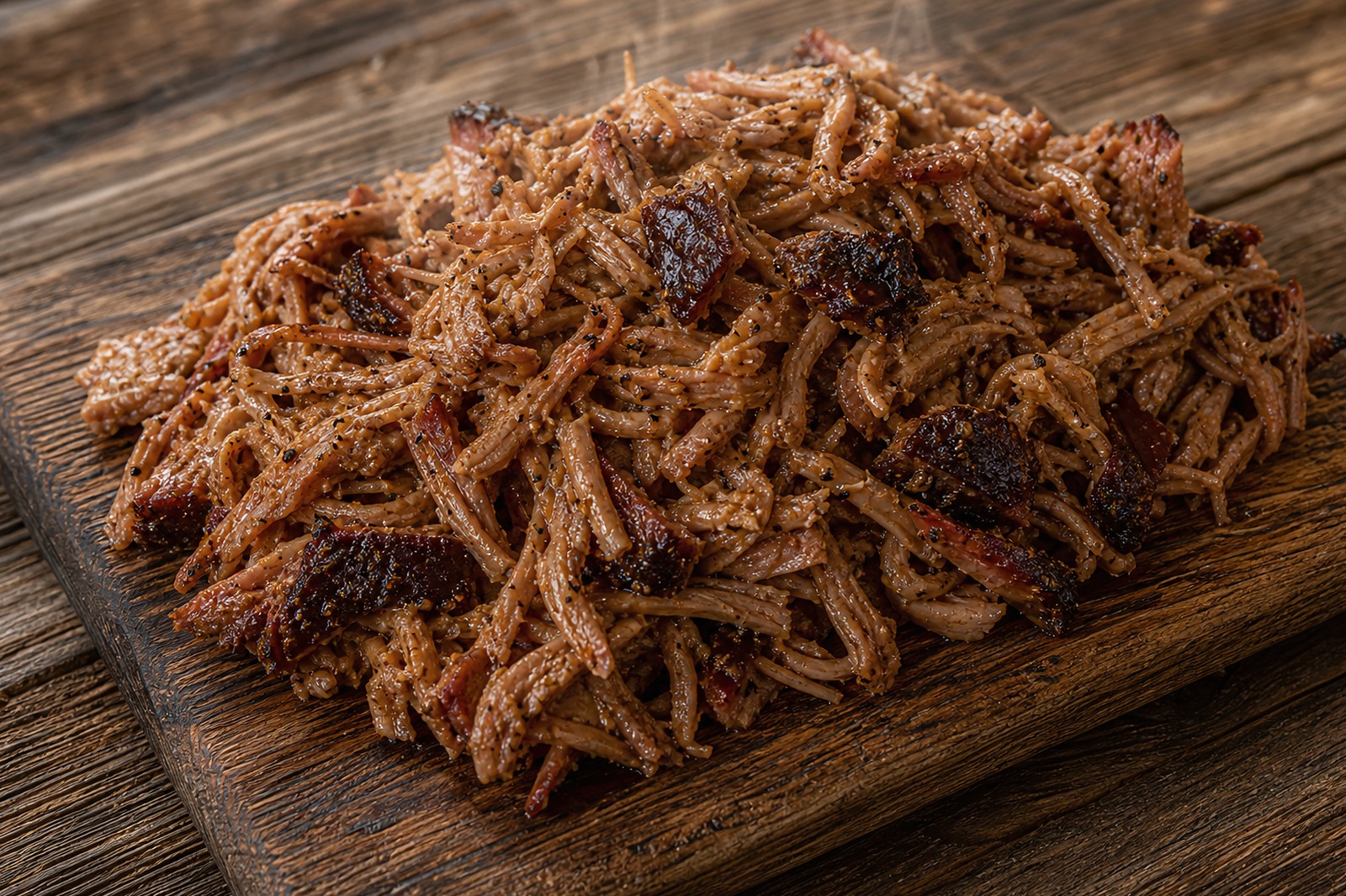
Most home cooks will not run a whole hog. An 8 to 10 pound bone-in pork butt at 225F (107C) takes 12 to 14 hours and gives you the same texture: pulled in long shreds, glossy with rendered fat, dressed at the table with whichever sauce your side of the state prefers. It is done when the blade bone slides out clean with a gentle pull.
Kansas City: burnt ends and a sauce that sticks
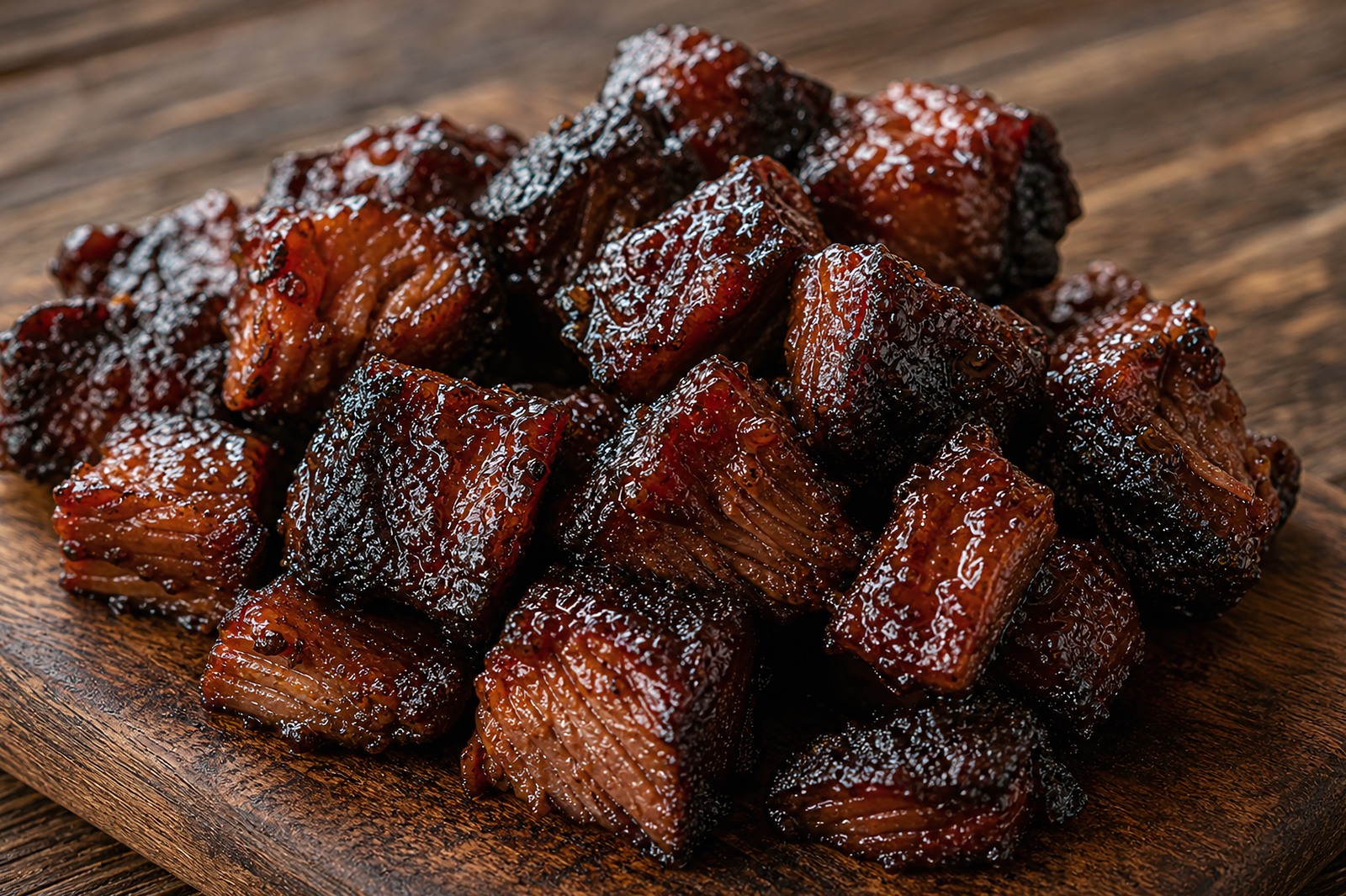
Kansas City is the all-of-the-above region. Pitmasters there smoke beef, pork, chicken, sausage, and whatever else fits on the rack, all over a hardwood blend, all finished with a thick molasses-and-tomato sauce that goes on the meat, not beside it. The signature is burnt ends: the fatty point of the brisket separated from the flat after the main cook, cubed into roughly 1.5 inch pieces, tossed with rub and sauce, and returned to the smoker for another 1.5 to 2 hours until the cubes are mahogany and the sauce has caramelized into a crust.
Alabama: smoked chicken and a white sauce nobody else makes
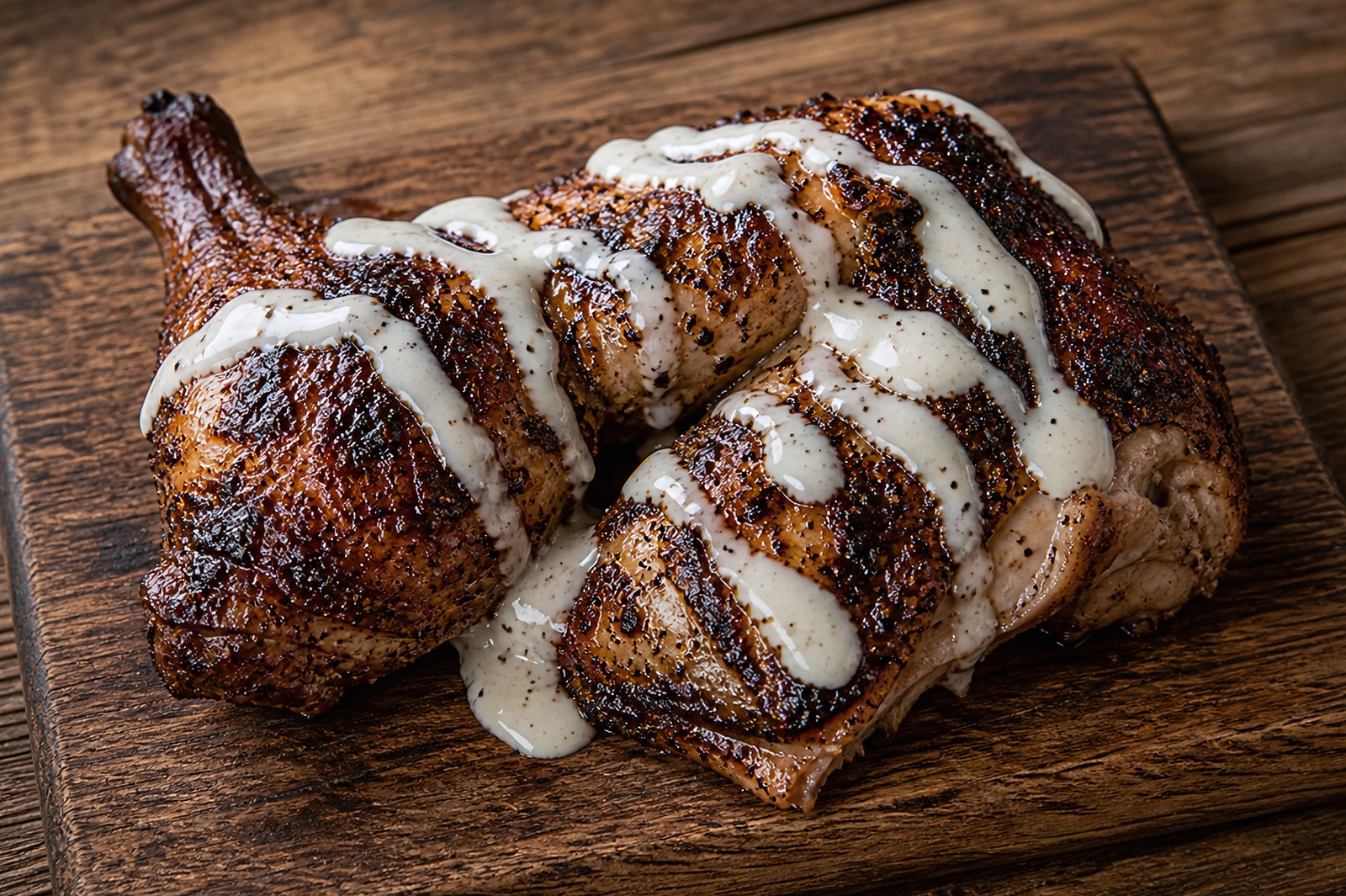
Big Bob Gibson’s place in Decatur put north Alabama on the map in 1925 with a sauce that breaks every other region’s rules: mayonnaise, cider vinegar, coarse black pepper, a little horseradish, no tomato, no sugar. The bird is split, smoked over hickory or pecan at 275F (135C) for about 3 hours to 165F (74C) in the breast and 175F (79C) in the thigh, then dunked whole into a bowl of cold white sauce. The mayo clings to the skin, the vinegar cuts the fat, the pepper bites at the back. It is the shortest cook on this list, and the easiest one for a Saturday that started late.
How to choose tonight
- You have all day Saturday and a 12-pound brisket in the fridge. Texas. Post oak, salt and pepper, no sauce.
- You want ribs on the table by 6 pm and you started at noon. Memphis. St. Louis cut, hickory, 3-2-1.
- You want pulled pork sandwiches for a crowd of twelve. Carolina shoulder. Pick your side of the state by the sauce you like.
- You want one cook that gives you sliced brisket and burnt ends. Kansas City. Plan 14 hours and a second sauce pass.
- You came home Friday with a whole chicken and no plan. Alabama. Three hours, white sauce, done.
A brisket rests wrapped for at least an hour before you slice it, and an Eastern Carolina shoulder sits in its own juices for thirty minutes before you pull it. Use that quiet hour to set the table, slice the white bread, open the pickles, pour something cold. The meat is finishing on its own. That waiting is part of the cooking too, and on the porch, with the smoker ticking as it cools, it is the best part of the day.
Regional BBQ is one of several cuisines where the cut, the heat, and the timing are inseparable from the tradition itself — the same is true of a Hong Kong cook’s approach to Cantonese steamed fish, where minutes on the steamer matter as much as hours on the smoker matter here. And if the dry-rub side of Memphis has you curious about spice blends as a whole worldview, the decoded guide to ras el hanout, baharat, and za’atar is a useful next stop. For another long-simmer tradition that rewards patience the way brisket does, look at the Hanoi-style clear broth behind pho bo from scratch.