
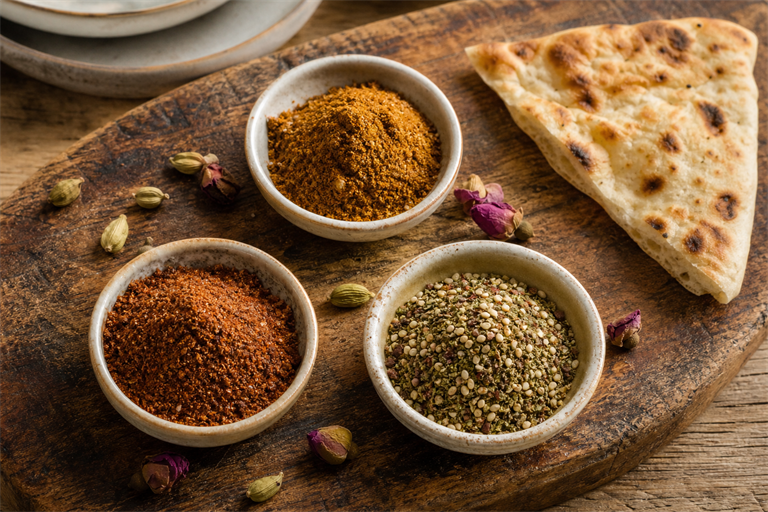
In the spice arcade of Souk el Attarine in Tunis, a teaspoon of ras el hanout invites a slow inhale, then an exhale through the mouth. The first breath reads as rose and cardamom. The second turns darker, with a long cellar note of cubeb and dried ginger. Read the blend before cooking with it: each aroma hints at the job it will do in the pot.
So when a home cook reaches for a jar labelled ras el hanout, baharat, or za’atar, what is actually in their hand, and how should that jar be used so the food tastes alive instead of dusty?
What you’re actually reaching for
These three blends are not interchangeable seasonings. They are three flavour systems, built for three cooking jobs, in three different parts of the Arab and Mediterranean world.
Ras el hanout is a Maghrebi perfume blend, warm and floral, designed for long, fat-rich braises. Baharat is the Gulf and Levantine workhorse, pepper-forward and meat-leaning, made to be bloomed in hot oil at the start of a dish. Za’atar is not a cooking spice at all. It is a Levantine dry condiment of wild thyme, sumac, and toasted sesame, eaten raw on oil-slicked bread, on labneh, on vegetables. Use them the wrong way and you waste them.
The geography matters because each blend grew out of what its region cooked most. Morocco, Algeria, and Tunisia lean on slow tagines, sweet-savoury tfaya, lamb cooked with dried fruit. Ras el hanout, whose name translates as “top of the shop,” is the spice merchant’s signature mixture. It can carry twenty to thirty ingredients and is built to perfume a pot that will sit on low heat for hours. Fez blends often include dried rosebuds, lavender, orris root, grains of paradise, cubeb pepper, long pepper, and galangal alongside the usual cumin, coriander, ginger, and cinnamon. No two shops sell the same one.
The Gulf and the Levant cook more grilled meat, more rice pilafs, more tomato-and-meat stews like kabsa, machboos, kibbeh bil sanieh, and the daily kafta. Baharat, which simply means “spices” in Arabic, is the everyday base. It is heavier on black pepper, allspice, and cumin, with cassia or cinnamon for warmth, and dried lime or nutmeg depending on whether you are in Bahrain, Aleppo, or Beirut.
The Levantine hills, from southern Lebanon down through Palestine and into Jordan, grow wild thyme on dry stony slopes. Za’atar the herb (Origanum syriacum) gives its name to za’atar the blend: the dried herb pounded with sumac, toasted sesame, and salt, sometimes with a little dried oregano or savoury. It is breakfast food, school-lunch food, the thing a Beiruti grandmother sprinkles on labneh at 7 a.m.
Ras el hanout, the Maghrebi perfume
A balanced ras el hanout sits in roughly these proportions by weight. Treat the ratios as a starting point, then adjust the floral and peppery notes to suit the dish.
| Component | Share by weight | Role |
|---|---|---|
| Cumin | 15% | Earth, base |
| Coriander seed | 15% | Citrus lift |
| Cinnamon or cassia | 10% | Sweet warmth |
| Ginger | 10% | Heat without burn |
| Black pepper | 8% | Backbone |
| Cardamom (green) | 7% | High floral |
| Allspice | 6% | Roundness |
| Nutmeg | 5% | Density |
| Clove | 3% | Sharp top note |
| Turmeric | 5% | Color, bitter edge |
| Dried rosebuds, ground | 6% | The signature |
| Mace, cubeb, grains of paradise, lavender | 10% combined | Library notes |
Two things matter. More than half the weight is warm and floral, not hot; ras el hanout is not a chilli blend. And it wants fat and time. Bloom one to two tablespoons in three tablespoons of olive oil or ghee at the start of a tagine, with the onions, for about ninety seconds at medium heat, until the kitchen smells like a perfumery and the oil turns a dark amber. Add it dry at the end and it will taste like sawdust.
Baharat, the everyday meat blend
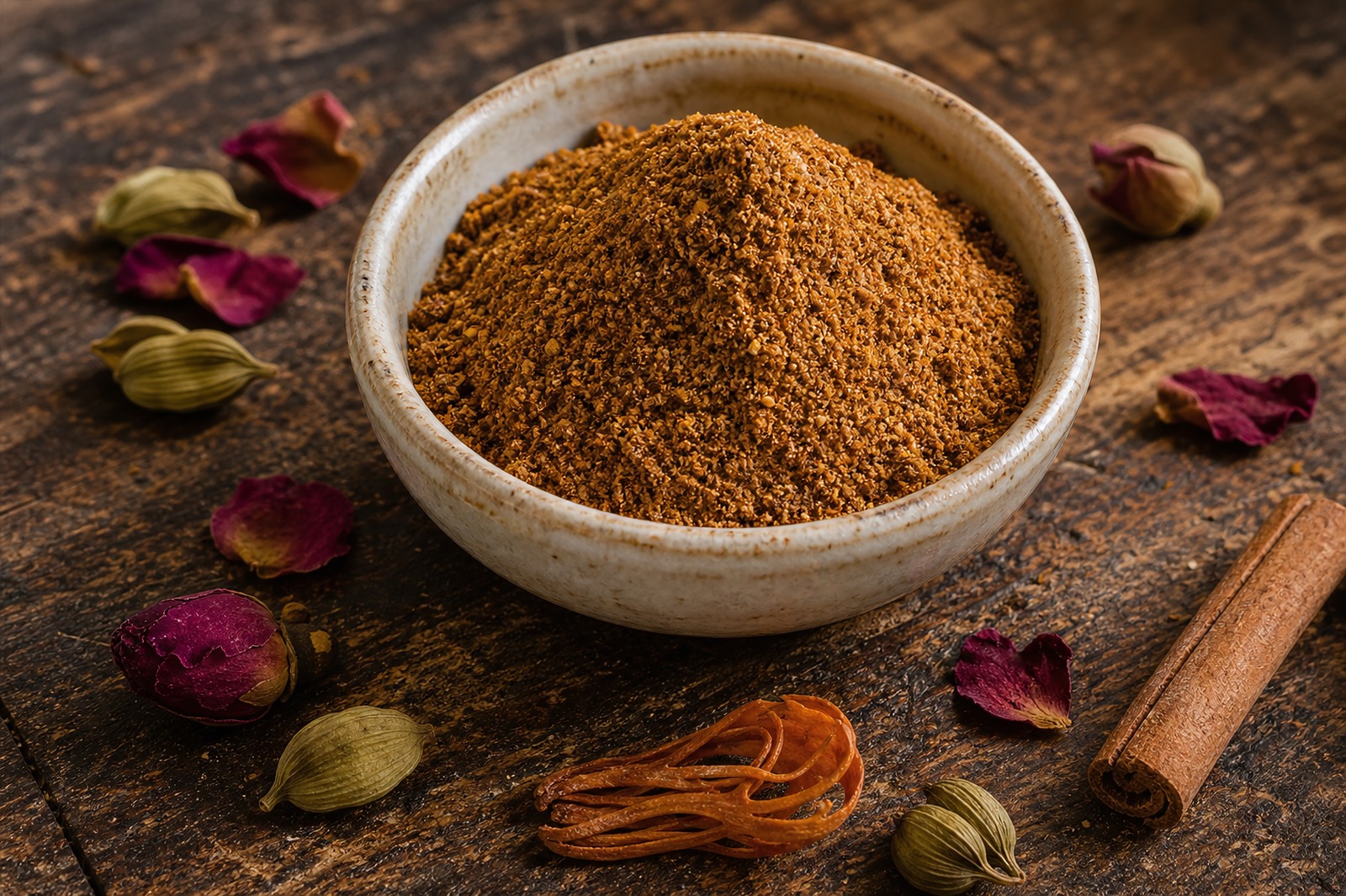
Baharat is built for the opposite job. It is a workhorse, not a perfume, and its ratios reflect that.
| Component | Share by weight | Role |
|---|---|---|
| Black pepper | 25% | Lead |
| Allspice | 20% | Sweet-bitter depth |
| Cumin | 15% | Body |
| Coriander seed | 10% | Lift |
| Cassia or cinnamon | 8% | Warmth |
| Clove | 4% | Edge |
| Cardamom | 5% | Aromatic top |
| Nutmeg | 4% | Density |
| Paprika (sweet) | 6% | Color |
| Dried lime (loomi), ground (Gulf only) | 3% | Sour ferment note |
A Beiruti baharat will skip the dried lime. A Bahraini or Kuwaiti baharat will lean on it heavily, sometimes doubling it. In Aleppo, paprika gives way to Aleppo pepper, and the whole blend tilts a little smokier and sweeter.
Baharat goes into the kafta mix before grilling, into the kibbeh stuffing with toasted pine nuts, into the rice for a maqluba, into the tomato base for a stew. One tablespoon per 500 g of ground lamb is a reliable starting ratio. Like ras el hanout, it wants to bloom. Unlike ras el hanout, it can also be worked raw into raw meat and left to rest for an hour before grilling.
Za’atar, kept bright with brief heat
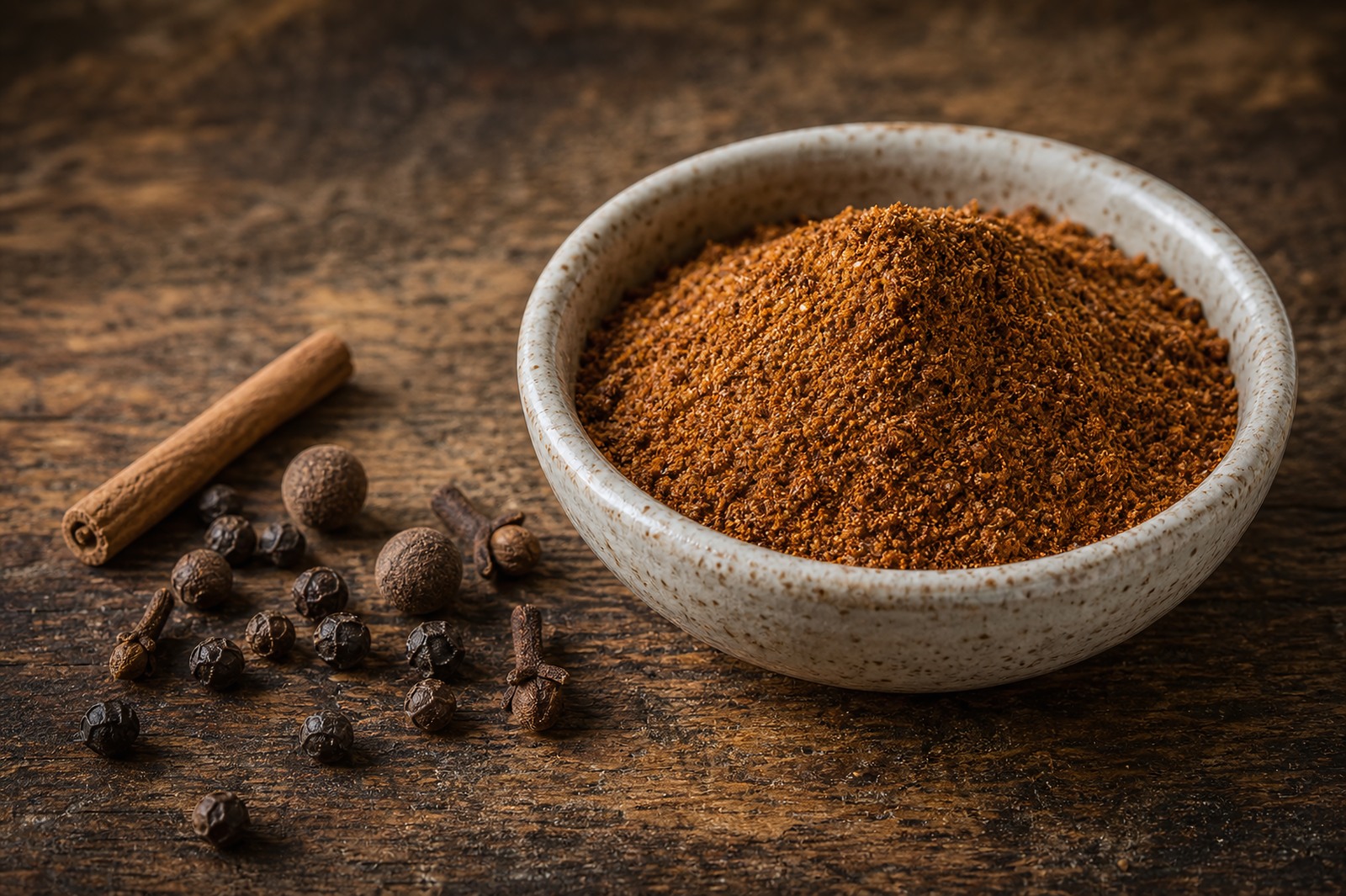
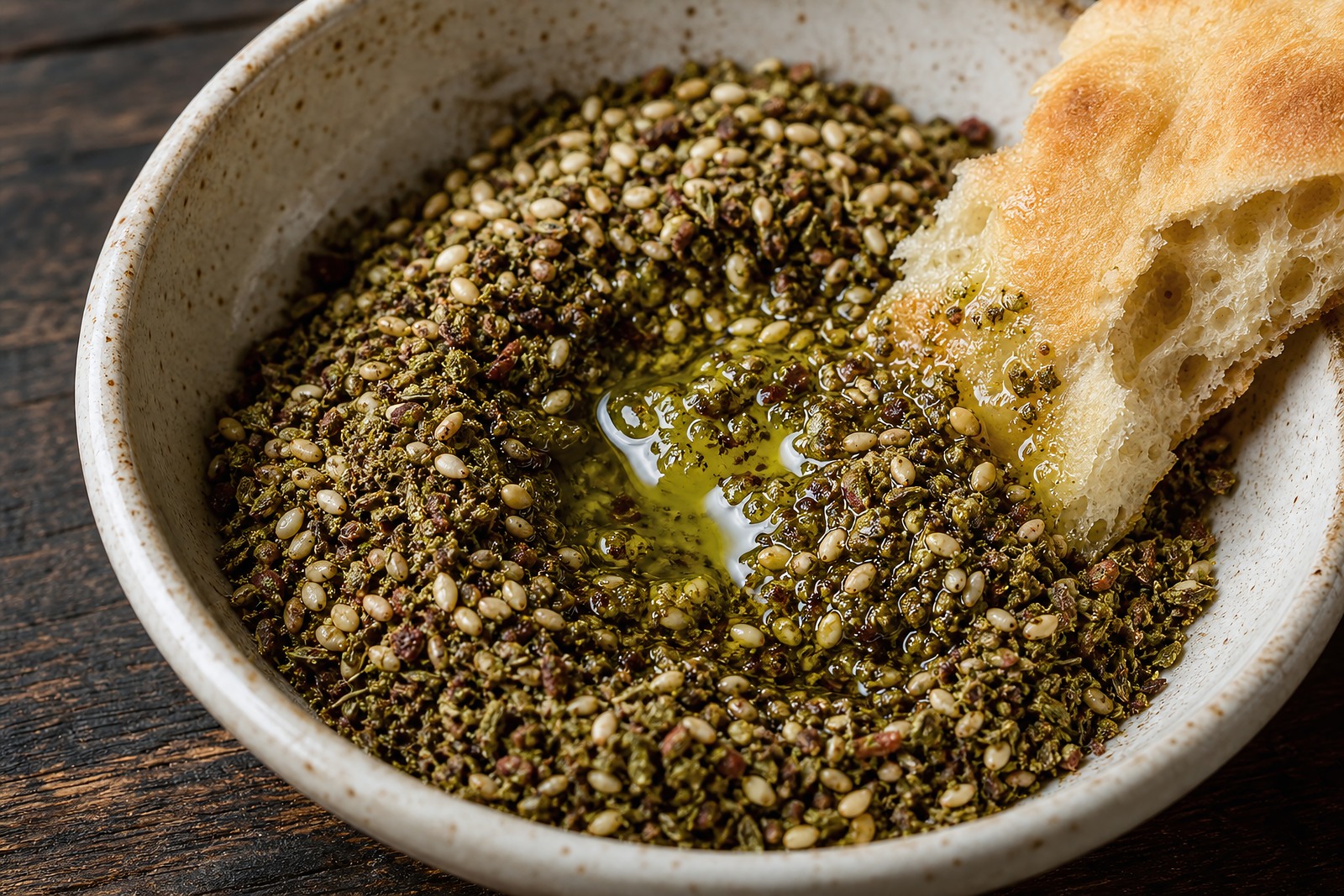
Za’atar loses its bright herbal edge during a long simmer, so reserve it for finishing or a brief bake. The blend is roughly:
- 50% dried wild thyme (Origanum syriacum), or a mix of thyme and oregano if the real thing is unavailable
- 25% ground sumac
- 20% toasted sesame seeds
- 5% salt
You stir it into good olive oil to make the dip for warm bread that is set down at every Levantine breakfast. You scatter it dry over labneh, sliced cucumber, hard-boiled eggs, roasted cauliflower, or a tray of small potatoes still hot from the oven. You press it into oiled dough for manakish and bake at 475F (245C) for six to eight minutes until the edges blister.
Take it above a quick bake and the sumac goes bitter, the thyme goes hay-like, and the sesame burns. The wild thyme of the Levantine hills is the soul of this blend, and it does not like long cooking.
Toasting, grinding, storing
The single biggest reason a home cook’s blend tastes dull is that the spices were never woken up. Whole spices keep their oils for one to two years in a sealed jar. Ground spices start losing them within weeks.
The method for both ras el hanout and baharat goes like this.
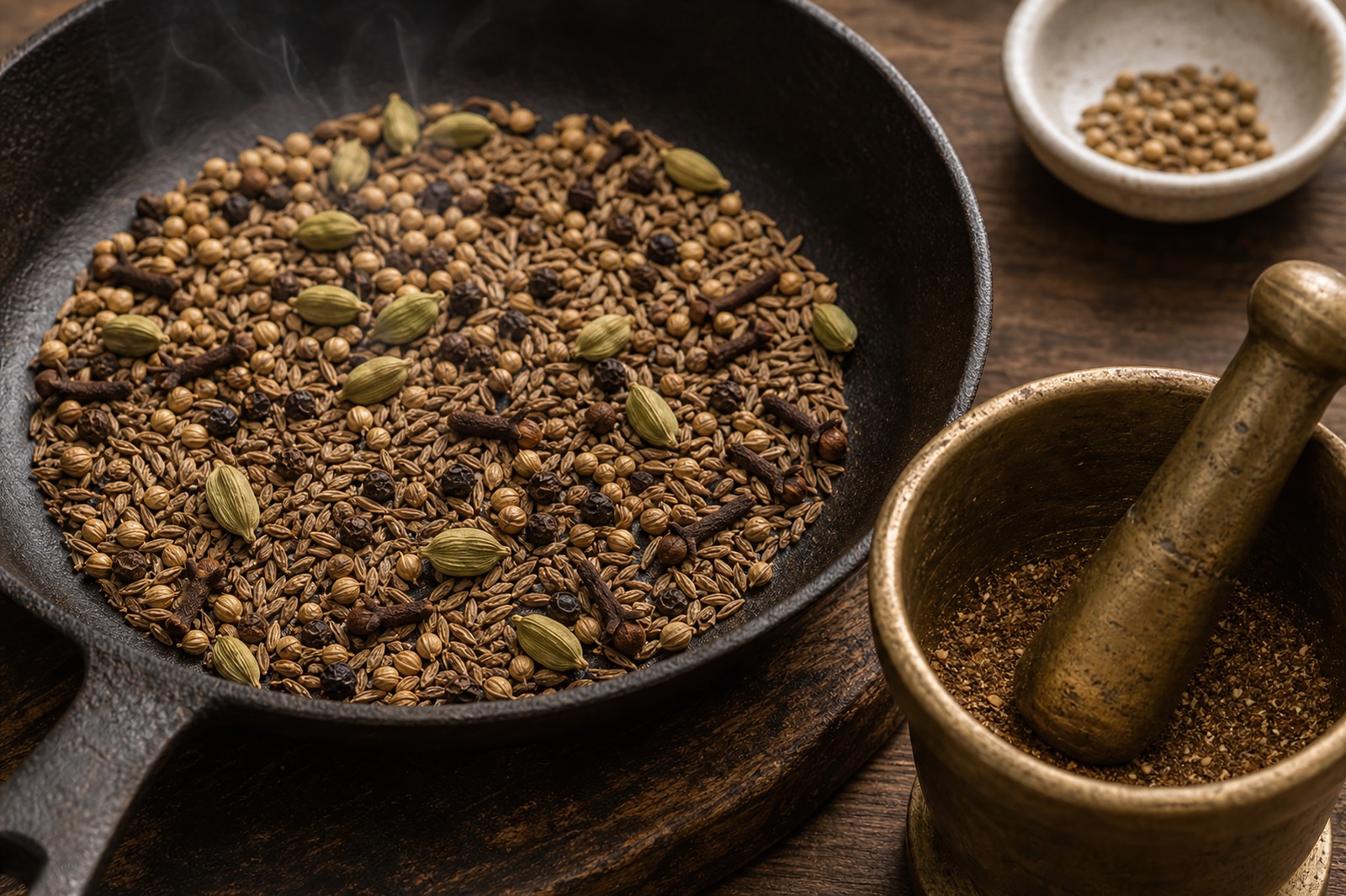
- Toast whole spices separately. Cumin, coriander, allspice, black pepper, cardamom pods, and clove each have a different threshold. Use a dry skillet over medium-low heat. Cumin takes about ninety seconds, coriander two minutes, pepper and allspice closer to three. Toast until fragrant, not smoking. If they smoke they are burnt and bitter.
- Cool fully on a plate for ten minutes. Hot spices grind unevenly and clump.
- Grind in two passes in a small electric grinder, ten seconds and ten seconds, shaking between. Aim for a grind a little coarser than store-bought; the oils stay alive longer.
- Add the pre-ground, soft ingredients last: cinnamon, turmeric, nutmeg, ground rose. Pulse three times to fold in.
- Store in a small glass jar, dark cupboard, away from the stove. Make 50 g at a time. Use within eight weeks for ras el hanout and baharat, four to six weeks for za’atar.
Za’atar wants a separate process. Do not toast the dried thyme; it will turn to dust. Toast the sesame seeds only, until pale gold, then cool and fold into the thyme, sumac, and salt. A side-by-side test makes the point: untoasted thyme keeps the green, resinous hillside note the blend depends on, while thyme that has been put through a hot pan tastes closer to scorched paper than to herb.
A pairing map, and when to buy versus blend
Buying makes sense when you have access to a real Maghrebi or Levantine spice merchant, in person or by mail. A good Fez ras el hanout will contain ingredients you cannot easily source at home: cubeb pepper, grains of paradise, orris root, dried Damascus rose. A blend like that, made the morning you buy it, is genuinely irreproducible in a Western kitchen.
Blending at home wins on almost everything else. You control freshness, salt level, and ratio. You can build a baharat that suits your meat, a za’atar that uses the actual wild thyme a Palestinian relative sent you. Most supermarket “Middle Eastern spice blends” sold under generic labels are six to eighteen months old, heavy on salt and cheap paprika, and built for a long shelf life rather than a hot pan.
The honest middle ground: buy the rare aromatics from a trusted merchant, do the toasting and grinding yourself.
A short reference, worth taping inside the spice cupboard:
| Ingredient | Ras el hanout | Baharat | Za’atar |
|---|---|---|---|
| Lamb shoulder, slow | yes, bloomed in ghee | yes, in the rub | no |
| Ground lamb or beef | sometimes | yes, worked into the mince | scattered after grilling |
| Chicken, roasted | yes, with preserved lemon | yes | scattered after roasting |
| Basmati or short-grain rice | only in sweet pilafs | yes, in the toasting fat | no |
| Tomato-based stew | rarely | yes | no |
| Roasted root vegetables | yes, with honey | yes | scattered after, with oil |
| Eggs, fried or boiled | no | rarely | yes, generously |
| Flatbread, manakish | no | no | yes, the classic use |
| Labneh, hummus, yogurt dips | no | no | yes |
| Olive oil dip for bread | no | no | yes |
Set a bowl of warm olive oil mixed with za’atar at one end of the table. At the other, a tagine of chicken with preserved lemon and ras el hanout, a platter of baharat-spiced kafta still hissing from the grill, a stack of warm khobz, a salad of tomato and cucumber dressed with lemon and parsley, and a glass of mint tea poured from a height. That is how these three blends sit beside each other at home, each doing the one job it was built for.