
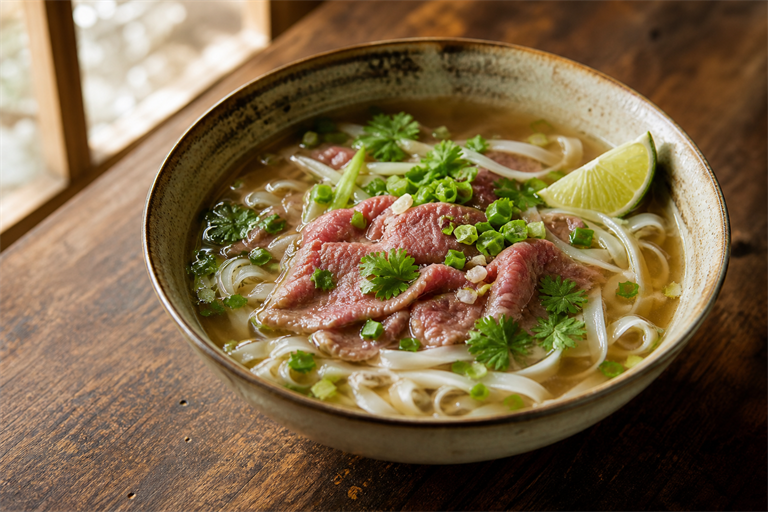
Northern pho bo, done properly, arrives almost colourless. Not pale, not weak. Clear, the way good tea is clear. You can see the noodles through it. Steam carries star anise, charred ginger, a faint sweetness from beef bone that has been talking to water for half a day. That is the target here. It is northern, it is restrained, and most English-language recipes get it wrong by reaching for the southern Saigon style with rock sugar by the fistful and a basket of herbs on the side.
| Yield | 6 servings |
| Prep time | 45 minutes |
| Cook time | 6 hours 30 minutes |
| Total time | 7 hours 15 minutes |
| Difficulty | Intermediate |
Why Hanoi Clarity Is the Target
Pho bac (northern pho) and pho nam (southern, Saigon-style) are cousins, not twins. The northern bowl is about clarity. The broth is barely sweet, the spice is present but quiet, and the garnish is short: scallion, cilantro, a chilli slice, sometimes a squeeze of lime. The southern bowl runs louder, sweeter from yellow rock sugar, fragrant with Thai basil, sawtooth herb, and bean sprouts piled on a side plate. Both are correct in their cities. This recipe is the Hanoi one. The whole technique bends toward removing every cloud from the pot.
Cut the parboil short, to only five minutes, and four hours later the broth will look like watered-down milk tea. The clarity is built in the first ten minutes, not the last six hours.
Ingredients
For the broth
- 2 kg beef leg bones, with marrow
- 1 kg beef knuckle or oxtail
- 800 g beef brisket, in one piece
- 2 large yellow onions, unpeeled, halved
- 1 hand of ginger (about 100 g), unpeeled, halved lengthwise
- 6 star anise pods
- 1 stick cassia bark (about 8 cm)
- 6 whole cloves
- 1 tablespoon coriander seeds
- 1 teaspoon fennel seeds
- 2 black cardamom pods, lightly cracked
- 45 ml Vietnamese fish sauce (Phu Quoc if you can find it)
- 25 g yellow rock sugar
- 20 g fine sea salt, plus more to taste
- 6 litres cold water for the long simmer
For the bowls
- 600 g dried banh pho (flat rice noodles, 3–5 mm wide)
- 400 g beef eye of round or sirloin, in a piece thick enough to check with a thermometer; cook before slicing as directed below
- 4 scallions, green parts thinly sliced; white parts halved lengthwise
- 1 small bunch cilantro, roughly chopped
- 2 bird’s eye chillies, thinly sliced
- 1 lime, cut into wedges
Equipment
- A heavy stockpot, at least 8 litres
- Fine mesh skimmer or a ladle with a steady hand
- Cheesecloth or a coffee filter for the final strain
- A sharp knife, a clean board for cooked meat, and an instant-read food thermometer
The Parboil That Decides Everything
-
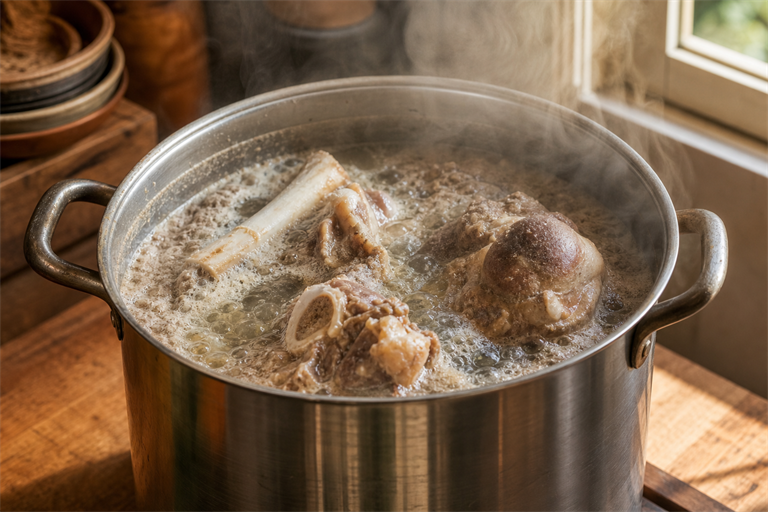
Rinse the bones under cold running water for 5 minutes. Place them in the stockpot, cover with cold water, and bring to a hard boil over high heat. Boil aggressively for 8–10 minutes. The water will turn grey-brown with foam. This is the parboil, and it pulls the blood and surface protein out of the bones before the real simmer. It is the single biggest reason the broth ends up clear.
-
Drain the bones into the sink. Scrub the pot. Scrub each bone under running water to remove every speck of grey film clinging to the surface. Skipping this scrub is how broth turns cloudy four hours later.
-
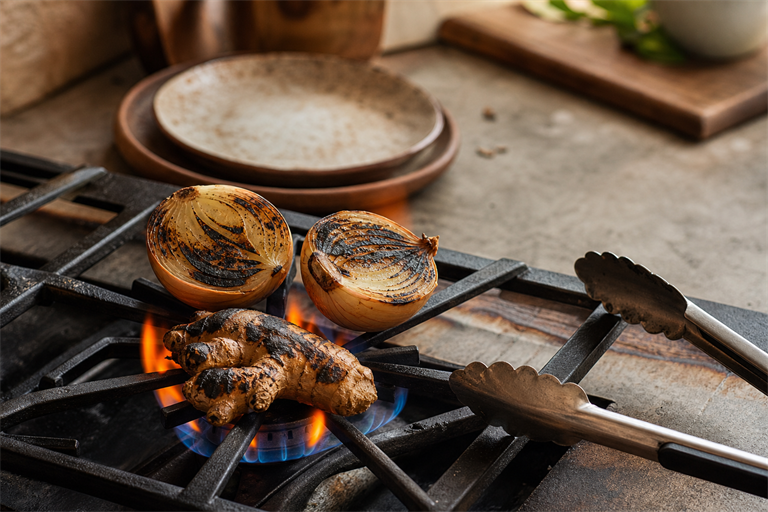
Char the aromatics. Set the onion halves and ginger pieces cut-side down directly on a gas burner over high flame, or under a broiler set to high. Leave them until they are blackened in patches, about 6–8 minutes. The char is not for colour in the broth. It is for the deep, slightly sweet aroma that defines northern pho. Once cool enough to handle, rinse off the loose ash, but leave the blackened skin attached.
-
Toast the spice sachet. In a dry pan over medium heat, toast the star anise, cassia, cloves, coriander seeds, fennel seeds, and cracked black cardamom for 90 seconds to 2 minutes, until you can smell them clearly. Tip into a square of cheesecloth and tie into a bundle. Toasting wakes the spices up; raw spices in long broth taste flat and slightly bitter.
The Slow Rise
-
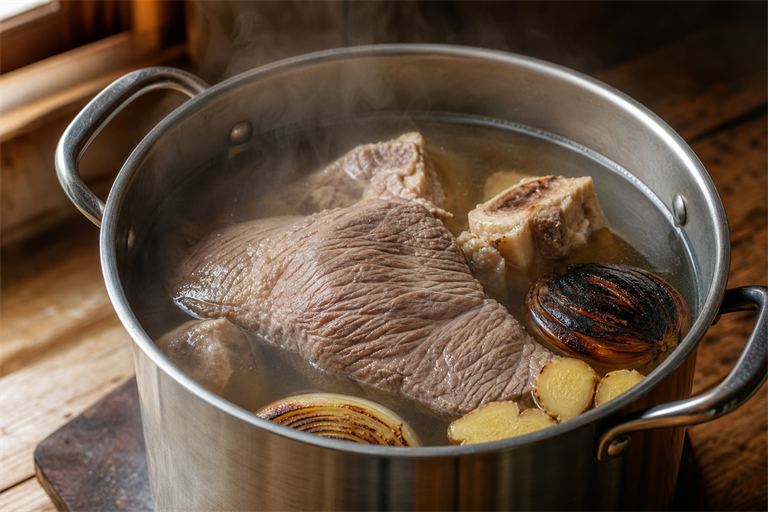
Return the cleaned bones to the cleaned pot. Add the brisket, the charred onion and ginger, and 6 litres of cold water. Bring slowly to a bare simmer over medium heat. This slow rise takes about 40 minutes, and that slowness matters. A hard boil at this stage will emulsify the fat into the water and ruin the clarity.
-
Once the broth reaches a gentle simmer, around 90–95C (194–203F), add the spice sachet. Skim every 15 minutes for the first hour. Begin checking the brisket after about 90 minutes; it must reach at least 63C (145F) in the center, with a three-minute rest after cooking, and may need longer simmering for tenderness. If preparing it ahead, divide it into smaller portions and refrigerate promptly in shallow containers within two hours; do not leave it on the counter to cool fully. Reheat the refrigerated brisket to 74C (165F) before serving. These endpoints follow USDA’s temperature chart and leftover guidance.
-
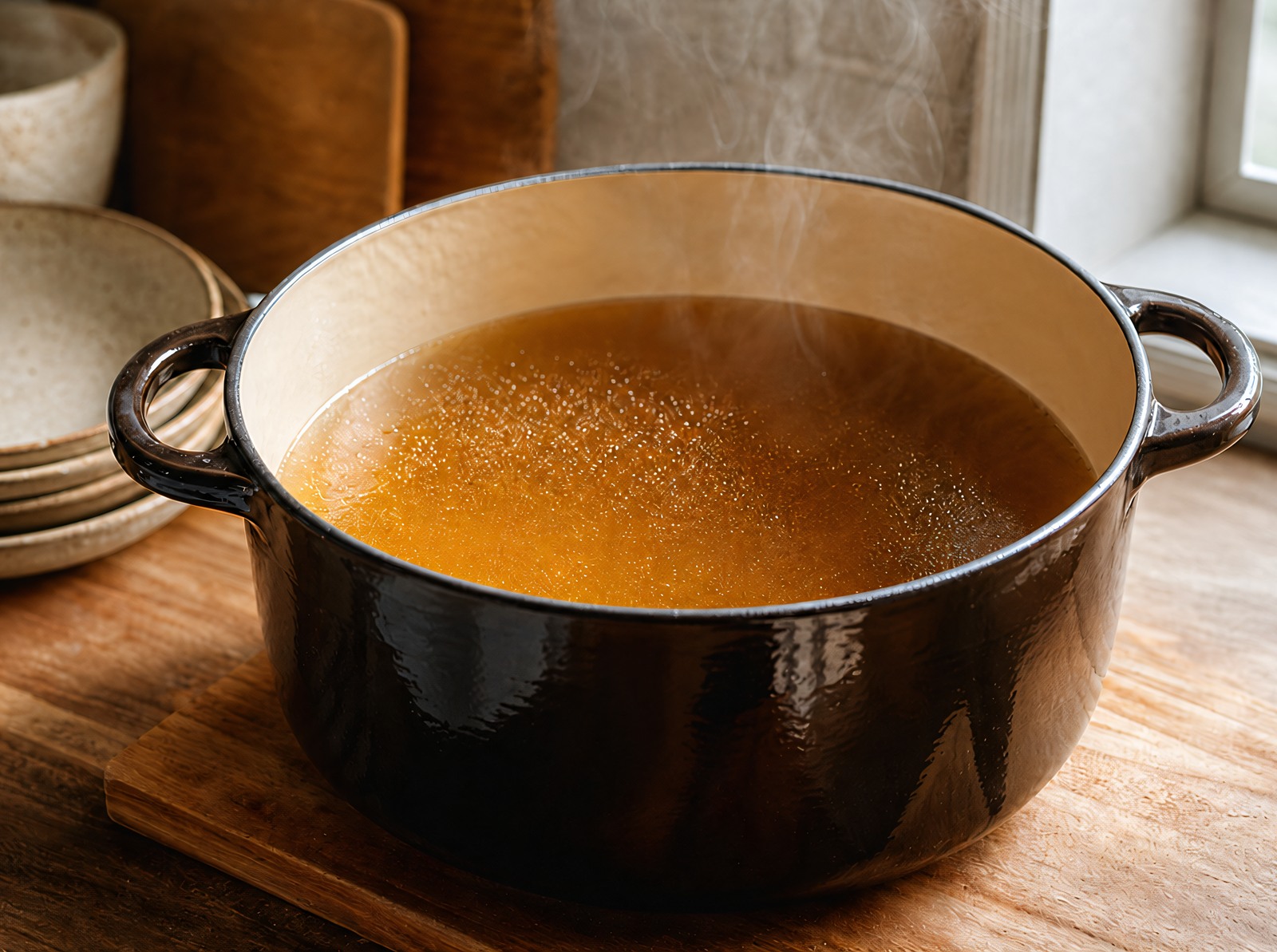
Hold that bare simmer for 6 hours total from the moment the spice sachet went in. Do not stir. Stirring breaks the fat into the broth. Top up with hot water if the level drops below the bones. At the 5-hour mark, add the fish sauce, rock sugar, and salt. Taste. The broth should be savoury first, faintly sweet, with the spice as a back note, not a front note. If it tastes flat, add another 5 ml of fish sauce. If it tastes sharp, another small piece of rock sugar.
Building the Bowl
-
Strain. Lift out the big solids with tongs, then pour the broth through a fine sieve lined with cheesecloth into a clean pot. Keep it hot, just below a simmer.
-
Cook the eye of round or sirloin before slicing: simmer it in a separate saucepan of broth until a thermometer reads at least 63C (145F) in the thickest part, then remove and rest for at least three minutes. This follows USDA guidance for whole beef cuts. Slice thinly across the grain on a clean board. Slice the cooked brisket separately and reheat it if it was refrigerated.
-
Soak the banh pho in warm water for 20 minutes, then drop into boiling water for 30–45 seconds, until just tender. Drain and divide between 6 deep bowls. Add the beef cooked and rested in the preceding step and the hot cooked brisket. Scatter scallion whites and cilantro, then ladle hot broth over them. Pouring broth over raw beef does not establish that the meat has reached a safe internal temperature. Finish with sliced chilli and a wedge of lime on the side.
Small Things That Matter
If your broth turns cloudy despite the parboil, the simmer went too high at some point. The fix is patience next time, not a strainer.
Black cardamom (thao qua) is non-negotiable for northern pho. Green cardamom is a different spice and will throw the flavour toward Indian. Vietnamese and Thai grocers carry it, often in small unmarked bags kept near the star anise.
For a cleaner finish, divide strained broth into shallow containers and refrigerate promptly, within two hours of cooking, or one hour above 32C (90F); do not cool the entire stockpot on the counter. Once chilled, lift off most of the solid fat, leaving a thin layer for flavour. Hanoi cooks generally skip the herb plate. A handful of cilantro and scallion in the bowl is the whole garnish. Thai basil and bean sprouts belong to the southern bowl. Keep refrigerated broth for up to 4 days or freeze for up to 3 months for quality. Bring reheated broth to a rolling boil, following USDA’s soup and leftover guidance.
What to Serve With
In Hanoi, pho is breakfast. It comes alone, with a small plate of quay (Chinese-style fried dough) to tear and dunk, and a glass of hot weak tea on the side. At the end, taste the broth before anything else. It should be salty first, savoury second, sweet only as a whisper. If it leans sweet, more fish sauce next time, a teaspoon at a time. If it leans sharp, a few extra grams of rock sugar. Trust your tongue more than the recipe; that is how every Hanoi cook learned it too.