
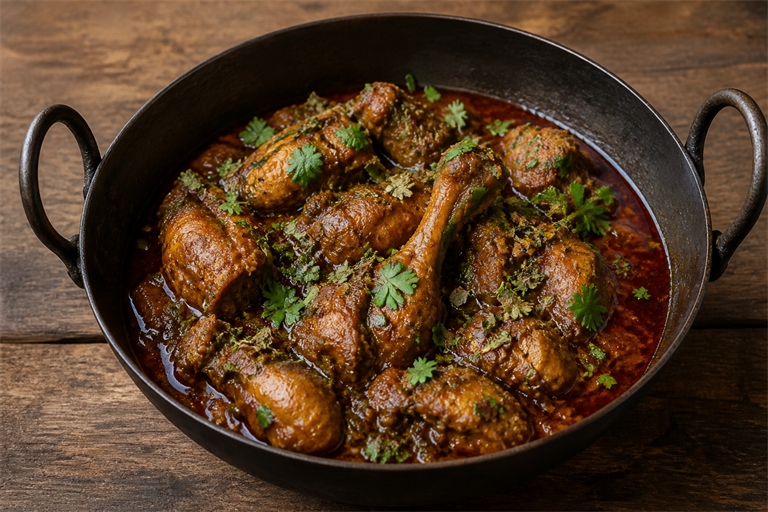
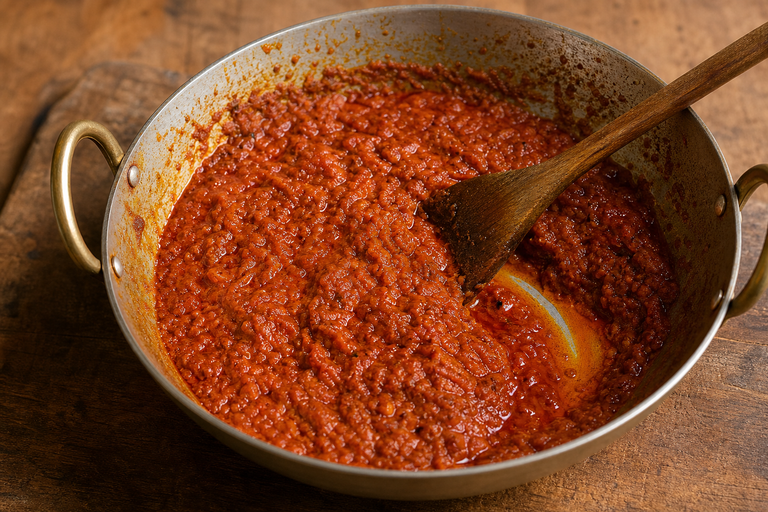
Punjabi chicken curry in the bhuna style lives in one visible cue. A heavy black kadhai on a low flame, masala fried until it looks almost dark at the edges, and then a thin slick of red-orange oil rising to the surface and pooling around the spoon. That is the signal for the chicken to go in. Oil floating clear of the masala is the whole technique in one image.
This is dhaba-style Punjabi chicken curry, the kind you find at truck stops on the GT Road between Amritsar and Delhi. It is built on bhuna, which means slow-frying the masala until the fat separates and the spices turn deep brick-red. No shortcuts. No blender for the onion. Bone-in chicken, whole spices in hot ghee, and patience at the stove.
| Yield | 4 servings |
| Prep time | 20 minutes |
| Cook time | 1 hour |
| Total time | 1 hour 20 minutes |
| Difficulty | Intermediate |
What makes a curry Punjabi
Three things separate a Punjabi chicken curry from a generic “Indian curry.” The first is the bhuna stage, where onion-tomato-ginger-garlic masala is fried in fat until the oil splits and rises. The second is whole spices bloomed in ghee before anything else hits the pan. The third is bone-in chicken, because the marrow thickens the gravy as it simmers.
Skip the bhuna and rush the masala, and the gravy stays watery, the spices taste raw. That single stage is the difference.
Ingredients
For the tadka and masala
- 3 tablespoons ghee (or 2 tbsp ghee + 1 tbsp mustard oil for a sharper, dhaba edge)
- 1 black cardamom pod, lightly cracked
- 4 green cardamom pods
- 1 small cinnamon stick (about 5 cm)
- 4 cloves
- 2 bay leaves
- 1 teaspoon cumin seeds
- 3 medium yellow onions (about 450 g), finely chopped
- 1 tablespoon ginger, finely grated
- 1 tablespoon garlic, finely grated
- 2 green chiles, slit lengthwise
- 4 medium tomatoes (about 500 g), pureed
- 1.5 teaspoons Kashmiri chili powder (for color, not heat)
- 0.5 teaspoon turmeric
- 1.5 teaspoons coriander powder
- 1 teaspoon salt, to start
For the chicken
- 900 g bone-in, skinless chicken, cut into curry pieces (thighs and drumsticks)
- 200 ml hot water (more if needed)
To finish
- 1 teaspoon garam masala
- 1 tablespoon kasuri methi (dried fenugreek leaves), crushed between palms
- 2 tablespoons fresh coriander, chopped
Equipment
A heavy-bottomed kadhai works best, or a 28 cm cast iron skillet with a lid. Thin pans scorch the masala before it browns. Cast iron holds heat steadily, so onions colour evenly rather than in patches, which is why a 28 cm Lodge skillet suits this style of curry.
Instructions
-
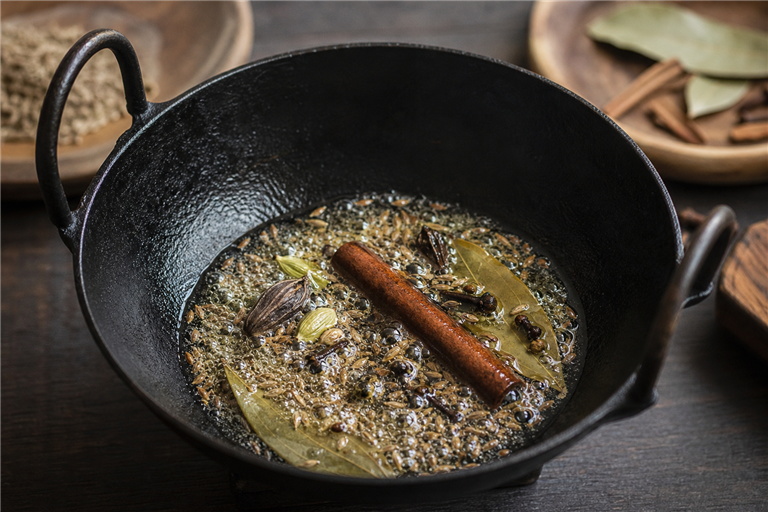
Heat the ghee in your kadhai over medium heat until it shimmers, about 1 minute. Add the black cardamom, green cardamom, cinnamon, cloves, bay leaves, and cumin. The cumin will crackle within 15 seconds. This is the tadka, and it perfumes the fat that everything else cooks in. If the spices go dark brown, the fat is too hot. Pull the pan off and start again.
-
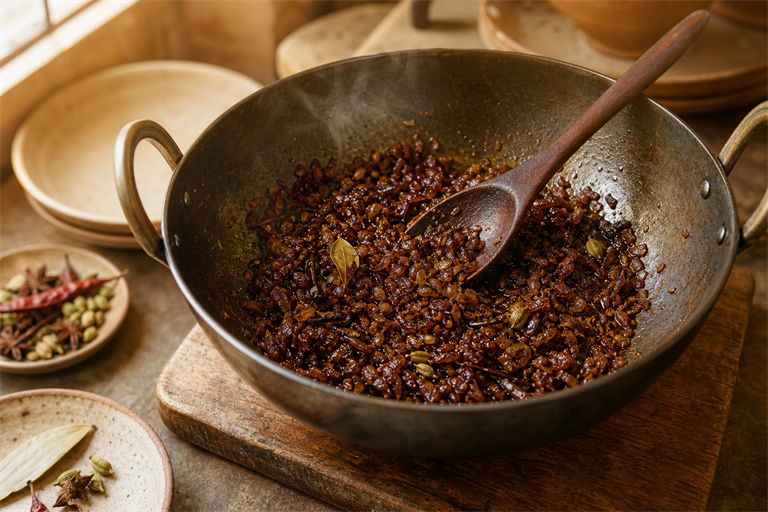
Add the chopped onions and a pinch of salt. Stir, then lower heat to medium-low. Fry 18–22 minutes, stirring every couple of minutes, until the onions go from translucent to gold to deep mahogany brown. This stage cannot be rushed. Pale onions mean a pale curry.
-
Add the ginger, garlic, and slit green chiles. Stir for 90 seconds, until the raw smell of the garlic disappears.
-
Stir in the Kashmiri chili, turmeric, and coriander powder. Fry the dry spices for 30 seconds in the hot fat, then immediately add the tomato puree before they scorch. Add the remaining salt.
-
Now the bhuna begins. Simmer the masala over medium-low heat for 15–18 minutes, stirring often, scraping the base. The mixture will start watery, then thicken, then darken from bright red to brick-red. When you push it to one side of the pan, a clear slick of orange oil should pool away from the masala. That is the doneness cue.
-
Add the chicken pieces. Turn the heat up to medium. Sear and stir for 6–8 minutes, coating every piece in the masala until the chicken turns opaque on the outside and the masala clings tight.
-
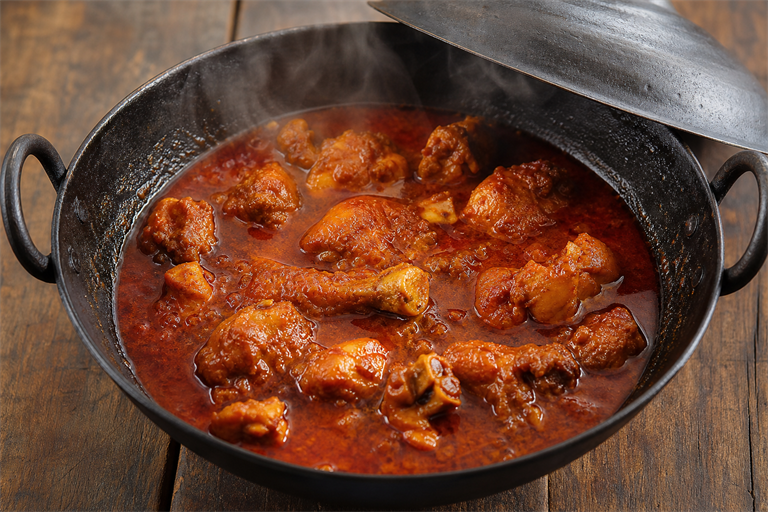
Pour in the hot water, stir, scrape the base, and bring to a gentle boil. Cover, lower heat, and simmer about 25–30 minutes, stirring once at the halfway mark. Check the thickest meat in several pieces with a food thermometer, avoiding bone, and continue cooking until each checked piece reaches at least 165F (74C), following USDA poultry guidance. Meat pulling from the bone and gravy coating a spoon are texture cues, not safety tests.
-
Sprinkle the garam masala and crushed kasuri methi over the curry. Stir, cover, and switch off the heat. Rest 10 minutes before serving. The methi rounds the spice and the resting time lets the fat rise again.
If something goes wrong
A watery gravy almost always means the bhuna was cut short. If yours looks thin at step 7, uncover and reduce on medium for 5–7 minutes.
Raw-tasting masala means the tomato stage was rushed. The oil separation cue at step 5 is not optional, it is the test.
Bitter spices come from a tadka that went too dark. Cumin should be golden brown, never black.
Mustard oil gives the dhaba edge. If you use it, heat it until it just starts to smoke, then lower the flame before adding the whole spices.
For next-day curry, divide leftovers into shallow containers and refrigerate within two hours, or one hour above 90F (32C). Keep for up to 3 days and reheat the chicken and sauce to 165F (74C) throughout. See USDA’s leftover guidance.
What to serve with it
At home in Punjab this goes with hot tandoori roti or a stack of phulkas, a wedge of raw onion soaked in vinegar, and a small bowl of plain yogurt. On a Sunday with the family, jeera rice on the side, and a glass of sweet lassi if it is summer.