
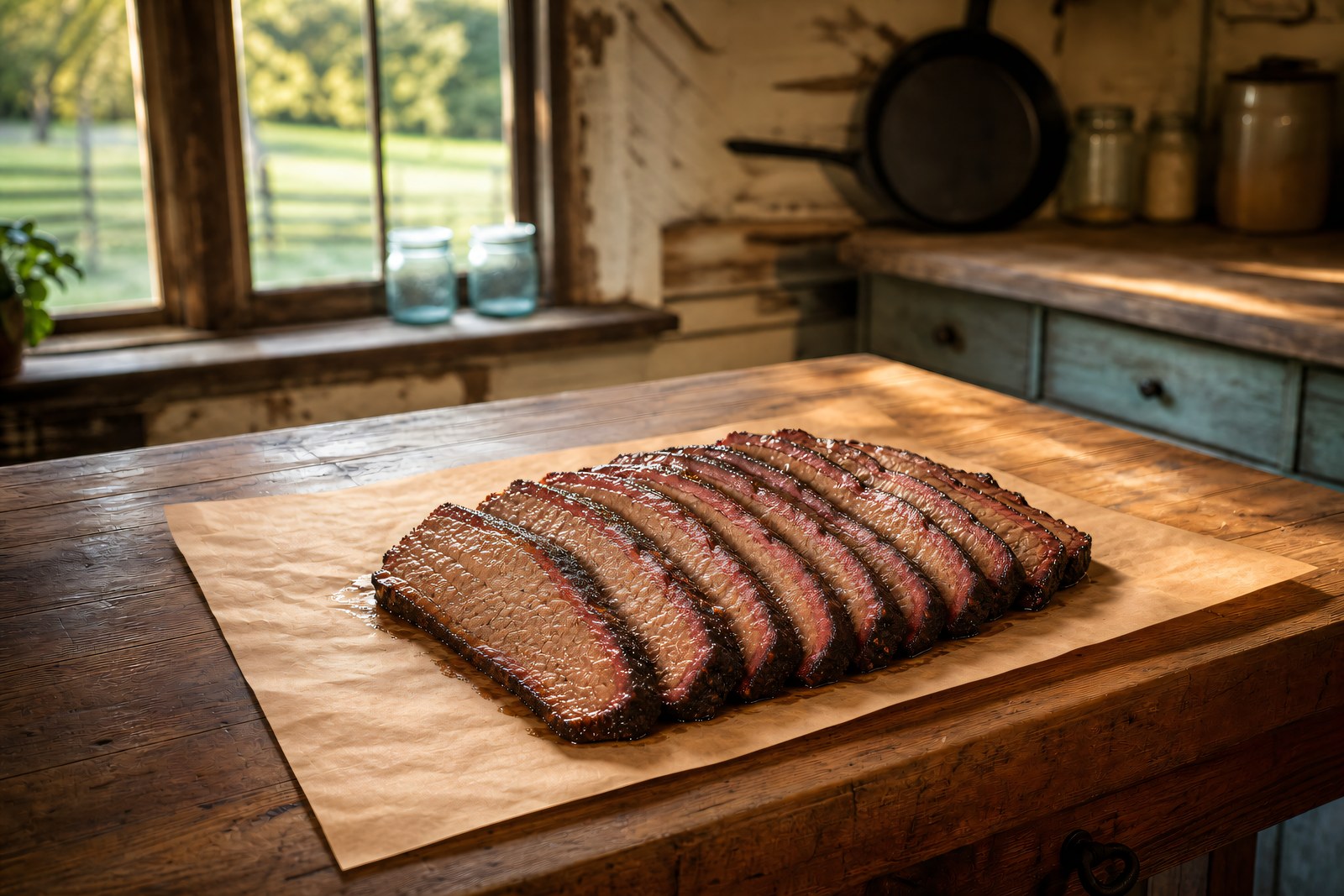

A Central Texas brisket runs on salt, pepper, and post oak smoke: roughly twelve hours from lighting the fire to the first slice on a 12-pound packer. Look for a flat that bends just enough to crack the bark without breaking it. That bend is the thing.
The reference cook below runs on a 22-inch offset with a Snake River Farms American Wagyu packer trimmed to about 10 pounds, pulled at an internal of 204F (95C) and rested four hours in a dry cooler. That cook is the playbook below.
| Yield | 8–10 servings |
| Prep time | 45 minutes |
| Cook time | 11 hours |
| Total time | 15 hours 45 minutes (includes a 4-hour rest) |
| Difficulty | Advanced |
Ingredients
- 1 whole packer brisket, 10–12 lb (4.5–5.5 kg), Choice or Prime grade
- 3 tablespoons coarse kosher salt (Diamond Crystal, or 2 tablespoons Morton)
- 3 tablespoons 16-mesh coarse black pepper
- 1 tablespoon granulated garlic (optional, for a Texas-leaning rub still called dalmatian)
- 2 tablespoons yellow mustard or hot sauce, as a binder
- 4–6 fist-sized chunks of post oak (hickory works; see step 3)
- Pink butcher paper, unwaxed, one full roll
Equipment
- Offset, pellet, or kettle smoker that holds 225F (107C) steady
- Two instant-read or leave-in probes (one for grate temp, one for meat)
- Sharp 6-inch boning knife and a 10-inch slicer
- Dry cooler or warming oven that holds 150F (65C)
Point, flat, and why this cut fights you
A packer has two muscles. The flat is lean and stacks neatly in slices. The point is fatty, marbled with collagen, and is what burnt ends are made from. They cook at different rates, which is why a brisket is not done at a single number. The flat wants probe-tender around 203F (95C). The point gets there sooner and forgives you longer. Cook the whole packer together, then read each muscle separately at the end.
Instructions
-
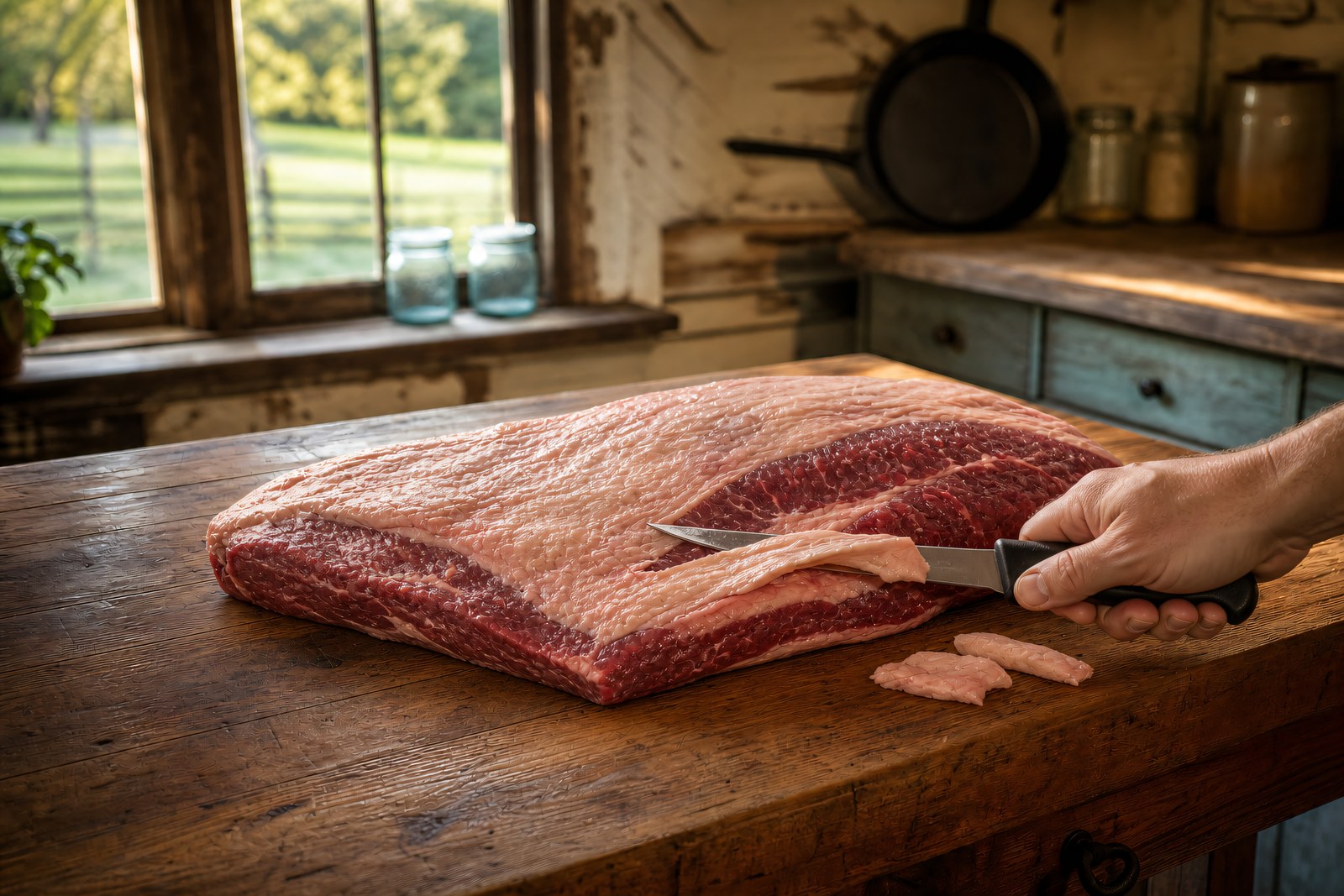
Trim the brisket cold, straight from the fridge. Leave a quarter inch (6 mm) of fat cap on top. Carve off the hard, waxy fat between the point and flat, and square off the thin edges of the flat so they do not burn. A cold brisket trims clean; a warm one tears.
-
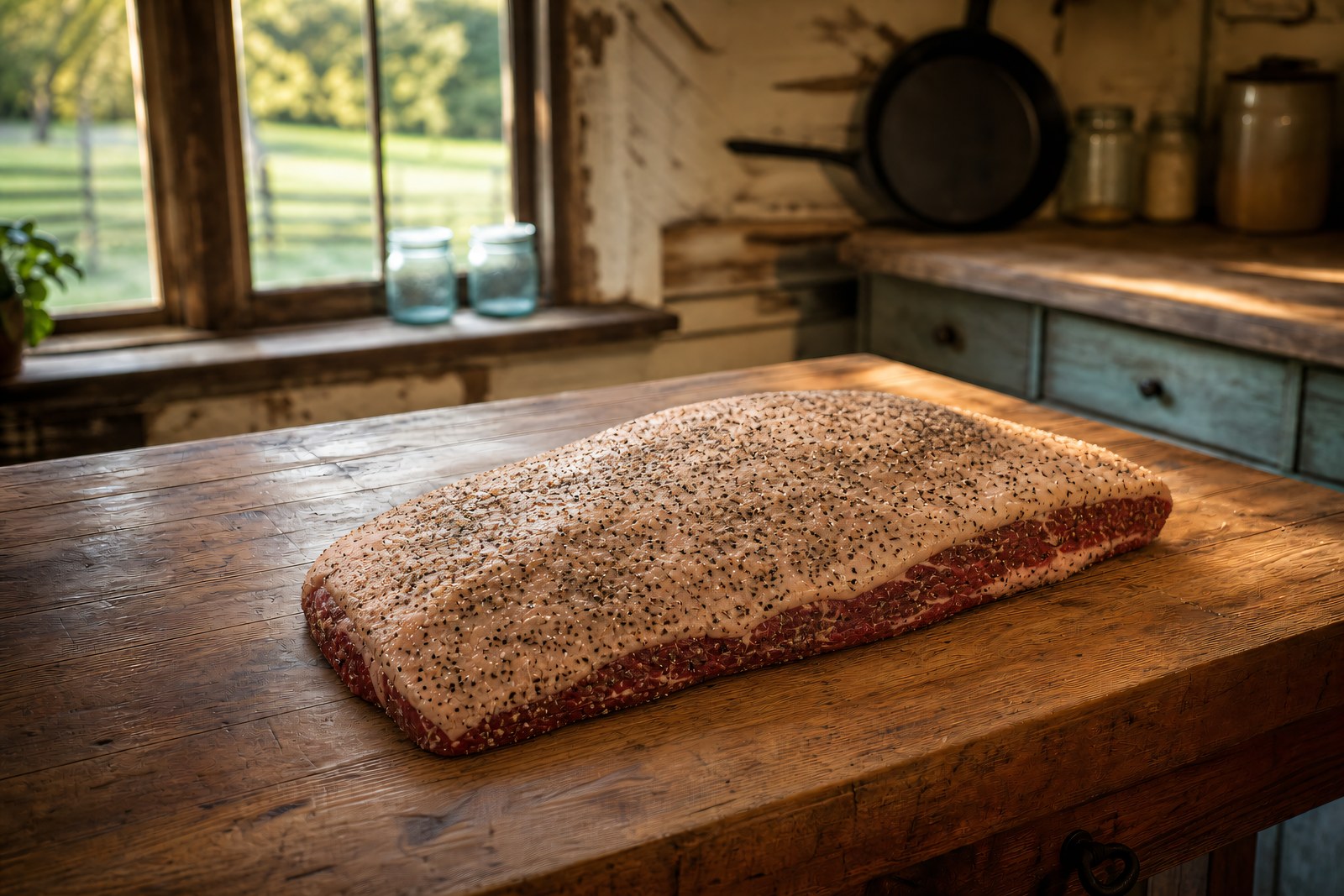
Mix the salt, pepper, and garlic in a bowl. Smear the brisket with mustard as a binder, then coat every surface with the rub, pressing it in. Use roughly 1 teaspoon of mixed rub per pound. Let it sit on the counter 30–45 minutes while the smoker comes up to temperature. The salt starts working, and a tacky pellicle forms that grabs smoke.
-
Bring the smoker to a steady 225F (107C) measured at the grate, not the dome. On an offset, build a small clean fire with seasoned post oak. On a pellet, set 225F and load post oak or hickory pellets. Post oak gives the classic Central Texas smoke, mild and a touch sweet. Hickory is louder and can push bitter if your fire smolders. You want thin blue smoke, never white.
-
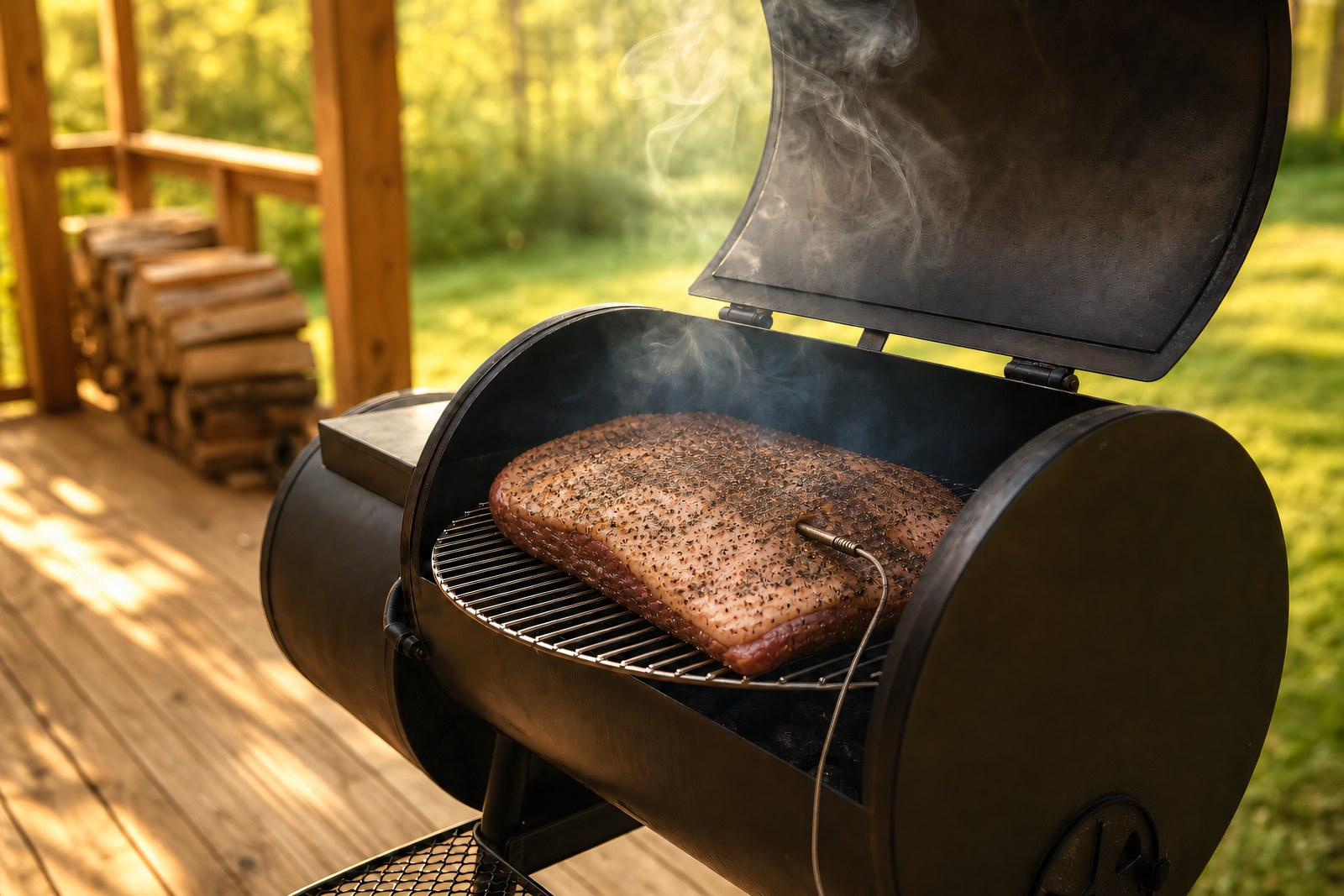
Place the brisket fat side up if your heat comes from below (most pellets, kettles), fat side down on a stick-burning offset where the fire box radiates from the side. Insert a probe into the thickest part of the flat. Close the lid and leave it alone for 4 hours.
-
Spritz every hour after the 2-hour mark with a 50/50 mix of water and apple cider vinegar. Spritzing cools the surface, which slows bark formation and stretches the smoke window. Skip it and your bark sets hard and dark by hour 5. Do it too much and the bark turns soft.
-
Around an internal of 165F (74C), the stall hits. The meat sweats, evaporation cools it, and the temperature parks for 2–4 hours. This is where first-timers panic. You have two choices: ride it out naked for a darker, crustier bark, or wrap. For a first cook, wrap.
-
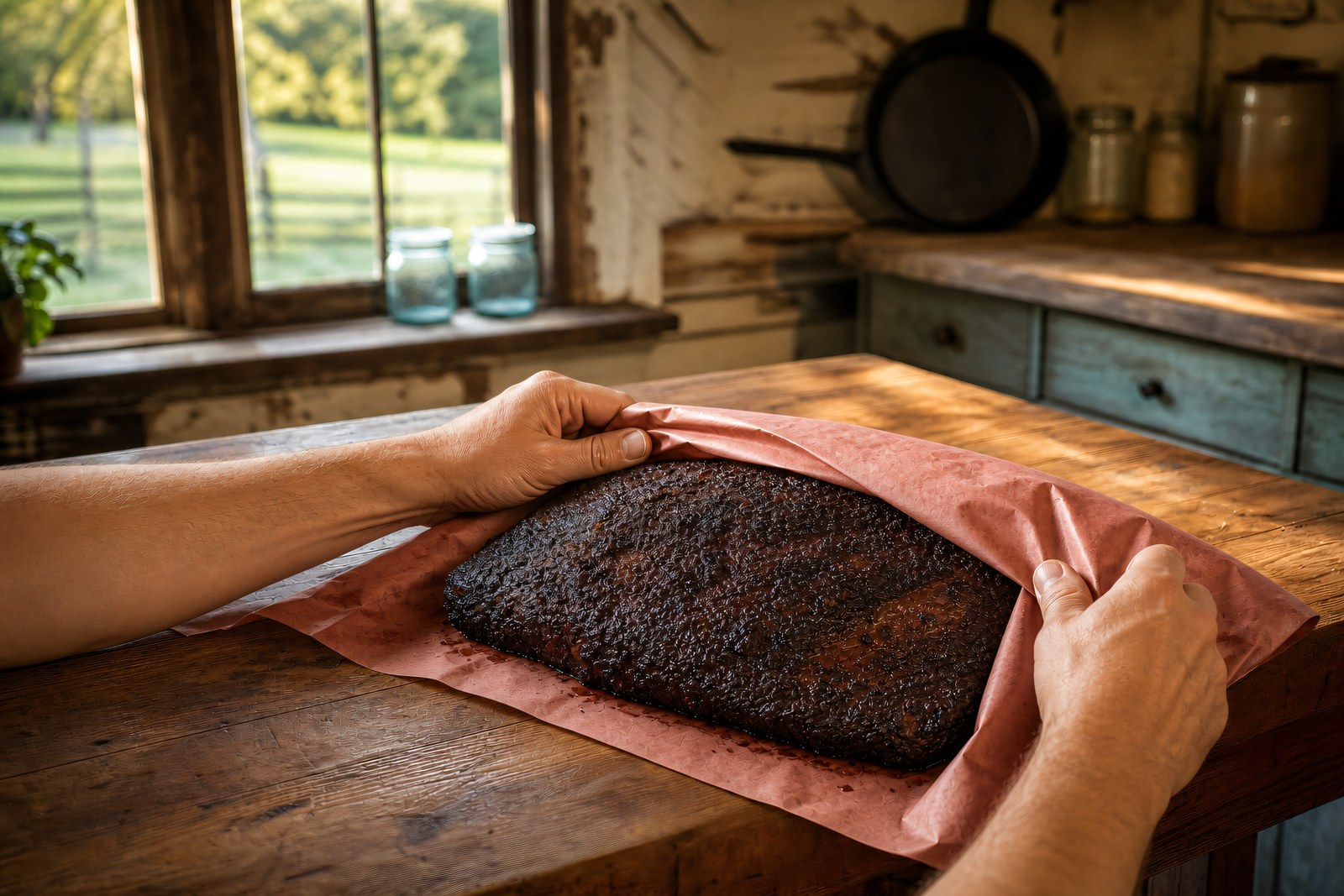
Lay out two long sheets of pink butcher paper, overlapped. Place the brisket in the middle, fold tight like a burrito with the seams underneath. Paper breathes; foil steams. A foil wrap (the Texas crutch) finishes 45 minutes faster but softens the bark to pot-roast territory. Return to the smoker, probe back in.
-
Start checking for doneness at an internal of 200F (93C). Slide the probe into the thickest part of the flat in three or four spots. It should go in like a warm knife into soft butter, almost no resistance. The reference cook above reached that feel at 204F (95C). Numbers are a guide; feel is the answer.
-
Rest the wrapped brisket in a dry cooler lined with a towel, or in an oven set to 150F (65C), for a minimum of 2 hours and ideally 4. The internal will coast down from 200F (93C) to about 160F (71C). Resting is where the juices set and the connective tissue finishes turning to gelatin. Slice too early and it bleeds out on the board.
-
Unwrap on a cutting board. Separate the point from the flat along the seam of fat. Slice the flat against the grain in pencil-thick pieces. Turn the point 90 degrees (the grain runs perpendicular) and slice it thicker, or cube it for burnt ends.
When the brisket fights back
A tough flat almost always means you pulled it early. Put it back, wrapped, until the probe slides clean. A mushy point is usually the opposite: held too long in the cambro, or wrapped in foil during a hot stall. Bitter bark is a fire problem, not a rub problem. White, billowing smoke from green wood or a choked fire lays down creosote. Open the vents, burn smaller logs, aim for thin blue.
A few practical notes
Choice grade works just fine. Prime and Wagyu have more intramuscular fat and forgive longer holds. A pellet smoker runs cleaner but lays down less smoke flavor; a smoke tube with post oak pellets for the first 3 hours helps close the gap. Leftover brisket reheats best sliced, sealed in a bag with a splash of beef tallow, and held in a 150F (65C) water bath for an hour. The smoke ring is a chemistry trick from nitrogen dioxide, not a flavor marker. Pretty, but not the goal. If the fire keeps dipping below 225F (107C), the coal bed is thin. Add a small split, crack the intake, wait five minutes before judging.
What to serve with it
White bread, dill pickles, sliced raw onion, and a cup of beans on the side. That is the Central Texas plate, and nothing else is needed. A cold beer, maybe a sweet tea if it is early. Let the brisket sit on the butcher paper at the table for the first ten minutes before anyone reaches for it, the way the pitmasters at Snow’s in Lexington do on a Saturday morning.