
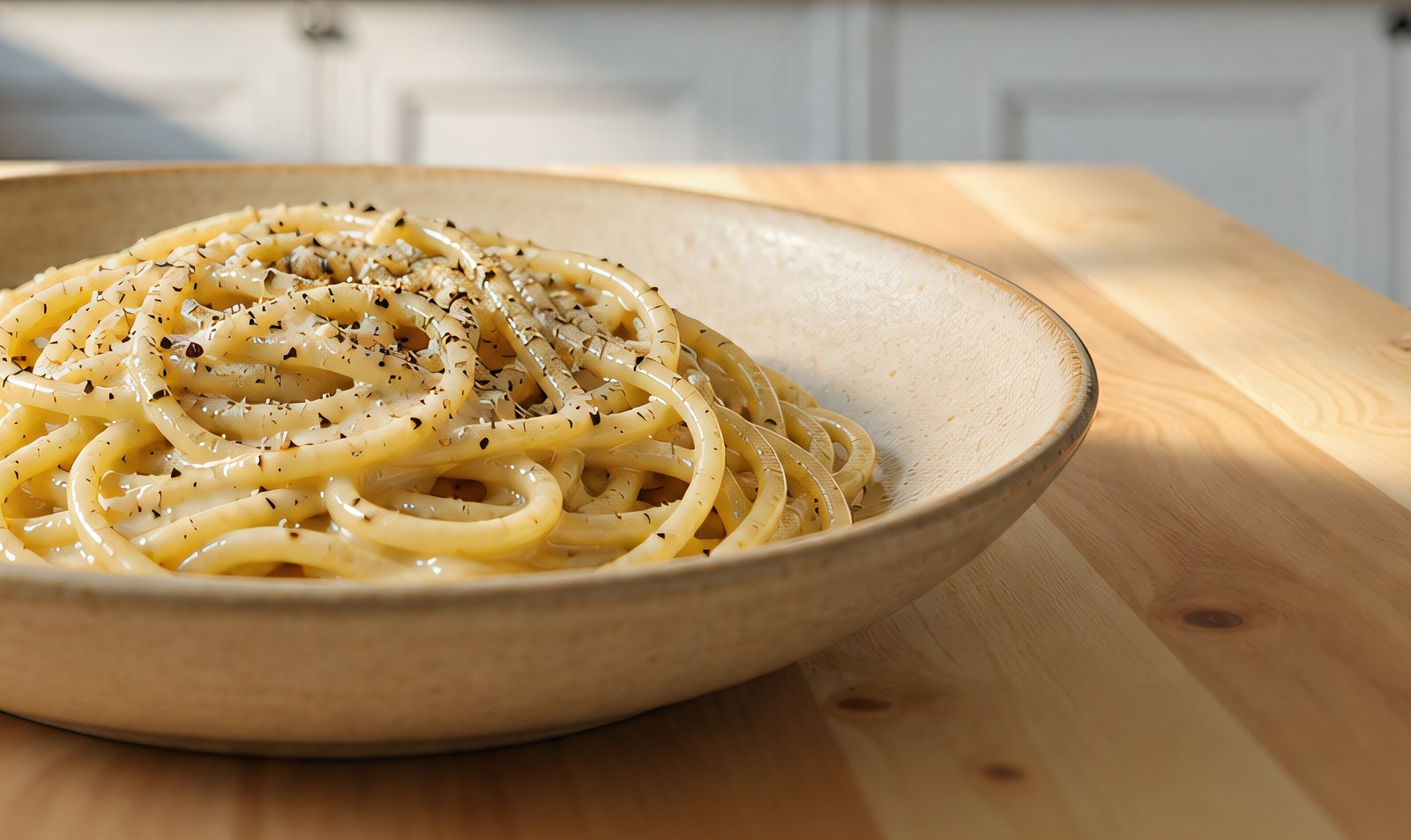
A deep bowl of tonnarelli arrives glossy with pecorino in Testaccio, the sauce folding into the hot pasta like silk. Crushed black pepper and warm sheep cheese set the aroma; the pasta should look glossy, never grainy.
The instincts used for Bologna-style ragù do not solve this sauce. Cacio e pepe needs a cooler pan, starch-rich water, and cheese added away from direct heat.
This version follows the Lazio combination of pasta, Pecorino Romano, and black pepper. Heat is the point most likely to cause trouble. Pecorino is a protein-heavy cheese; boiling water or a hot pan tightens it into the grainy clumps left at the bottom of the bowl. Brunelli Pecorino Romano DOP and De Cecco bronze-die tonnarelli fit the quantities below, but the texture cues are more useful than the brand names.
| Yield | 2 servings |
| Prep time | 10 minutes |
| Cook time | 12 minutes |
| Total time | 22 minutes |
| Difficulty | Intermediate |
Ingredients
- 200 g tonnarelli or bronze-die spaghetti
- 150 g Pecorino Romano DOP, finely grated on the small holes of a box grater
- 2 teaspoons whole black peppercorns (Tellicherry if you can find them)
- 6 g fine sea salt for the pasta water
- 60 ml cold water for the cheese paste
What you need at the stove
- A wide stainless or carbon steel skillet (not non-stick, so you can see what the sauce is doing)
- A heavy box grater
- A mortar and pestle, or the bottom of a heavy pan for cracking pepper
- A small mixing bowl, tongs, and a ladle
The method, step by step
-
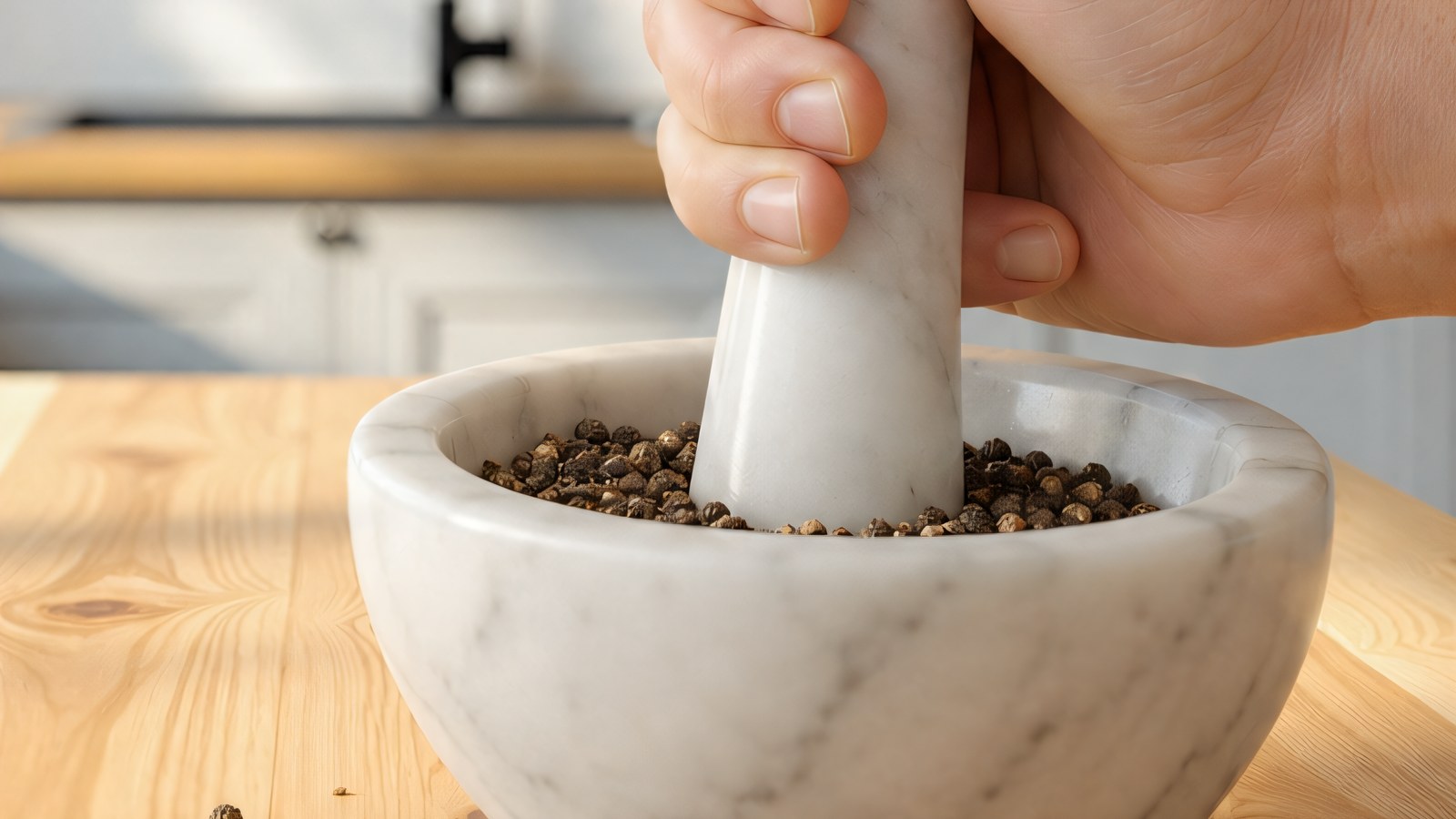
Toast the 2 teaspoons of peppercorns in a dry skillet over medium-low heat for 60 to 90 seconds, until they smell sharp and floral. Crush them coarsely in a mortar. Coarse means visible cracked pieces, not powder. Fine pepper turns the sauce muddy and bitter.
-
Bring 1.2 litres of water to a gentle boil and add only 6 g of salt. Less water and less salt means starchier, less salty cooking water. That starch is what binds the cheese and water into an emulsion later.
-
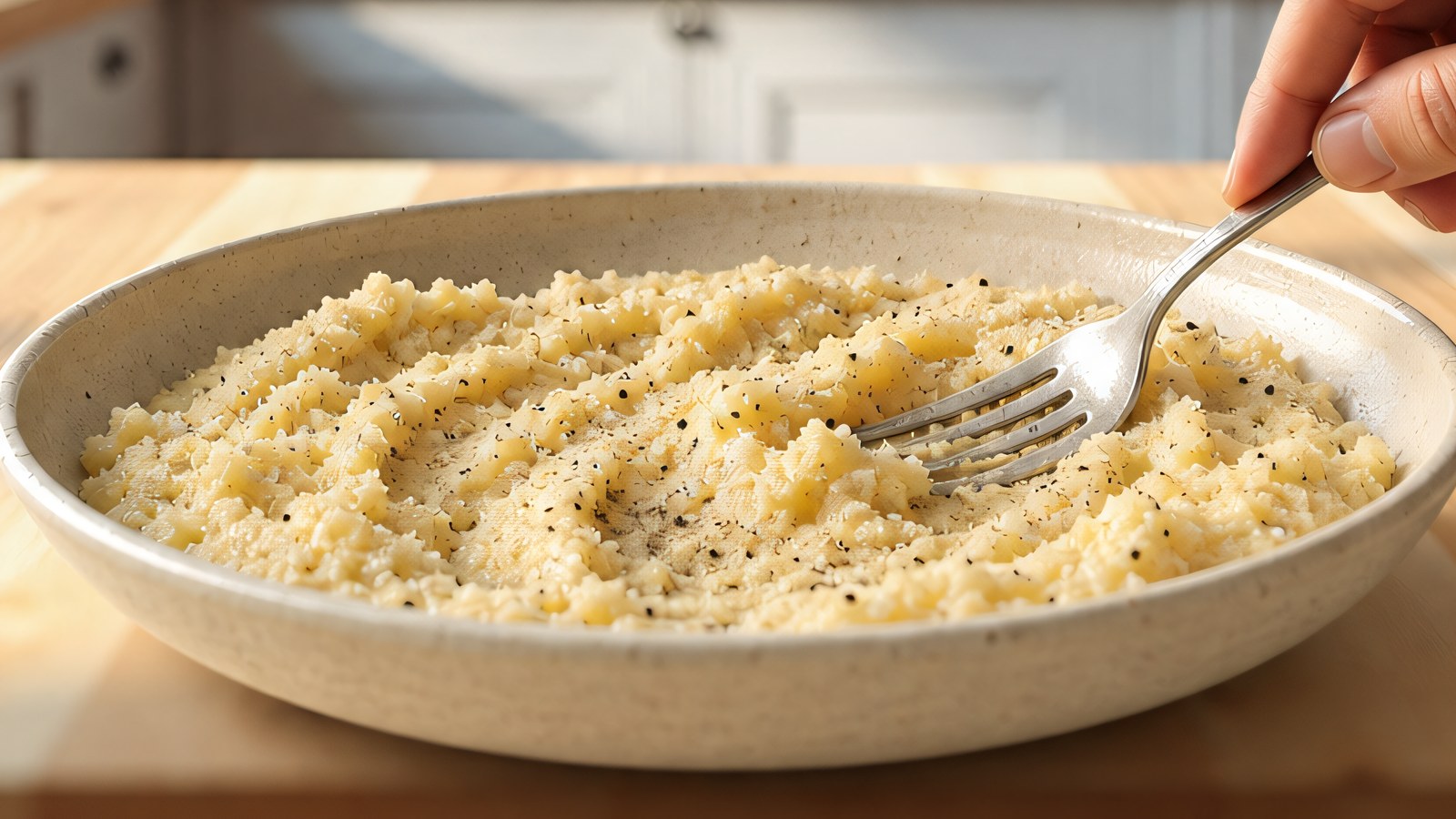
Grate the 150 g of pecorino into a wide bowl. Add 60 ml of cold water and most of the cracked pepper. Stir with a fork into a thick, sandy paste the texture of wet sand. Cold-hydrated cheese will not seize when it meets hot pasta. This is the single biggest fix for clumping.
-
Drop the pasta in and cook two minutes shy of the package time. For tonnarelli labelled 7 to 8 minutes, pull at 5 to 6. The pasta will finish in the pan and shed more starch as it does.
-
Two minutes before the pasta is done, ladle 250 ml of the cooking water into the wide skillet over medium heat. Reduce by about a third. You want a thick, faintly cloudy liquid the colour of weak tea, with visible streaks when you tilt the pan.
-
Lift the pasta into the skillet with tongs, dragging a little extra cooking water with it. Toss for 30 seconds over the heat until the strands are glossy. Now slide the pan off the burner and wait 30 seconds. The pan must drop below roughly 160F (70C) before the cheese goes in. Any hotter, and the casein proteins tighten into curds.
-
Add the pecorino paste in three additions, tossing constantly with tongs between each. Loosen with a splash of reserved starch water if it tightens. The sauce shifts from rough to silky in about a minute as the cheese melts into the starch.
-
Plate into warm bowls and finish with the remaining cracked pepper. The sauce keeps thickening as it sits, so serve it slightly looser than you want it to end up.
When the sauce goes wrong
If the sauce breaks into a grainy mess, the pan was too hot when the cheese went in. Pull it off the heat, add 30 ml of cold water, and whisk hard for 20 seconds. Cold shock pulls the emulsion back together more often than not.
Pecorino Romano DOP only. Supermarket pecorino is often a softer, milder sheep cheese that will not give the right sharp bite. No Parmigiano, no grana, no mix.
Some Roman cooks drop a single ice cube into the pan at the off-heat stage. The cold shock encourages the emulsion. Try it if step 6 keeps failing on you.
A Microplane grates pecorino too fine. It clumps before it can hydrate. Stay on the small holes of a box grater.
This dish keeps for nothing. Eat within five minutes of plating.
What to put next to it
A glass of cold Frascati Superiore from the Castelli Romani, and a plate of puntarelle in anchovy dressing on the side if it is winter. In Rome this is a Thursday first course, after gnocchi day. Bread on the table, never on the pasta.
The contrast with butter-rich risotto is useful: cacio e pepe needs no cream, only pecorino, pepper, starchy water, and patience.