
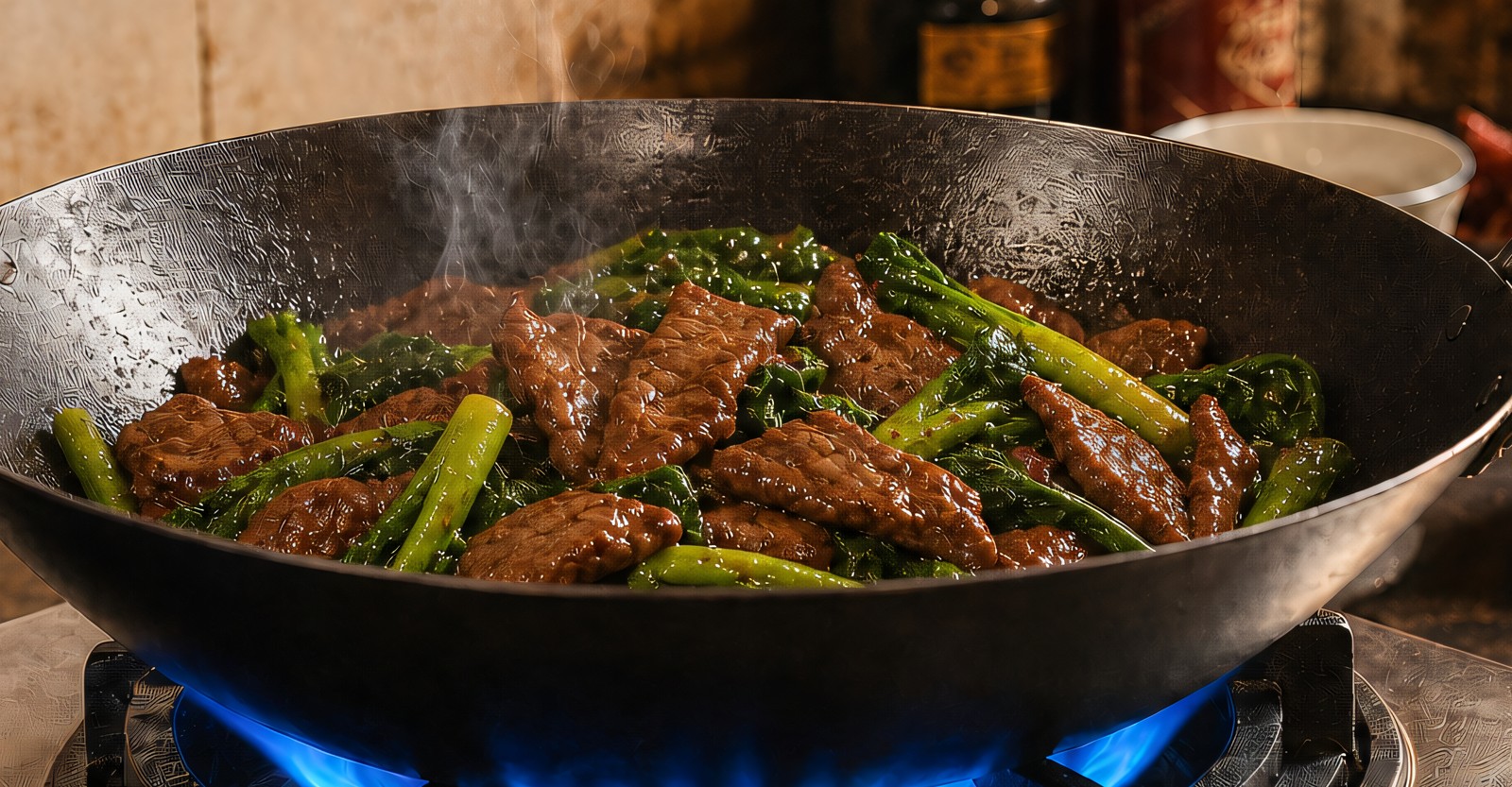
Two woks move over a roaring jet flame at a noodle and stir-fry counter in Sham Shui Po. Within five seconds, the air smells of toasted scallion oil and the beef takes on a faintly scorched, almost smoky perfume. That aroma is wok hei (鑊氣), the breath of the wok. At home, the practical goal is to keep the pan hot enough that the food sears instead of steaming.
A domestic burner can get close. Not identical, but close enough for the kitchen to smell right and the beef to taste seared rather than stewed. Use the timings below as a drill for a 15,000 BTU gas hob and a 14-inch carbon steel wok; the visual and aromatic cues matter more than the address of the cookware shop.
| Yield | 2 servings (one wok load) |
| Prep time | 20 minutes |
| Cook time | 6 minutes active |
| Total time | 26 minutes |
| Difficulty | Intermediate |
What wok hei actually is, and why your stove fights you
Wok hei is two things stacked. First, hard Maillard browning on protein and aromatics from metal hotter than 260C (500F). Second, a fine aerosol of oil that flashes off the wok wall, ignites briefly in the flame, and re-lands on the food as scorched-aroma compounds. A commercial jet ring pushes 100,000 to 130,000 BTU. A good home gas hob gives you maybe 12,000 to 18,000 BTU. The deficit is real.
So you stop trying to brute-force it. You preheat longer, cook smaller, and borrow heat from a torch or a dry pan at the end.
Gear: a carbon steel wok and a burner you respect
Buy a 14-inch (35 cm) carbon steel wok with a flat-ish bottom if your hob is gas, a rounded bottom if you cook on a portable single-ring wok burner. Skip nonstick. Skip stainless. Carbon steel is light, takes heat fast, and seasons into a near-black patina that releases food cleanly.
To season a new wok: scrub the factory oil off with hot water and steel wool, dry on the flame until straw-coloured, then rub a thin film of grapeseed oil over the inside with a paper towel and heat until it just stops smoking. Repeat four times. The wok will look mottled brown-black. That is correct.
If you cook on induction, get a flat-bottomed wok rated for induction and set the hob to its highest setting for a full 4 minutes before any oil. Electric coil burners are the hardest; consider a single-burner butane wok stove (around 12,000 BTU) for £30 to £50. It changes everything.
The preheat protocol and the rule of small batches
This is the step home cooks rush.
-
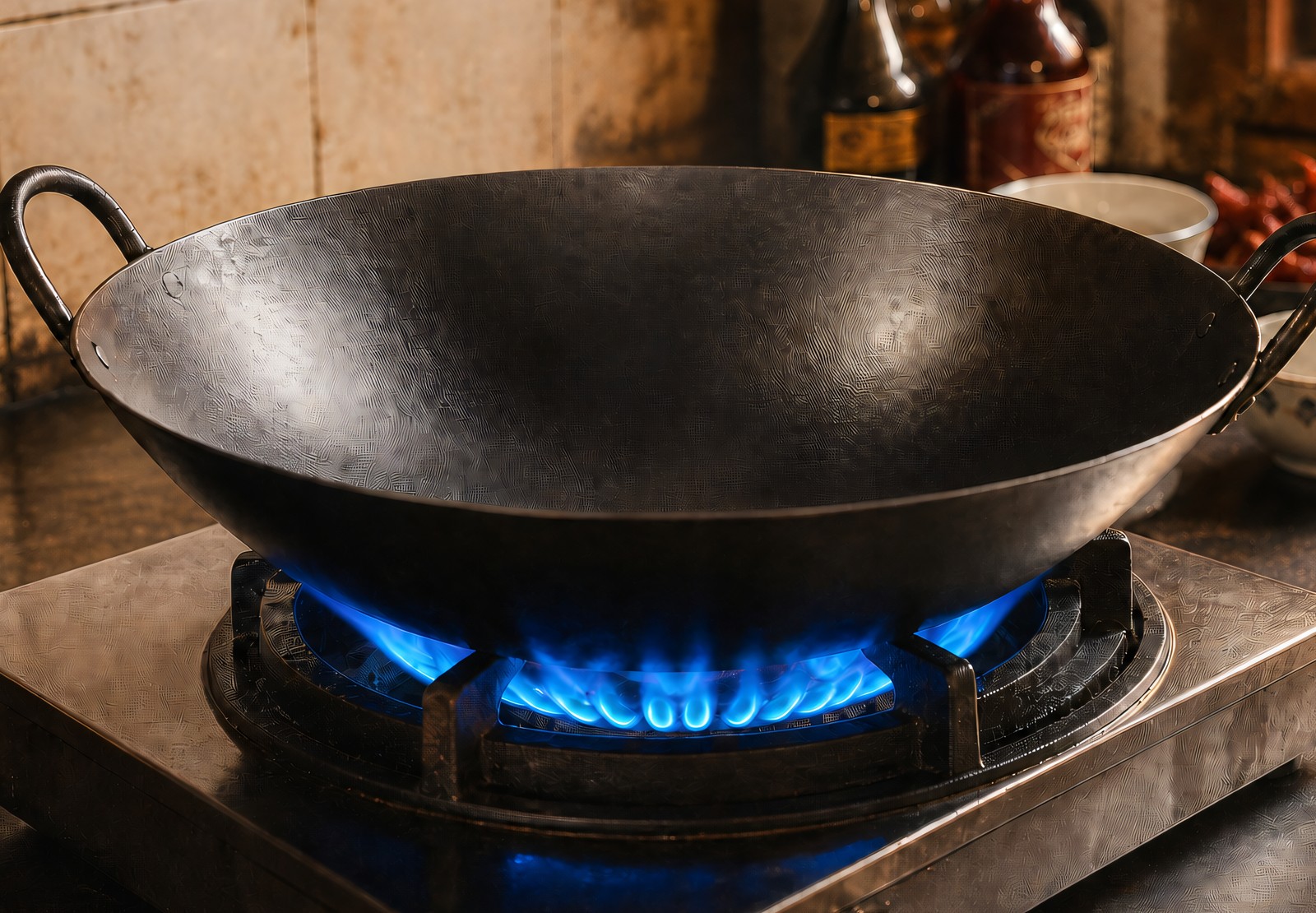
Set the burner to maximum. Place the dry empty wok on the flame and wait 3 to 4 minutes. Flick a drop of water in. If it skitters and evaporates in under a second, you are ready. If it pools, wait longer.
-
Add 1 tablespoon (15 ml) of a high smoke point oil (peanut, rice bran, or refined sunflower). Swirl it up the sides for 5 seconds. The oil should shimmer and just begin to smoke. That faint smoke is the signal to add aromatics.
-
Cook in batches of no more than 250 g of protein and 200 g of vegetables per round. More than that and the wok drops below 200C (390F) and you are now braising. Two small rounds beat one crowded round every time.
-
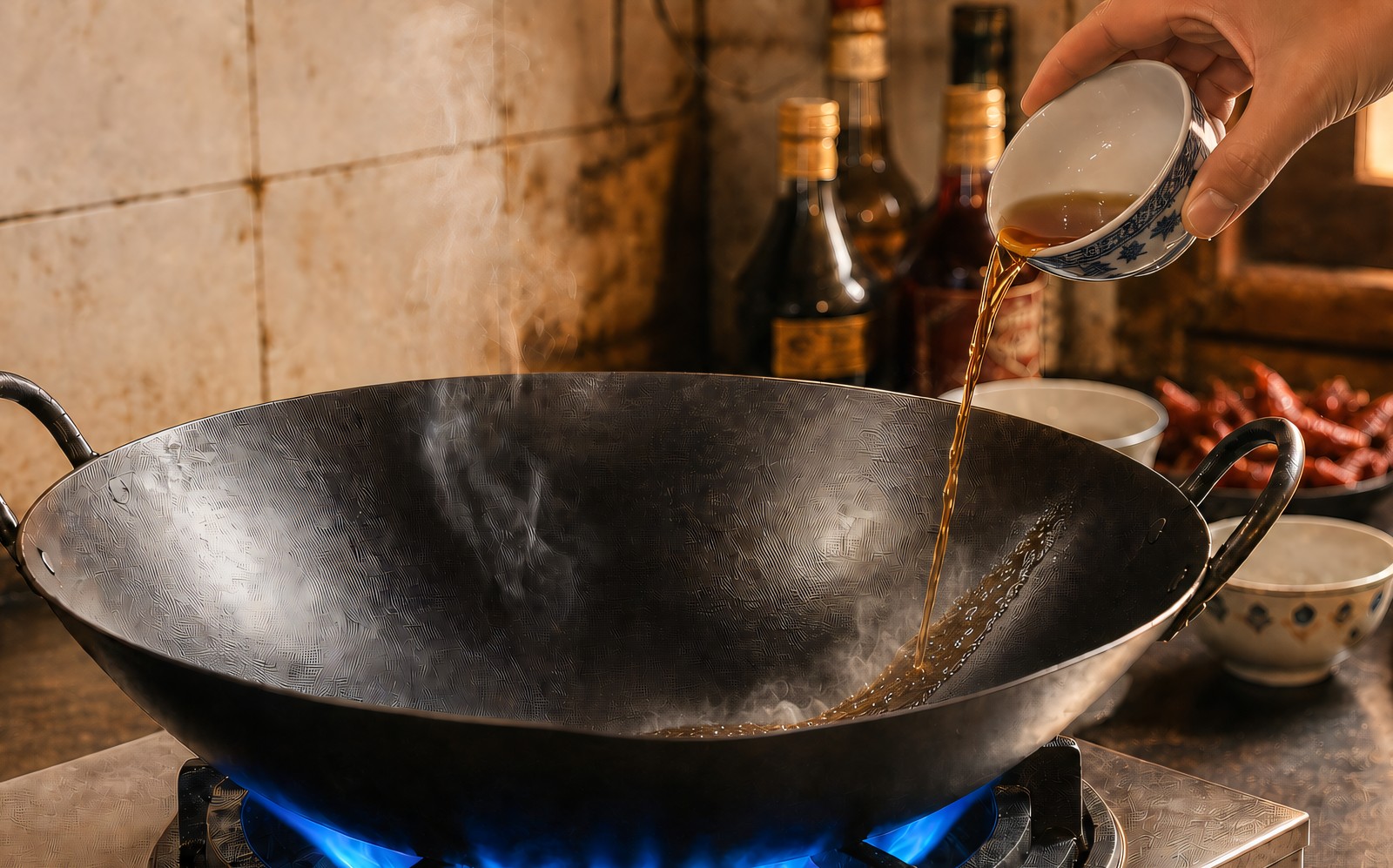
Sequence ingredients by required heat: aromatics (garlic, ginger, scallion whites) for 15 seconds, then protein spread in a single layer for 30 seconds undisturbed to sear, then toss for another 60 to 90 seconds. Add the firm vegetable, then 1 tablespoon of Shaoxing wine down the hot side of the wok. It hisses and vaporises. That hiss is half the aroma you came for.
Faking the flame without burning the kitchen down
If your hob simply cannot get the wok hot enough, two tricks help.
A small kitchen blowtorch (the kind used for crème brûlée) held 10 cm above the finished stir-fry for 8 to 12 seconds, moving in slow circles, scorches the surface oil and produces an unmistakable smoky note. Do this with the extractor fan on full.
The dry-pan re-sear works too. Tip the cooked stir-fry onto a plate, wipe the wok, reheat it dry for 90 seconds until almost smoking, then return the food for a final 20-second toss with no extra oil. The residual oil on the food flashes against the bare hot metal. Expect a gentler result than the torch finish—roughly seventy percent of its smoky edge—but still enough to lift the aroma.
A practice recipe: beef and gai lan
Use beef and gai lan as the practice dish. The whole cook is under 6 minutes once the wok is hot, so every ingredient needs to be cut, measured, and within reach. To see how heat, salt, sour, and aromatic notes line up, the four-axis approach to Southeast Asian flavour provides a useful tasting framework.
Ingredients
For the beef
- 250 g flank or sirloin, sliced 3 mm thick against the grain
- 1 teaspoon light soy sauce
- 1 teaspoon Shaoxing wine
- 1 teaspoon cornstarch
- 1 teaspoon water
- 1 teaspoon peanut oil
For the stir-fry
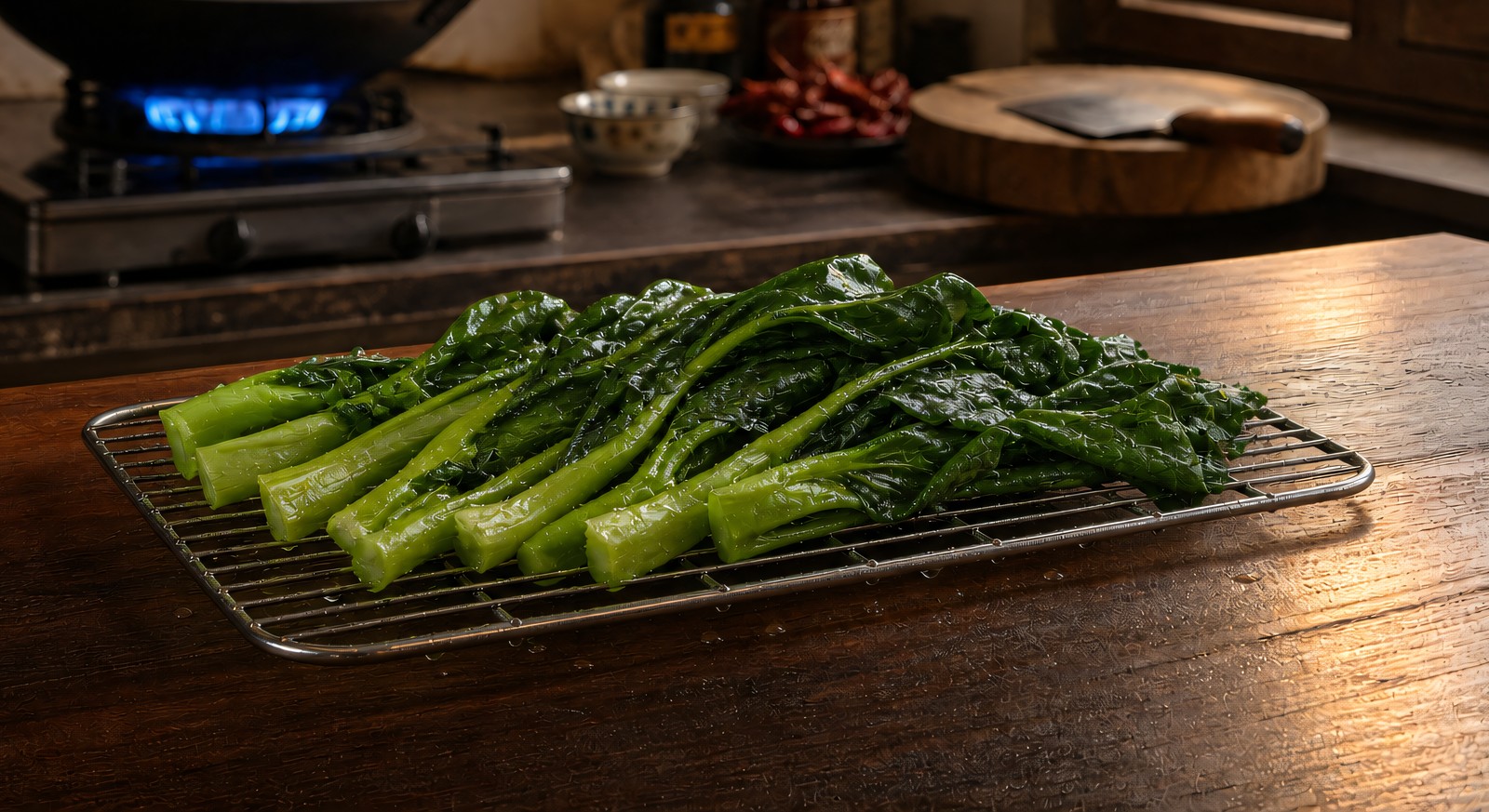
- 200 g gai lan (Chinese broccoli), stalks split lengthwise, leaves left whole
- 2 tablespoons peanut oil
- 3 garlic cloves, smashed
- 2 thin coins of ginger
- 1 tablespoon Shaoxing wine (for the wok wall)
- 1 tablespoon oyster sauce
- 1 teaspoon light soy sauce
- 1/2 teaspoon sugar
- 2 tablespoons water or unsalted stock
Equipment
- 14-inch carbon steel wok
- Long-handled wok spatula (wok chan)
- Small kitchen blowtorch (optional, for the finish)
Instructions
-
Mix the beef with soy, Shaoxing, cornstarch, water, and oil. Rest 15 minutes at room temperature. The cornstarch slurry protects the surface and lets it brown without seizing.
-
Blanch the gai lan stalks in boiling salted water for 60 seconds, then the leaves for 20 seconds. Drain hard and pat dry. Wet vegetables kill wok hei faster than anything else.
-
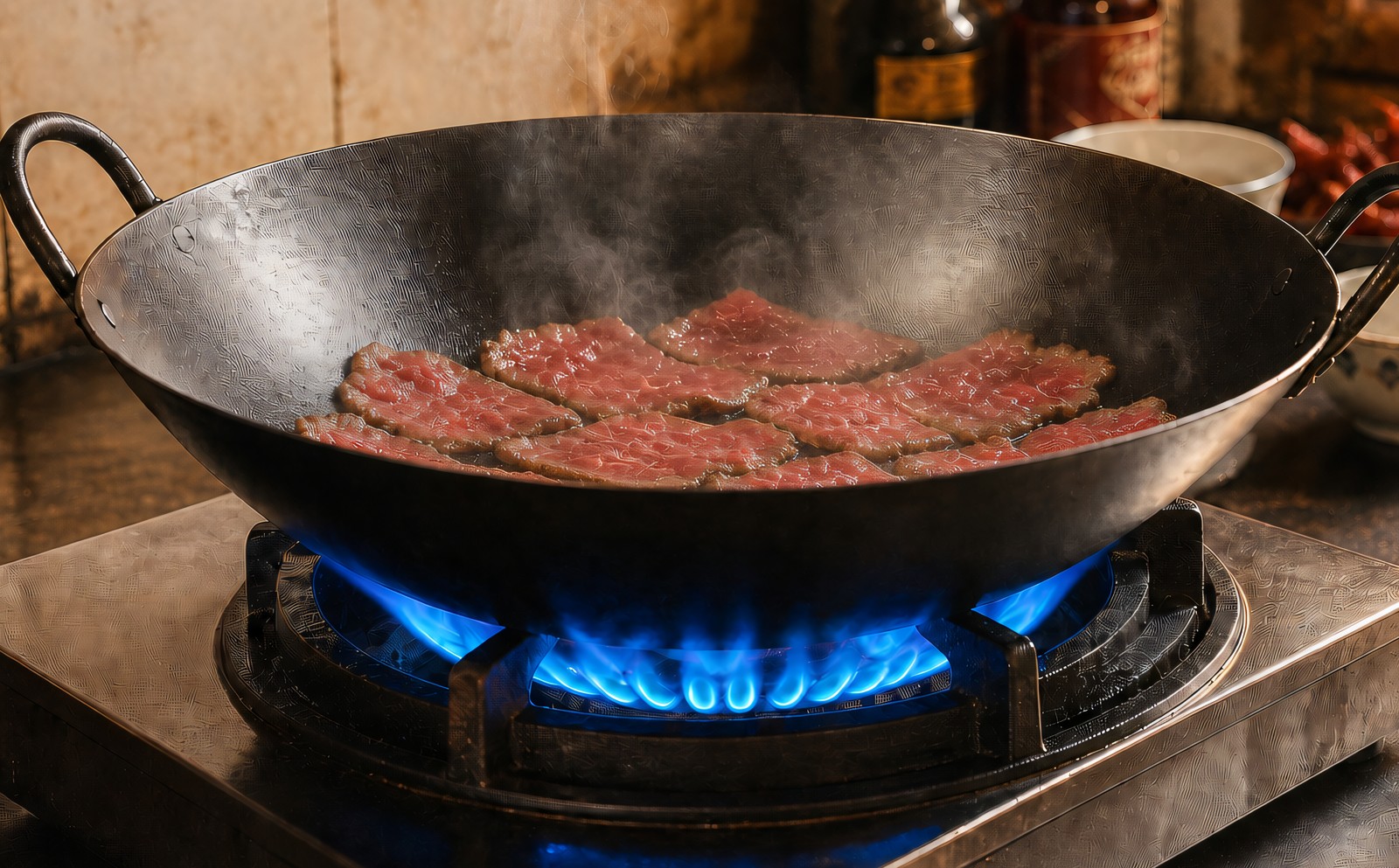
Heat the dry wok over maximum flame for 3 to 4 minutes until a water drop vanishes in under a second. Add 2 tablespoons peanut oil and swirl up the sides. Wait for the first wisp of smoke.
-
Add garlic and ginger. Toss for 15 seconds until fragrant. Do not let them brown past pale gold.
-
Add the beef in one layer. Leave it undisturbed for 30 seconds to sear, then toss aggressively for 60 seconds until 80 percent cooked. Push the beef up the side of the wok.
-
Drop the gai lan into the centre. Pour 1 tablespoon Shaoxing wine down the hot wok wall. It will hiss and steam. Toss everything together for 30 seconds.
-
Add oyster sauce, light soy, sugar, and water. Toss for another 45 to 60 seconds until the sauce clings and looks glossy, not soupy.
-
Optional torch finish: tip onto a warm plate, then sweep a small blowtorch 10 cm above the surface for 8 to 12 seconds. Serve immediately.
Notes
- If your beef released grey liquid into the wok, the pan was not hot enough. Pour the liquid off, return the wok to high heat, and finish dry.
- Substitute broccolini for gai lan if you must, but blanch it the same way. Frozen vegetables cannot give wok hei; they carry too much ice water.
- Light soy and dark soy are different sauces. Light is salt and brightness. Dark is colour and a faint sweetness. Do not swap them.
- Leftovers lose the aroma within an hour. This is a cook-and-eat dish, not a meal-prep dish.
- Shaoxing wine matters. Dry sherry is a passable swap; cooking sake is too sweet; rice vinegar is wrong.
What to serve with
A bowl of plain jasmine rice, steamed until each grain stands separate, and a small dish of chilli oil on the side for anyone who wants it. Cantonese tables usually pair stir-fries like this with a clear soup, and a simple pork bone and watercress broth works — if you’d rather lean Japanese, a clean konbu and katsuobushi dashi sits just as well alongside the rice. One last thing to call across the kitchen: the wine goes down the side of the wok, not on the food, and you toss for thirty seconds after it hisses. Not ten. Not sixty. Thirty.