
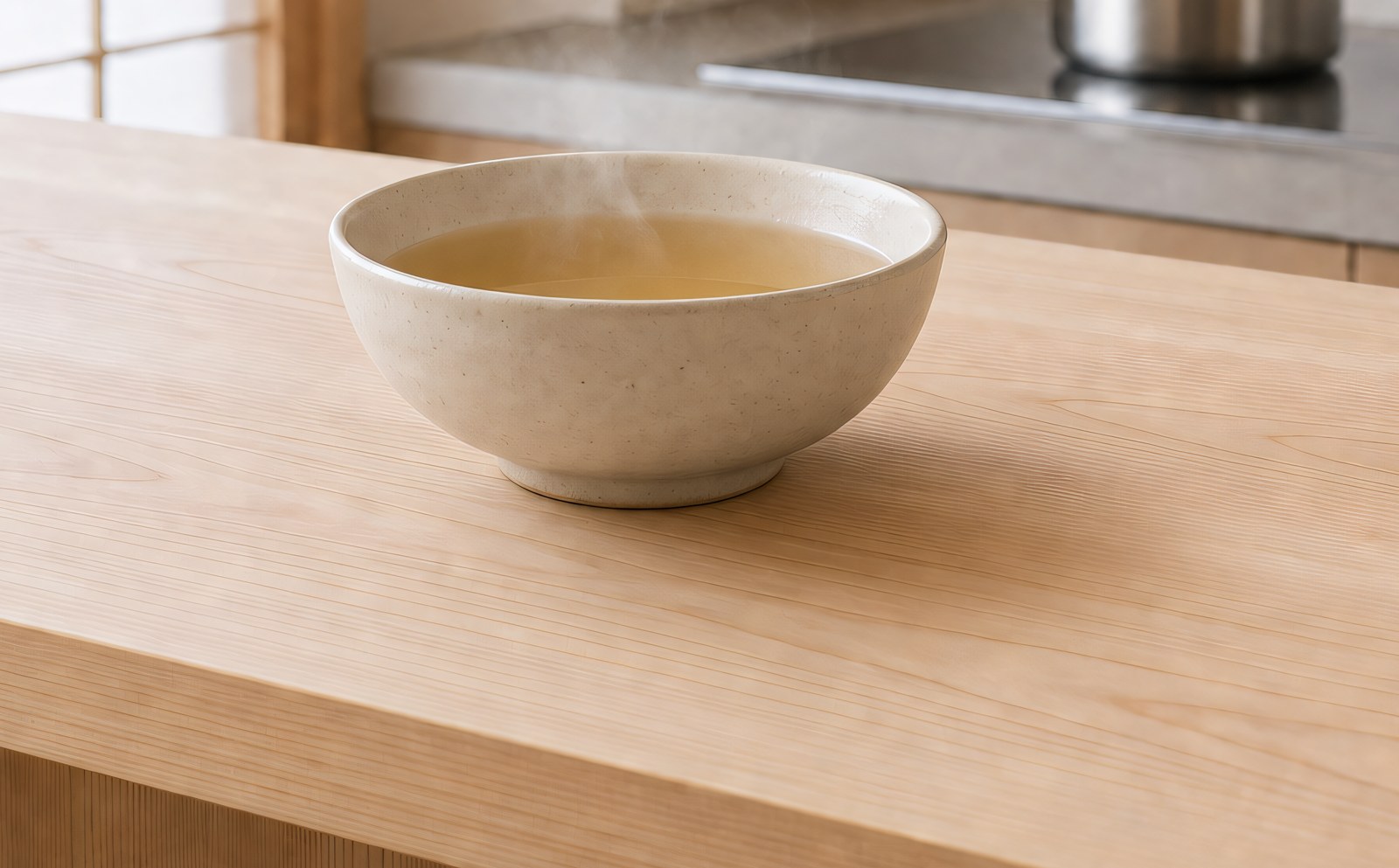
Good Kyoto-style dashi smells faintly of the sea while the konbu steeps, then of woodsmoke once the katsuobushi goes in. The working ratio is 10 g of Rishiri konbu to 800 ml of soft mineral water, cold-soaked for an hour. The broth pulls pale gold and reads clear against a white bowl, closer to weak tea than to stock.
This is ichiban dashi: the first extraction from konbu (dried kelp) and katsuobushi (shaved smoked bonito). Its flavour rests on two molecules. Glutamate from the konbu and inosinate from the katsuobushi multiply each other’s intensity. The rest is restraint. No boiling, no pressing, no shortcuts.
Most Western recipes simmer the konbu and squeeze the strainer. Both ruin the broth. Above 60°C (140°F) the konbu turns slimy and bitter. Pressing forces fish oils and fine particles through the cloth. Get the temperature and the strain right, and the rest follows.
| Yield | 800 ml (about 4 small bowls) |
| Prep time | 10 minutes |
| Cook time | 1 hour 15 minutes (mostly soaking) |
| Total time | 1 hour 25 minutes |
| Difficulty | Easy |
Ingredients
- 800 ml soft water (filtered or low-mineral bottled)
- 10 g konbu (one piece about 10 cm square, Rishiri or Ma-konbu preferred)
- 20 g katsuobushi (hanakatsuo shavings, loosely packed)
Equipment
- Heavy-bottomed pot
- Instant-read thermometer
- Fine mesh strainer
- Cotton cloth or paper coffee filter
How to make it
-
Wipe the konbu lightly with a damp cloth and leave the white powder where it is. That powder is mannitol and free glutamate. Do not rinse it off.
-
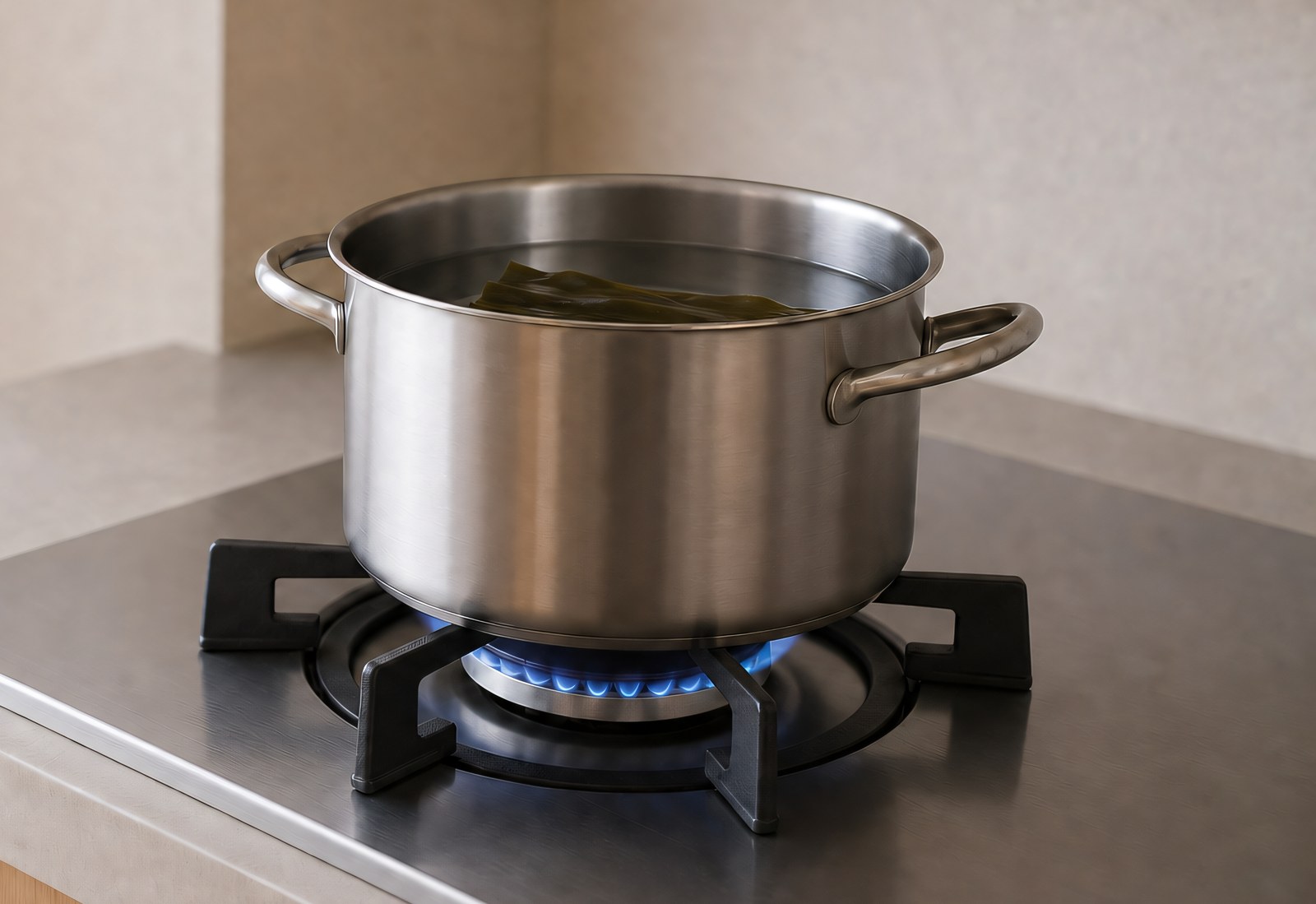
Place the konbu in the pot with 800 ml of cold water. Soak for at least 1 hour, ideally 3 to 8 hours in the fridge. The ratio is 1% konbu by weight (10 g per litre). Cold soaking pulls glutamate without releasing the alginates that cause slime and bitterness.
-
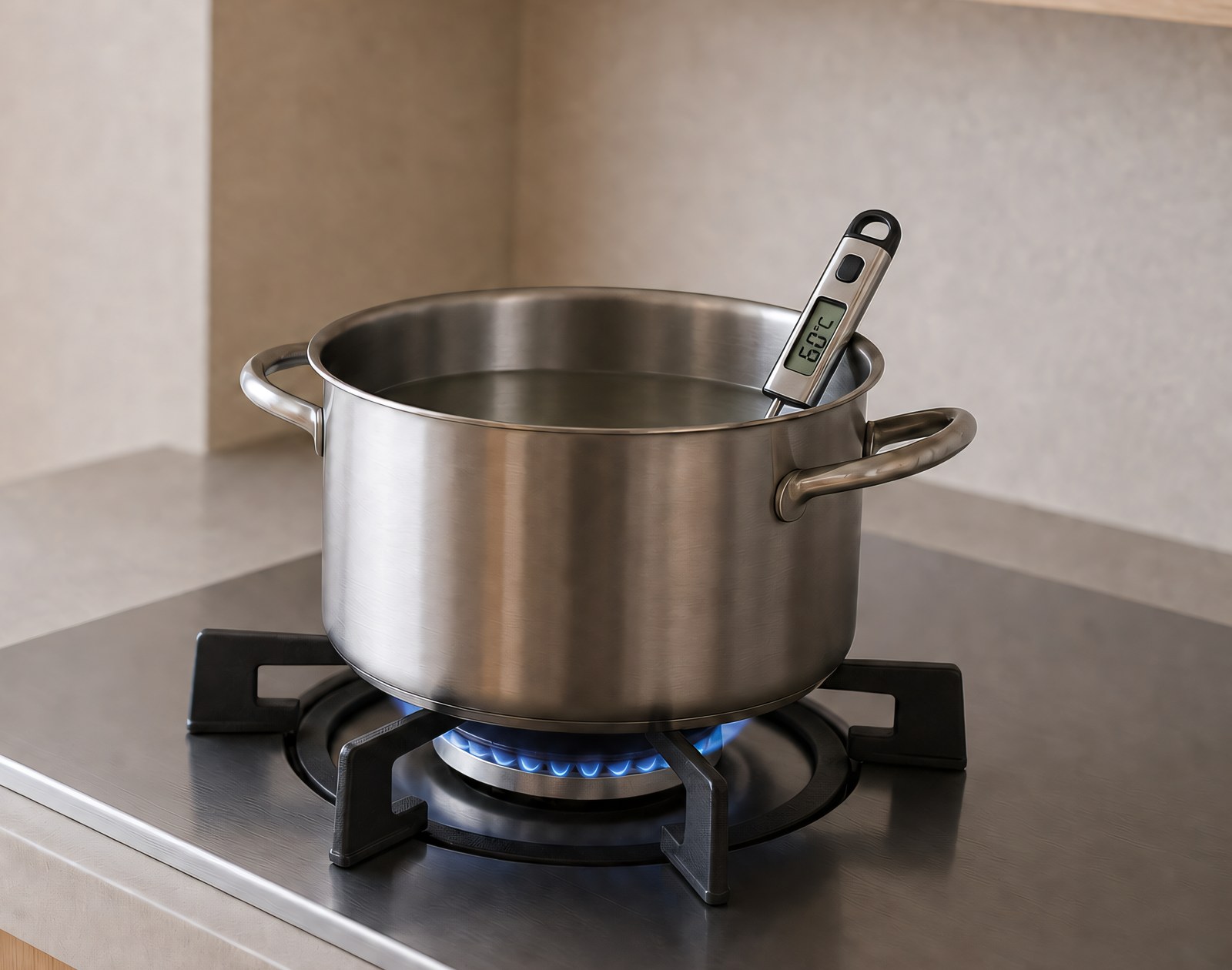
Heat the pot uncovered over low heat. Aim to reach 60°C (140°F) in about 10 minutes. Slow heating gives the konbu time to release amino acids without breaking down. Use a thermometer. Do not guess.
-
Pull the konbu out at 60°C (140°F). If the water is still climbing, lift it before it boils. Set it aside on a small plate. You will use it again for niban dashi.
-
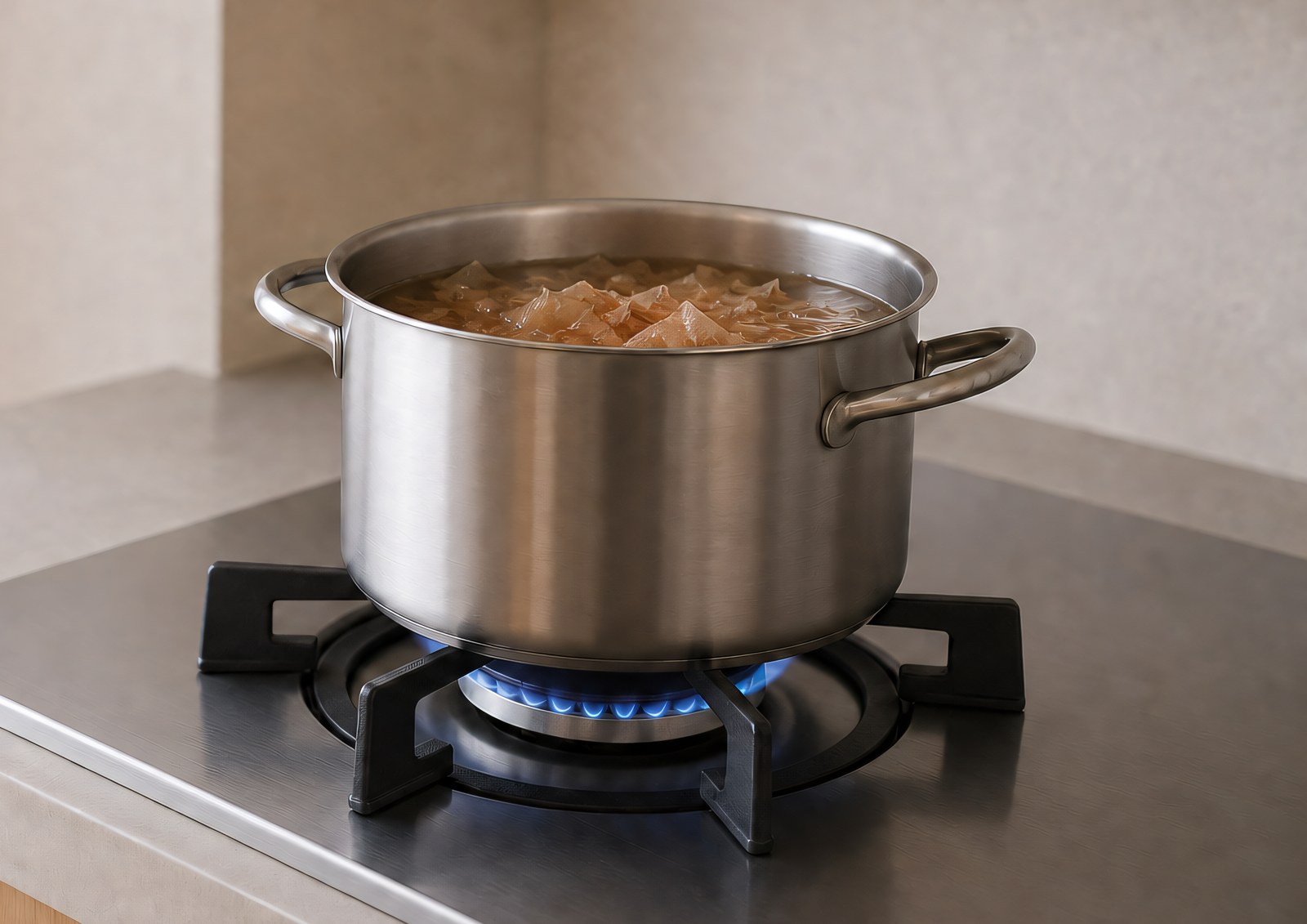
Raise the heat and bring the water to a brief boil. Take the pot off the heat the moment bubbles break the surface. Pour in 1 to 2 tablespoons of cold water to drop the temperature to about 80°C (175°F). Boiling katsuobushi turns the broth sharp and fishy.
-
Add the 20 g of katsuobushi. Let it steep, untouched, for 60 seconds. Most of the shavings will sink. Do not stir. Stirring releases bitter compounds and clouds the broth.
-
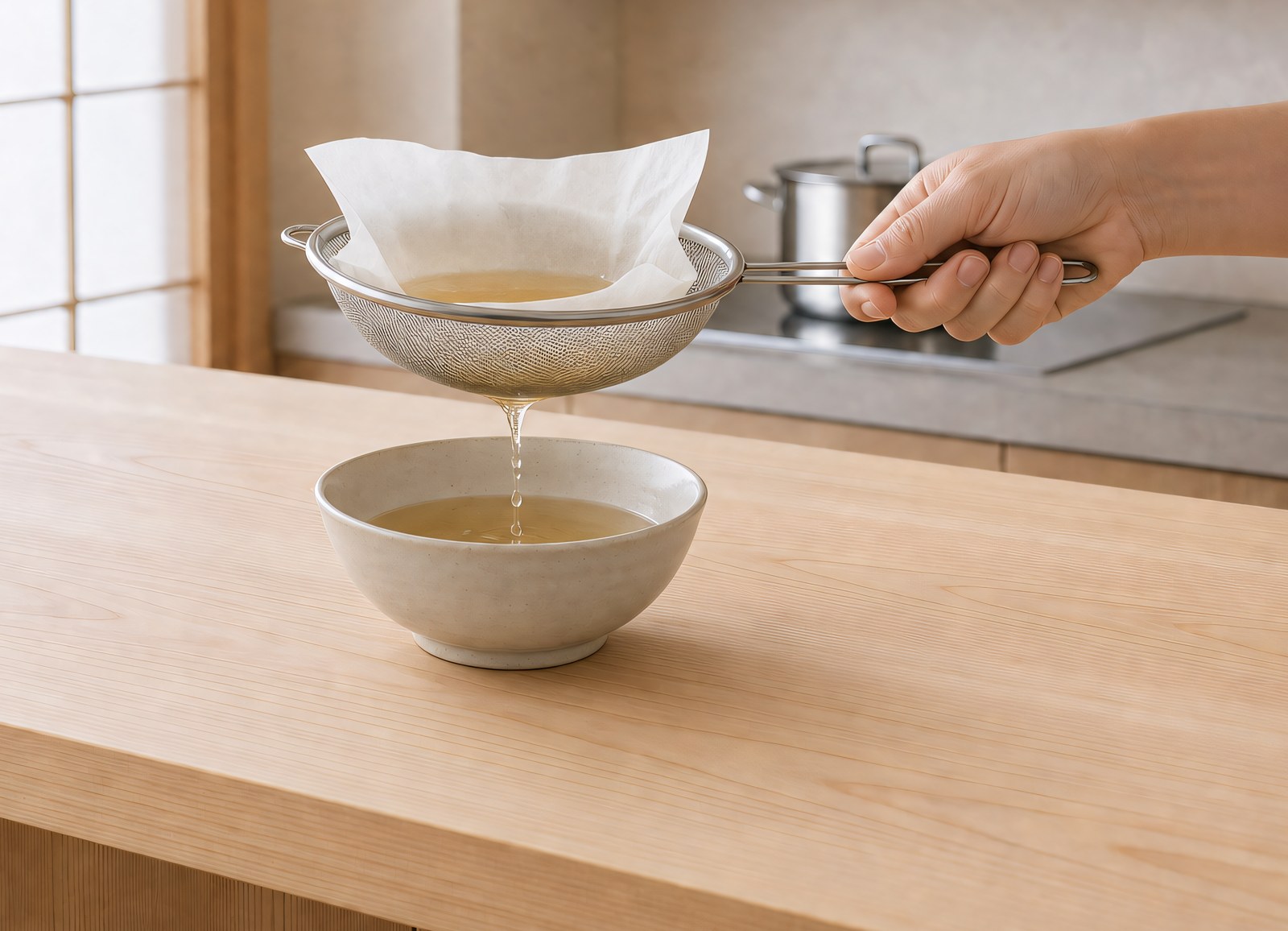
Strain through a fine mesh lined with a damp paper coffee filter or cotton cloth. Let gravity do the work. Do not press. Pressing forces oil and fine particles through the filter and turns the broth cloudy.
-
Taste the dashi warm. It should be quiet at first, then expand at the back of the throat. If it is flat, you under-extracted; soak the next batch longer. If it tastes bitter or metallic, the water passed 60°C with the konbu still in.
-
For niban dashi, return the spent konbu and katsuobushi to the pot with 600 ml of fresh water. Bring to a gentle simmer for 10 minutes. Off the heat, add a small pinch (about 3 g) of fresh katsuobushi. Strain. Niban is stronger and a little smokier, best for braises and everyday miso soup.
A few small notes
- Konbu grades: Rishiri gives a clean, slightly floral broth, ideal for clear suimono. Ma-konbu is rounder and richer, good for nimono. Hidaka is softer and cheaper; fine for daily cooking.
- Katsuobushi: hon-karebushi (fermented with koji mould) gives a deeper, more complex flavour. Arabushi (unfermented) is sharper and more common in supermarkets. Both work at home.
- Water matters. Hard tap water pulls iodine and metallic notes from the konbu. Use filtered or soft bottled water.
- A reliable signal that the konbu is ready to come out: small bubbles cling to the surface of the kelp, just before the water trembles.
- For miso soup, use ichiban dashi if you want a clear, quiet broth. For chawanmushi, ichiban is essential, because the egg custard relies on its delicacy.
What to serve with it
Ichiban dashi belongs in chawanmushi, in clear suimono with a single piece of tofu and a leaf of mitsuba, and in the broth for oyakodon. Niban dashi goes into everyday miso soup, simmered vegetables, and the base for udon. Refrigerate ichiban in a clean glass jar for up to 2 days; niban keeps for 3. Freeze either in an ice cube tray for a month, and drop the cubes straight into the pot when you need a quiet bowl on a tired evening.
This same patience-over-shortcuts approach shows up across other classical techniques — the emulsion discipline behind a proper beurre blanc, the starch-and-stock layering of a Milanese risotto, or the four-axis balance that anchors Southeast Asian cooking. Once the dashi is right, the rest of the bowl quietly follows.