
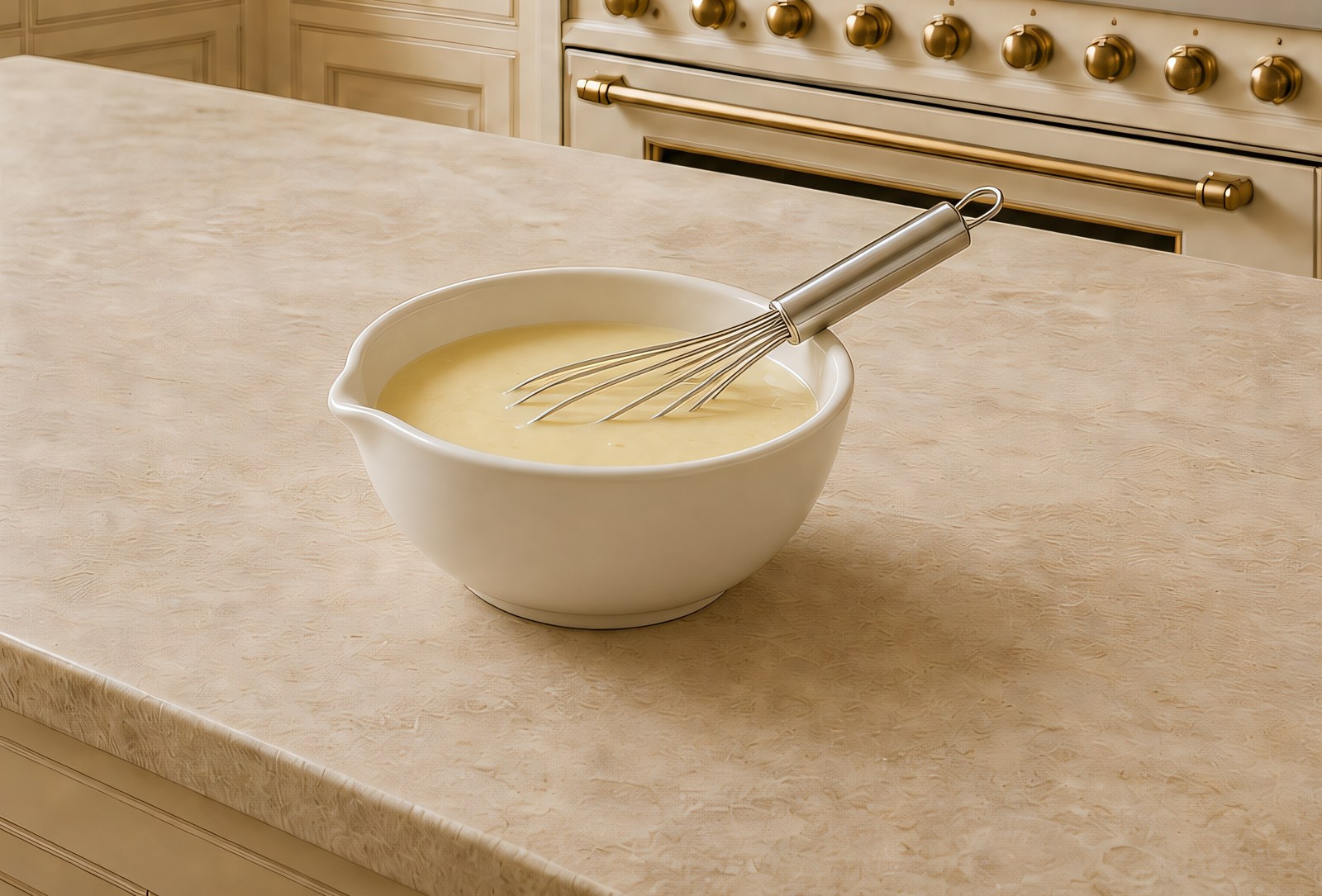

A proper beurre blanc smells of butter and reduced shallots in near-equal measure. A 2019 kitchen note would still need the same warning as an older one: don’t let the sauce sit too long. When it’s right, the colour resembles cold cream and the surface shines like wet stone.
Beurre blanc was invented in Anjou, a little upriver from Nantes, by a cook named Clémence Lefeuvre at the turn of the last century. The recipe is two thirds butter, one third reduced acid, and a question of temperature. What separates a glossy sauce from a broken one is the window when you mount the butter: between 55 and 60°C (130 to 140°F), no hotter.
This version uses Beurre d’Isigny, two echalion shallots, and 80 ml of Muscadet. Held in a warm bain-marie, the emulsion stays glossy for around forty minutes.
| Yield | About 200 ml, enough for 4 servings |
| Prep time | 10 minutes |
| Cook time | 15 minutes |
| Total time | 25 minutes |
| Difficulty | Intermediate |
What goes in the pan
- 2 medium shallots (about 60 g), finely minced
- 80 ml dry white wine (Muscadet de Sèvre-et-Maine if you can find it)
- 40 ml white wine vinegar
- 15 ml water
- 200 g cold unsalted butter, ideally cultured French butter like Beurre d’Isigny, cut into 1.5 cm cubes
- 15 ml double cream (optional, gives a wider margin of error)
- Fine sea salt, to taste; start with a quarter teaspoon
- A pinch of white pepper
The kit that matters
- Small heavy saucepan (stainless steel or copper, not thin aluminium)
- Balloon whisk
- Instant-read thermometer
- Fine-mesh sieve
Building the sauce
-
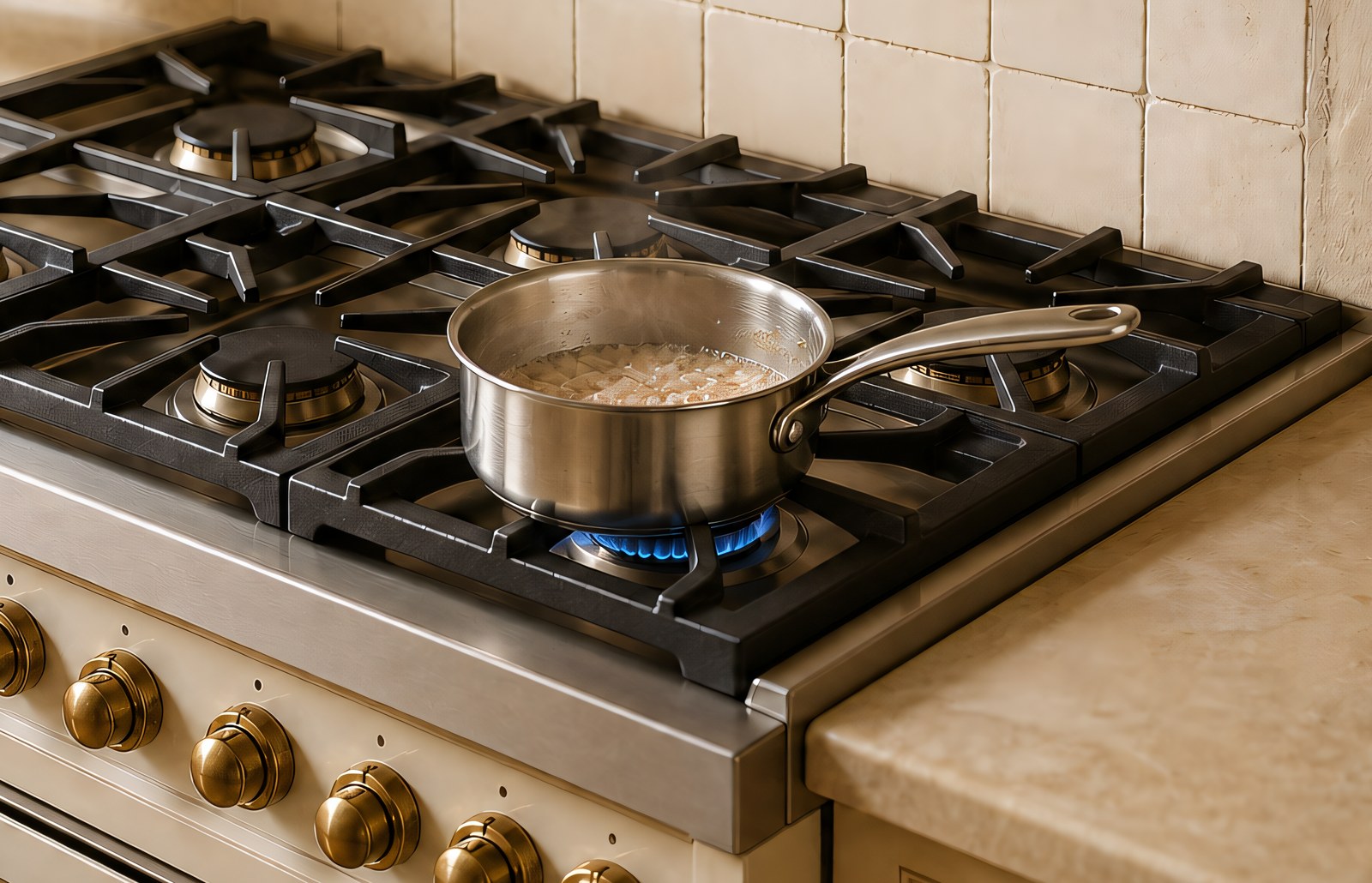
Combine the shallots, wine, vinegar, and water in the saucepan. Place over medium-low heat. The acid here is doing structural work, not just flavouring. It keeps the butterfat emulsified once it goes in.
-
Reduce uncovered for 8 to 10 minutes until you have about 30 ml of liquid still clinging to the shallots. You want it almost syrupy. Water left in the pan will later thin the sauce past saving.
-
Stir in the cream if you are using it and let it bubble for 30 seconds. Cream is the home cook’s safety net: the milk solids buffer the emulsion against small heat spikes.
-
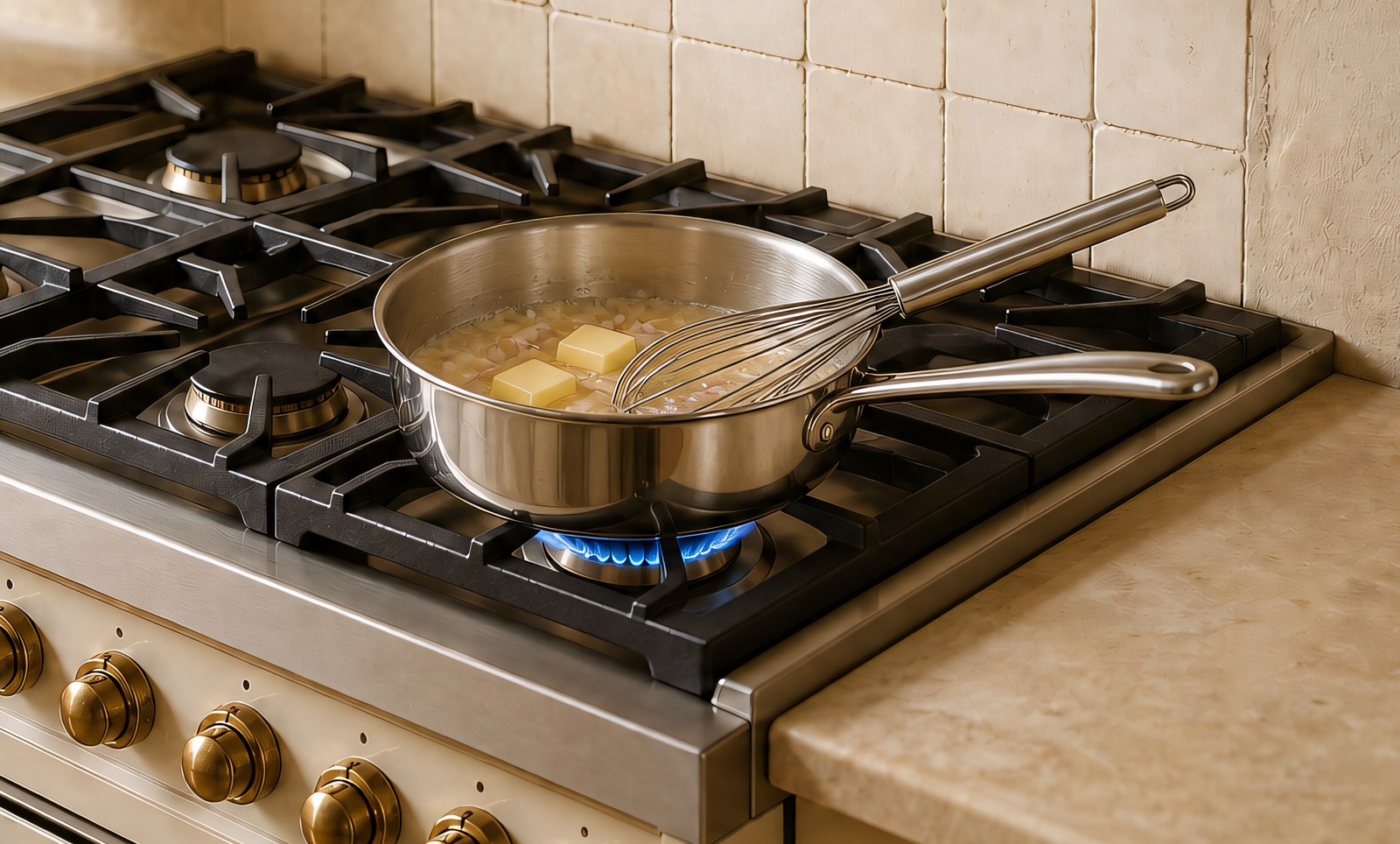
Drop the heat to its lowest setting. Pull the pan halfway off the burner. Add two cubes of cold butter and whisk constantly until they have nearly disappeared into the liquid.
-
Continue adding the butter two or three cubes at a time, whisking each batch in before the next. Keep the thermometer in the pan. If it climbs past 60°C (140°F), lift the pan off the heat for fifteen seconds before adding more cold butter.
-
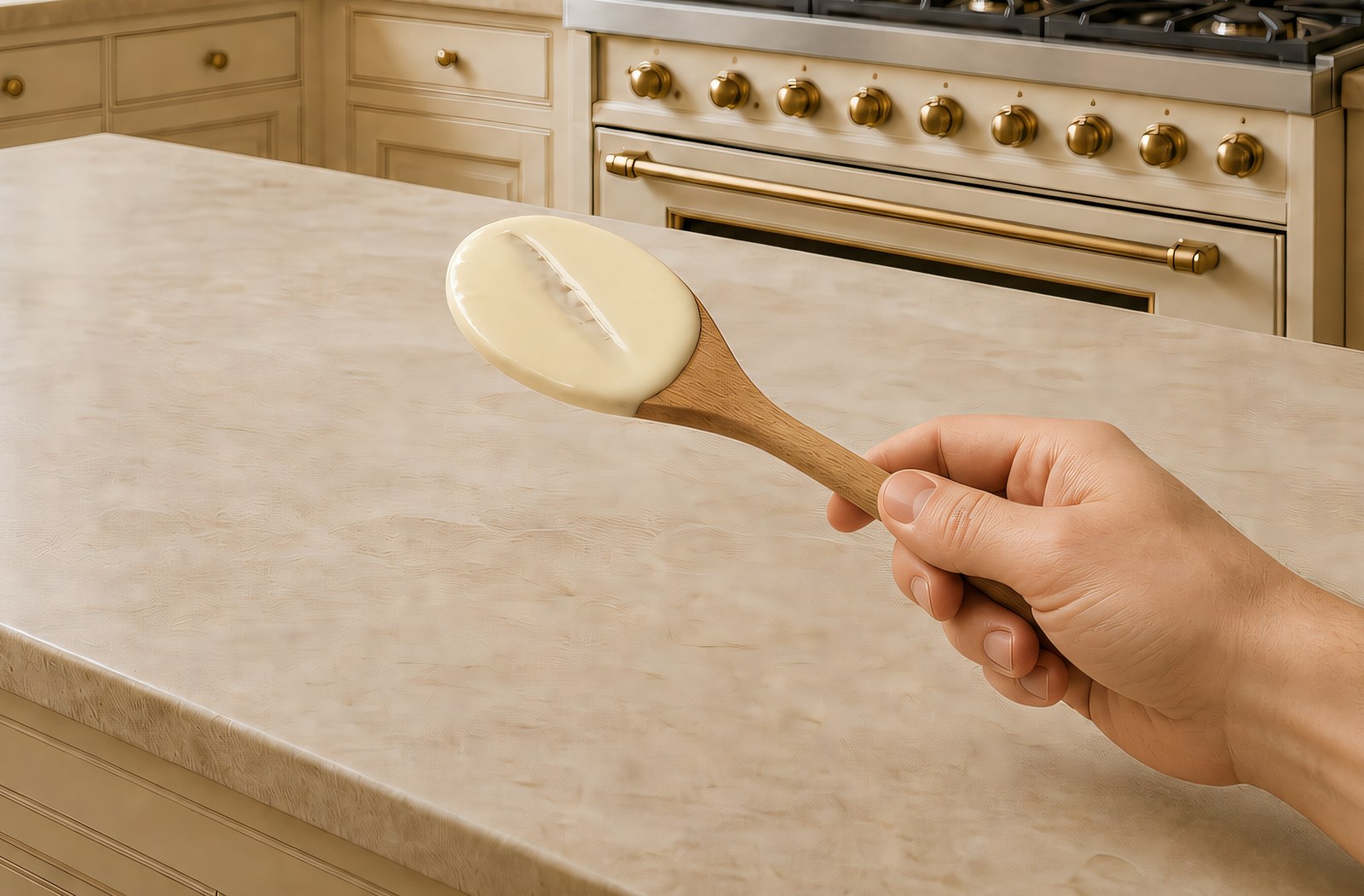
After the last cube melts, the sauce should be pale, thick enough to coat the back of a spoon, and visibly glossy. Season with the salt and white pepper. Taste.
-
Strain through a fine sieve into a warmed sauceboat, or hold over a bain-marie of water no hotter than 55°C (130°F). Use within forty minutes.
When things go sideways
If the sauce breaks and looks oily with butter separating out, pull it off the heat at once. Pour a tablespoon of cold cream or ice water into a clean bowl and whisk the broken sauce into it slowly, the way you would rebuild a mayonnaise.
If the sauce goes grainy, it has been too cold and the butter has set rather than emulsified. Return it to the lowest heat with a teaspoon of warm water and whisk gently until smooth.
Never use salted butter. Salt content varies between brands and the sauce becomes impossible to season cleanly.
A heavy pan is not optional. Thin aluminium reacts with the acid and gives the sauce a tinny edge.
For tarragon beurre blanc (sometimes called beurre Nantais), whisk in a teaspoon of finely chopped tarragon at the end. Replace half the vinegar with lemon juice when you plan to serve it with asparagus.
The sauce will not reheat once it has cooled. Make it the moment before you sit down.
What it belongs with
Beurre blanc lives first of all on poached or pan-roasted white fish: turbot, sole, brill, pollack. It is equally lovely over warm asparagus in late April, leeks vinaigrette finished glossy, or a soft-boiled egg on toast for a Sunday breakfast that feels like a small holiday. Hélène pours a glass of the same Muscadet she cooked it with.
Keep the thermometer in the pan. Touch alone is unreliable around the emulsion window; a probe gives a clear signal before the sauce overheats.
This kind of temperature discipline shows up across European classical cooking — it’s the same patience that gives you a glossy, clump-free cacio e pepe or a properly mantecato risotto alla Milanese with its saffron sheen. If you are building a French repertoire, beurre blanc pairs naturally with the slow, structured discipline of dishes like a true ragù alla Bolognese — recipes where the technique, not the ingredient list, is what you are really learning.