
A common question from home cooks abroad: why does a Bolognese made in London taste nothing like one served in Emilia, and why does Sicilian pasta feel like a different cuisine altogether? Both plates can share olive oil, dried spaghetti, and a tin of San Marzano and still land far apart. Northern and southern Italy share a flag and very little else at the stove.
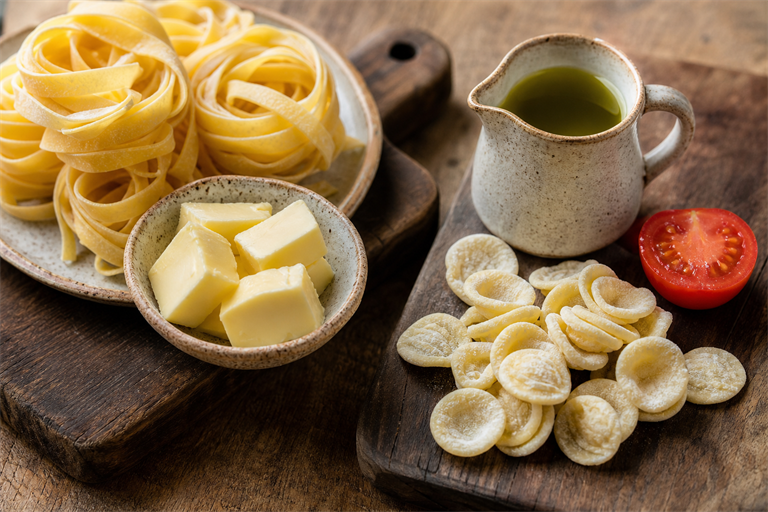
In Bologna, a block of butter lives in the fridge the way a bottle of olive oil sits on a Neapolitan counter. A ragù finished with a knob of butter and a splash of whole milk tastes unmistakably different from the same sauce loosened with a slick of Sicilian olive oil from a producer like Frantoi Cutrera. So what actually separates north from south? The honest answer is geography. The useful answer is a small map you can carry into the kitchen.
Why Italy cooks in two voices
The Apennines run down the spine of the country, and the climate changes with them. The Po Valley in the north is cold, foggy, and wet enough to grow rice and graze dairy cattle. Lombardy, Piedmont, the Veneto, and Emilia-Romagna sit on that plain. Butter, cream, lard, and fresh eggs are the everyday fats and binders because the animals that make them live next door.
South of Rome, the land turns dry and stony. Olive trees thrive where cows would starve. Puglia, Campania, Calabria, and Sicily grow durum wheat, tomatoes, capers, and almonds in volcanic soil and Mediterranean heat. The sea shapes these cooking traditions more directly than pasture does.
Centuries of trade pressed the difference deeper. The north absorbed Austrian and French habits: braises, risotti, slow reductions. The south carried Greek, Arab, and Spanish traces: raw oils, dried pasta, sweet-sour vinegars, fish cured in salt.
The fat tells you the region
If you remember one thing from this piece, remember the fat. Fat is the fastest way to read an Italian recipe.
| Region | Everyday fat | What it builds |
|---|---|---|
| Emilia-Romagna, Lombardy, Piedmont | Butter, lard, pancetta | Ragù, risotto, brasato, tortellini in brodo |
| Veneto, Trentino | Butter, smoked pork fat | Polenta dishes, baccalà mantecato |
| Lazio (the hinge) | Pork fat (guanciale), some olive oil | Carbonara, amatriciana, cacio e pepe |
| Campania, Puglia, Calabria | Extra-virgin olive oil | Marinara, orecchiette, pasta e fagioli |
| Sicily, Sardinia | Olive oil, sometimes almond oil | Pasta alla Norma, bottarga dishes |
A Milanese risotto finishes with cold butter beaten into the rice off the heat. That last step is called mantecatura, and it is what makes the grains glossy and tight. A Sicilian pasta alla Norma finishes with raw olive oil drizzled over the plate and salted ricotta grated on top. Same country, opposite gestures.
Rice and egg pasta up north, durum and dried down south
The starch follows the fat. Where butter goes, you find rice (Carnaroli and Arborio from Vercelli and Novara) and fresh egg pasta rolled by hand. Tagliatelle, tortellini, lasagne verdi, anolini: all egg-rich, all northern. Polenta, ground from corn that arrived after the Columbian exchange, feeds the Alpine valleys.
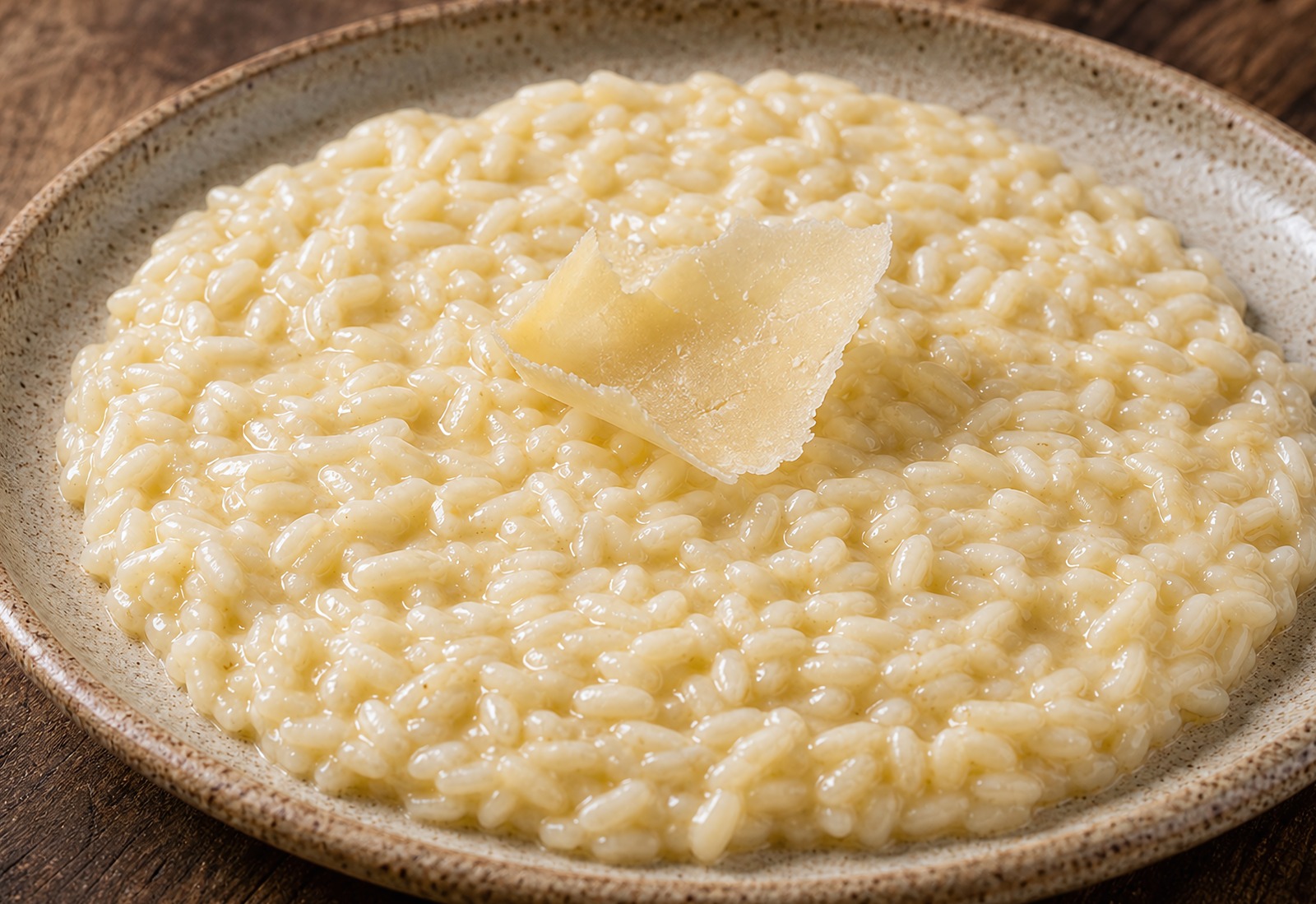
Risotto rice is its own discipline — the variety, the starch, the way you treat the grains — much like the care Japanese short-grain rice demands on the stovetop, where rinsing, hydration, and heat decide whether the dish works.
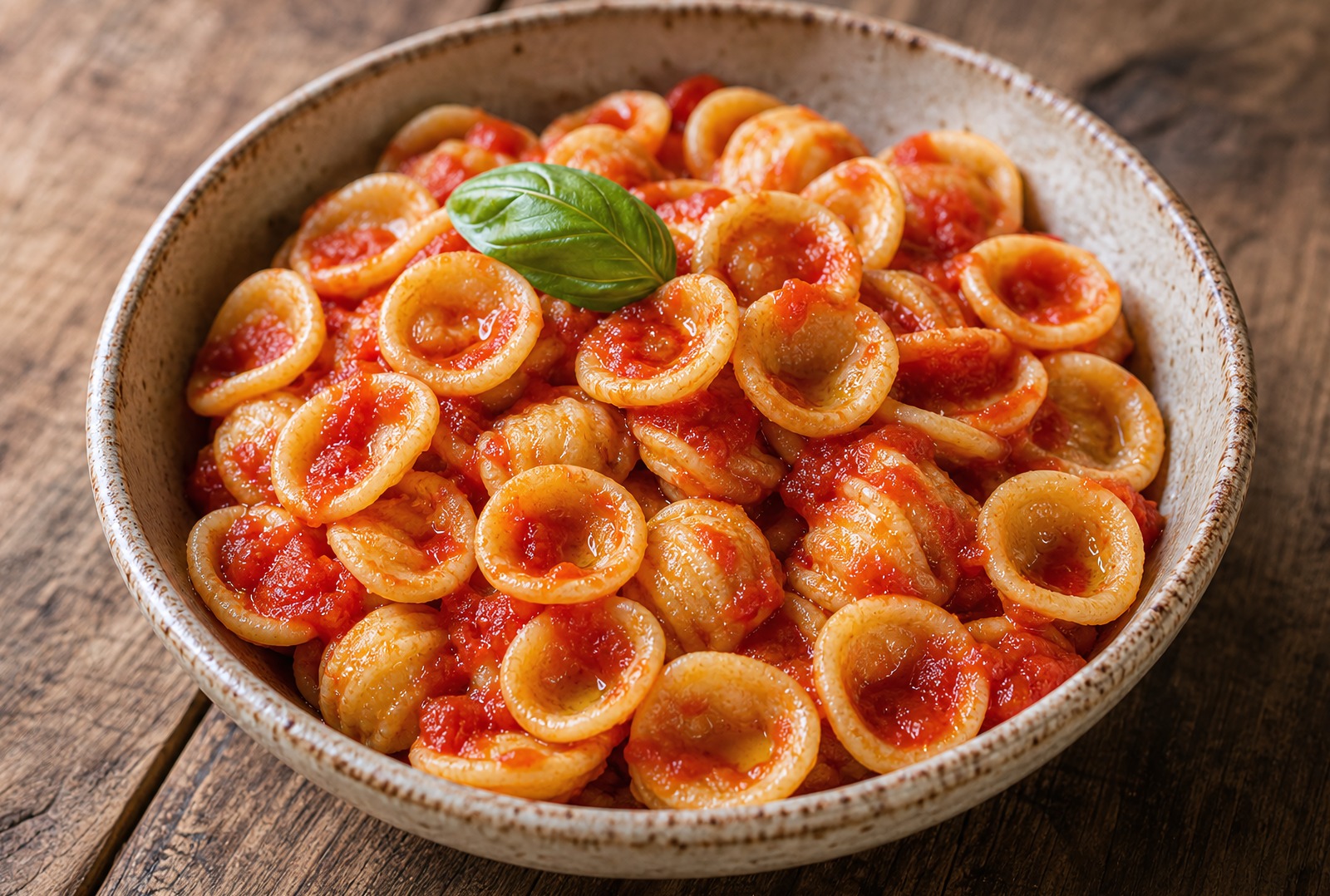
The south grows durum wheat, the hard amber variety that makes dried pasta possible. Spaghetti, bucatini, orecchiette, paccheri, ziti: all extruded from semolina and water, no egg, all built to hold their shape in a hot tomato sauce. If a recipe calls for dried pasta and a raw garlic-and-oil base, you are cooking south of Rome whether the headnote says so or not.
What the land gave each kitchen
Northern menus lean on dairy and pork: Parmigiano-Reggiano, Grana Padano, Gorgonzola, prosciutto di Parma, culatello, cotechino, plus game from the foothills and freshwater fish from the lakes. Sauces are built on soffritto cooked slowly in butter, then deglazed with white wine and finished with milk or cream.
Southern menus lean on the sea and the garden. Anchovies, sardines, swordfish, octopus, mussels. Tomatoes ripened on the vine, aubergines, peppers, fennel, capers, olives. Cheese is fresh and quick: mozzarella di bufala, ricotta, pecorino. Sauces are built fast in a wide pan: oil, garlic, chilli, tomato, basil torn in at the end.
Slow braise versus quick sauté
Technique splits along the same line. Northern cooking rewards patience. A brasato al Barolo simmers for four hours, a ragù alla bolognese for at least three, a risotto needs twenty minutes of attention at the stove. Heat is low, fat is solid, time is long.
The patience the north demands isn’t unique to Italy — it’s the same logic behind a properly built Cajun roux for Louisiana gumbo, where rushing the fat ruins the dish before the first ingredient lands in the pot.
Southern cooking rewards timing. Pasta alla puttanesca comes together in the time the spaghetti boils, maybe twelve minutes. Aglio e olio is three ingredients and one pan. The fat is liquid, the heat is high, and the finish is often raw: a slick of green oil, a handful of torn herbs, a squeeze of lemon.
The split between slow northern braises and fast southern sautés mirrors other regional divides in world cooking — the differences between Sichuan, Cantonese, and Hunan kitchens come down to the same combination of climate, fat, and technique.
Choosing a side for tonight’s dinner
Use this as a decision map when you are standing at the fridge.
- Cold evening, time on your hands, butter in the door of the fridge: cook north. A risotto alla milanese with saffron, or tagliatelle tossed in butter and sage with a grating of Parmigiano. Build slowly, finish with mantecatura.
- Warm evening, half an hour, a good bottle of olive oil on the counter: cook south. Spaghetti aglio, olio e peperoncino, or a quick tomato sauce with garlic, basil, and dried orecchiette. Keep the heat high and the gestures few.
- You have guanciale, pecorino, and black pepper: you are in Lazio, the hinge between the two. Cacio e pepe, carbonara, amatriciana — pork fat, hard sheep’s cheese, no cream, ever.
The practical rule is simple. If the recipe comes from the northern side of the Apennines, cook it with butter and do not rush it. If it comes from the other side, trust the oil and do not crowd the pan.