
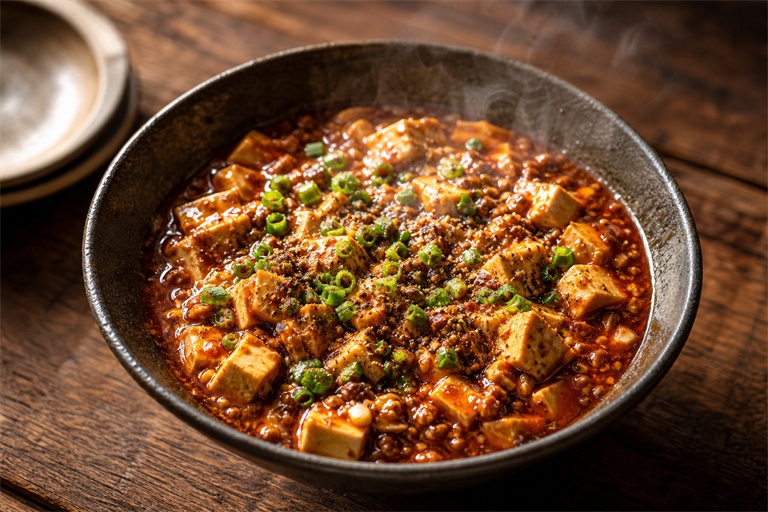
There is a counter at Chen Mapo Tofu in Chengdu where the cook ladles lard into a wok, and within fifteen seconds the whole room smells red. That smell of fermented broad bean and hot fat is the dish before the dish arrives. Mapo tofu is a Sichuan home cook’s dish from Chengdu. It depends on one physical condition: oil hot enough to bloom doubanjiang without burning it.
A 350 g block of Pulmuone silken tofu suits a home batch. For the doubanjiang, reach for 鹃城牌 Pixian, ideally a year-old jar with deep brick color. The seven flavors Sichuan cooks invoke are 麻辣鲜香酥嫩烫: numbing, hot, savory, fragrant, crisp, tender, scalding. All of them hinge on the order things go in the pan, and on a finishing trick called 活油 (huo you), or living oil.
| Yield | 4 servings (with rice) |
| Prep time | 20 minutes |
| Cook time | 25 minutes |
| Total time | 45 minutes |
| Difficulty | Intermediate |
What goes in the pan
- 350 g silken tofu (Pulmuone or any Chinese silken brand)
- 100 g ground beef (twice-ground; or 80/20 ground pork)
- 2 tbsp (40 g) Pixian doubanjiang, finely chopped (鹃城牌, aged at least one year)
- 1 tbsp (15 g) douchi (fermented black soybeans), rinsed and coarsely chopped
- 2 tsp (6 g) erjingtiao chili powder (Sichuan, medium heat)
- 1 tsp (3 g) red Sichuan peppercorns (huajiao)
- 1/2 tsp (1.5 g) green Sichuan peppercorns (qing huajiao)
- 3 cloves garlic, minced (about 15 g)
- 1 tsp ginger, minced (5 g)
- 3 scallions, whites and greens separated
- 250 ml unsalted chicken stock (or water)
- 1 tbsp Shaoxing wine
- 1 tsp light soy sauce
- 1/2 tsp sugar
- 30 ml rendered lard for cooking, plus 1 tbsp warm lard for finishing
- 1.5 tbsp cornstarch mixed with 3 tbsp cold water (slurry)
- 1/2 tsp salt for the tofu blanch
What you need on the stove
- Carbon steel wok or heavy 12-inch skillet
- Small dry skillet for toasting peppercorns
- Mortar and pestle, or small spice grinder
- Slotted spoon
Cooking it, in order
-
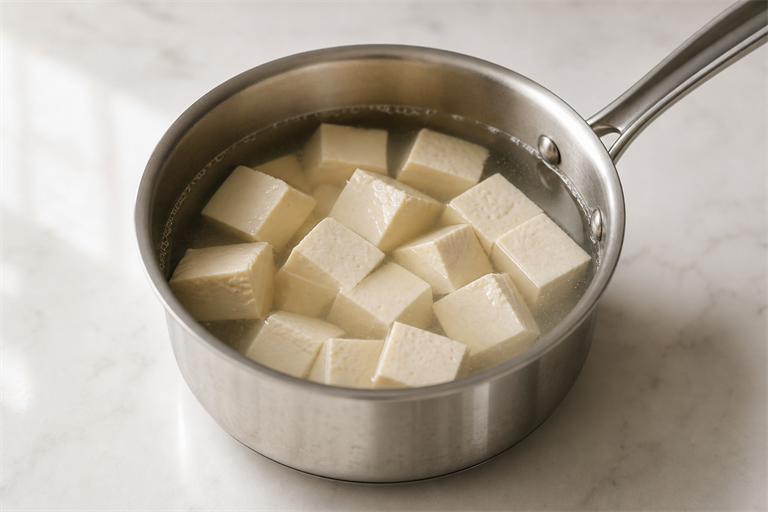
Cut the tofu into 2 cm cubes. Slip them into 1 L water with 1/2 tsp salt, heated to 80C (175F), not boiling. Hold 3 minutes until the edges feel firm. The salt firms the silken surface so the cubes survive a braise.
-
Toast the 1 tsp red huajiao in a dry skillet over medium heat for 60–90 seconds, until fragrant and just smoking at the edges. Grind half coarsely for the dish. Keep the other half finely ground. Grind the green huajiao fresh and reserve it separately for the finish.
-
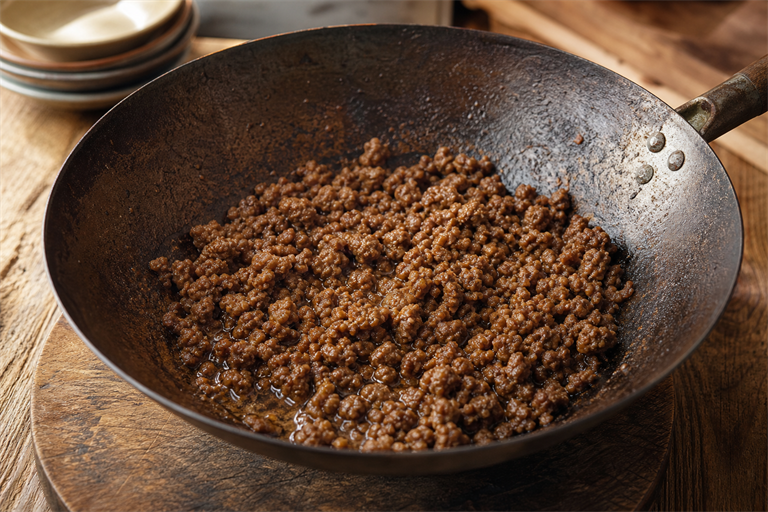
Heat the wok over medium-high. Add 30 ml lard. When it shimmers at roughly 180C (360F), add the ground beef. Stir-fry 3–4 minutes until it cracks dry and turns rust-brown. Beef that still steams will dull the doubanjiang.
-
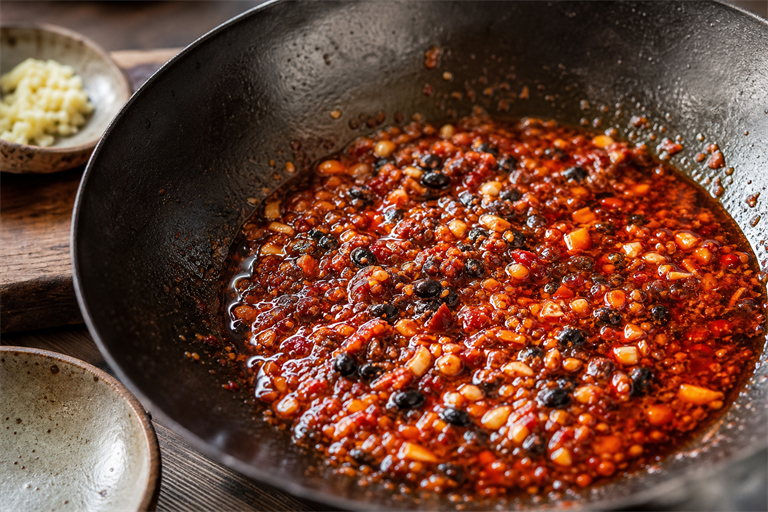
Push the beef to one side and drop the heat to medium. Add the chopped doubanjiang to the fat pool. Fry it alone for 60–90 seconds, pressing with the spatula. The oil should turn brick-red and the paste should smell sweet, not raw. This is the bloom. Burnt paste tastes bitter and grey.
-
Add the douchi, garlic, and ginger. Stir 30 seconds. Sprinkle in the 2 tsp erjingtiao chili powder. Stir another 15 seconds off direct flame so it colors the oil without scorching.
-
Pour 1 tbsp Shaoxing wine around the rim of the wok. Add 250 ml stock, 1 tsp light soy, 1/2 tsp sugar, and the coarsely ground red huajiao. Bring to a simmer.
-
Slip the drained tofu in with a slotted spoon. Do not stir with a spatula. Tilt and swirl the wok to move the cubes. Simmer 4 minutes. Add the scallion whites.
-
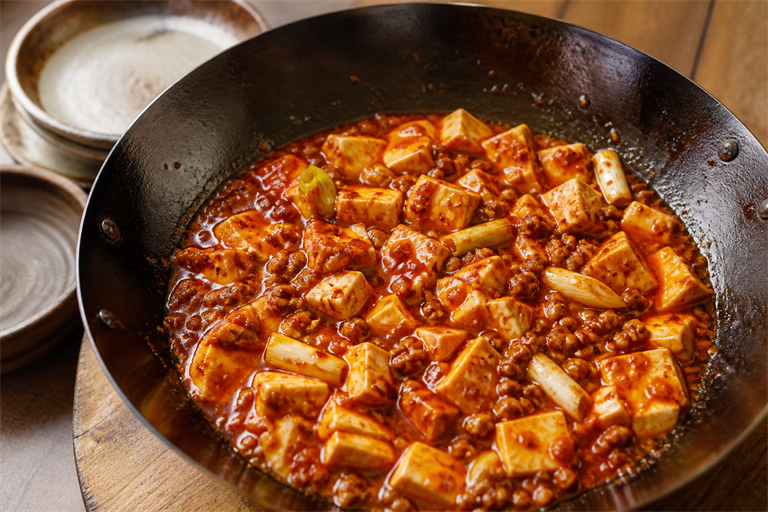
The slurry goes in three stages. Stir it well. Add one-third, swirl, wait 30 seconds. Add the second third, swirl, wait 30 seconds. Add the last third only if the sauce still runs off the spoon. One dump makes a paste. Three stages makes a glossy braise that clings.
-
Off the heat, drizzle 1 tbsp warm lard over the surface. That is 活油, the living oil that sits on top and carries aroma to the nose. Dust with the fine green huajiao powder and scallion greens. Serve straight away.
When something goes sideways
- Bitter sauce: the doubanjiang was fried too hot or too long. The 60–90 second medium-heat window is non-negotiable; drop the flame next time.
- Watery braise: stock too high, or slurry stages too thin. Reduce stock to 200 ml on a strong burner, or add a small fourth slurry stage.
- Weak numbness: huajiao loses its tingle within six months of opening. Buy small bags and toast fresh each cook. Green huajiao is more floral, red is more numbing.
- Tofu falling apart: you skipped the salted blanch, or you raked with a spatula. Always swirl the wok.
- Pork instead of beef: Chengdu home cooks lean beef, restaurants often use beef. Pork tastes sweeter and softer.
- Lard versus oil: rendered lard for the finish is what gives the dish its mouth-feel. Neutral oil works for the initial cook.
On the table around it
Plain steamed jasmine rice, a bowl per person, the tofu spooned over so the red oil pools on the rice. A plate of stir-fried garlic pea shoots or blanched yu choy with light soy sits well beside it. A small glass of cool barley tea calms the tongue between bites. One timing cue matters more than any other: green huajiao goes on after the wok leaves the heat, never before. Sixty seconds earlier and the tingle dies in the steam.