
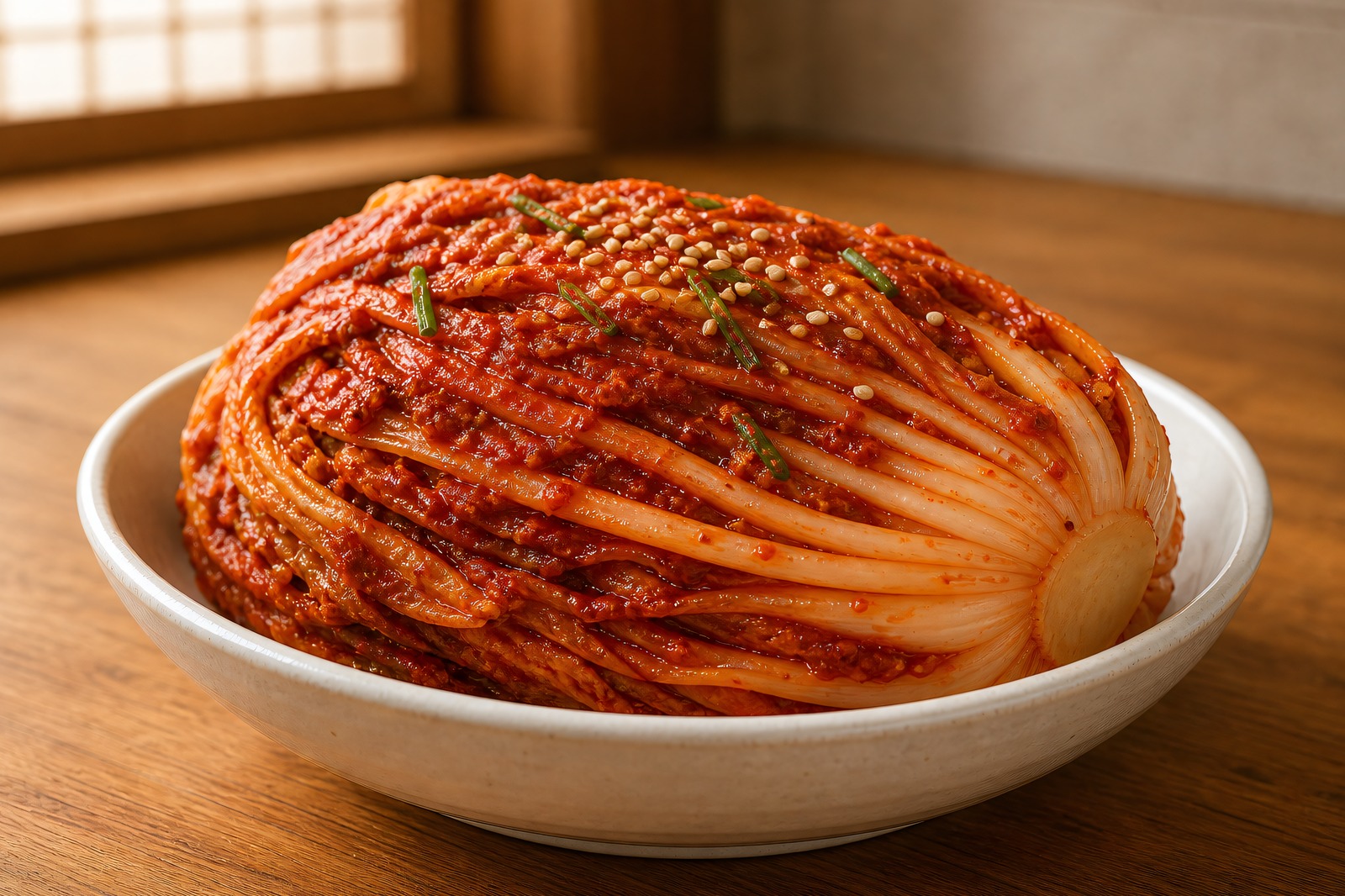

Before starting homemade kimchi, choose a complete fermentation method and read through its storage instructions. Salting and seasoning cabbage is only the preparation stage. The fermentation conditions and the point at which you refrigerate the batch need just as much attention.
Correction, September 2026: We have withdrawn this page’s previous recipe. Its fixed timing, advice to leave a refrigerated batch out again, and assumption that white surface film was harmless were not adequately supported. The guide below helps you select and follow an extension-published method; it does not validate the earlier formula.
Choose one complete recipe before shopping
A useful starting point is Oregon State University Extension’s Kimchi basics. Its recipe section includes “Fermented Kimchi” and “Newell Kimchi,” with their sources identified. Open the full instructions and choose one. Their ingredients, equipment, fermentation directions, and storage periods differ; do not combine the ingredient list from one with the timetable from the other.
For example, the Newell version describes a jar-and-spring setup and daily checks that the vegetables remain covered. If you lack that equipment, resolve the substitution with the recipe provider before starting. A recipe that matches what you actually own is easier to follow than one you must modify halfway through.
We are linking to those published methods rather than reproducing their recipes here. We have not independently tested them, and their instructions should not be transferred to the old recipe formerly on this page.
Separate preparation from fermentation
Preparation includes measuring, cutting, salting, and packing. Fermentation is the subsequent controlled process in which acidity develops. Soft cabbage after salting does not tell you that fermentation has finished. Likewise, bubbles indicate activity, but do not by themselves establish that an improvised recipe is safe.
University of Minnesota Extension’s fermentation guidance recommends research-based, tested recipes and monitoring acidity through the process. Read that guidance alongside your chosen recipe. If its monitoring instructions are unclear, ask an extension food-preservation specialist before preparing the batch.
Keep a short batch record
A note beside the jar makes missed steps easier to spot. Use the requirements in your chosen method to fill in this record; the table is not a replacement fermentation schedule.
| Record | Why it helps |
|---|---|
| Recipe title, source link, and date accessed | You can return to the exact instructions rather than a different version. |
| Actual ingredient quantities and any deviation | You can describe the batch accurately if you need advice. |
| Preparation date and fermentation start | You can distinguish salting time from fermentation time. |
| Temperature and the recipe’s required checks | You can identify conditions that departed from the method. |
| Refrigeration date and the source’s storage directions | You avoid assigning the jar an unrelated generic shelf life. |
When the batch does not behave as expected
Do not add an extra day on the counter merely because a refrigerated batch tastes mild. Return to the method’s troubleshooting guidance and your batch record. Do not improvise additional salt, acid, or warming as a rescue treatment.
White growth cannot reliably be identified as harmless yeast from a brief description. Do not taste a suspect batch to decide whether it is safe. Penn State Extension warns against tasting fermented cabbage with mold, sliminess, or a bad odor. That guidance does not make scraping a surface film off kimchi a validated remedy. When uncertain, stop serving the batch and seek qualified food-preservation advice.
Plan how you will use it
Choose a batch size you can manage within the selected recipe’s storage directions. Label the container, use clean serving utensils, and keep the original instructions available. A record of a successful batch is useful for repeating the same method; it is not evidence that a changed recipe will behave the same way.