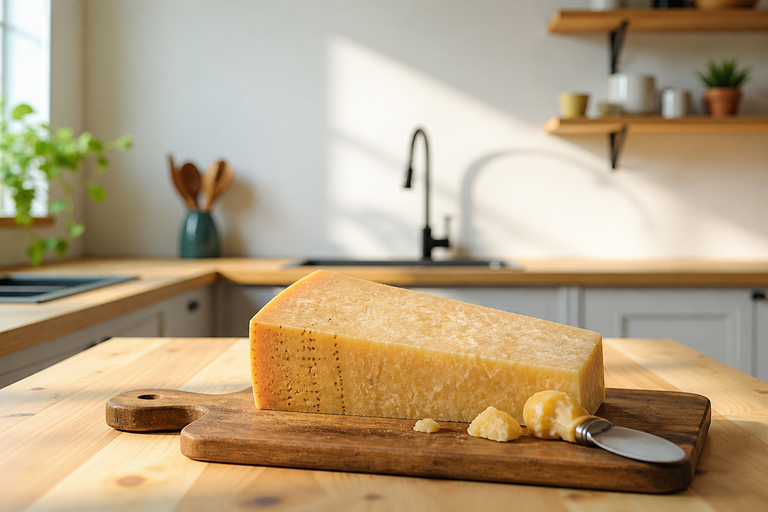

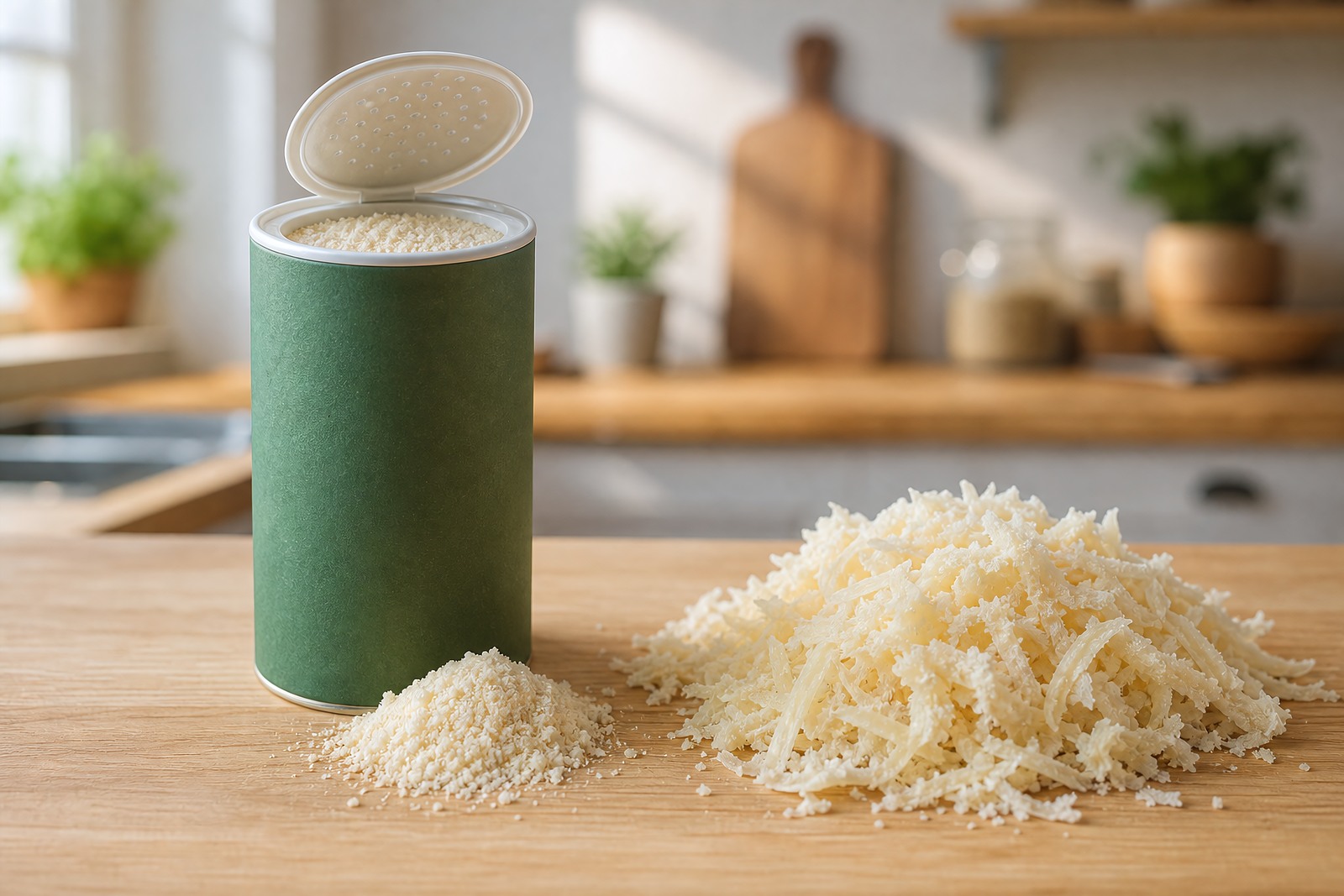
Parmigiano Reggiano rewards a close look. A short almond-shaped knife is worked into the wheel, and the rind cracks like dry earth. Tiny crystals catch in the back teeth and dissolve into salt and pineapple. A piece the size of a domino is enough to make the point: this is cheese. Anything in a green shaker is a spice.
That is the split most home cooks are trying to understand when they type parmigiano reggiano vs parmesan into a search bar. In Italy, only one cheese, made in Parma, Reggio Emilia, Modena, and parts of Bologna and Mantua, can carry that name. Everything else is a family of hard grating cheeses. Some are decent, most are flat, and all of them miss the four things that make the real one taste the way it does.
The pin-dots on the rind tell you exactly what you are buying
Every wheel of real Parmigiano Reggiano has the words Parmigiano Reggiano stamped in pin-dots around the entire rind. On the wedge at the counter you should see part of that repeating stencil. Look for it. If the rind is smooth and unstamped, it is a different cheese, sometimes sold in English shops as “parmesan-style.”
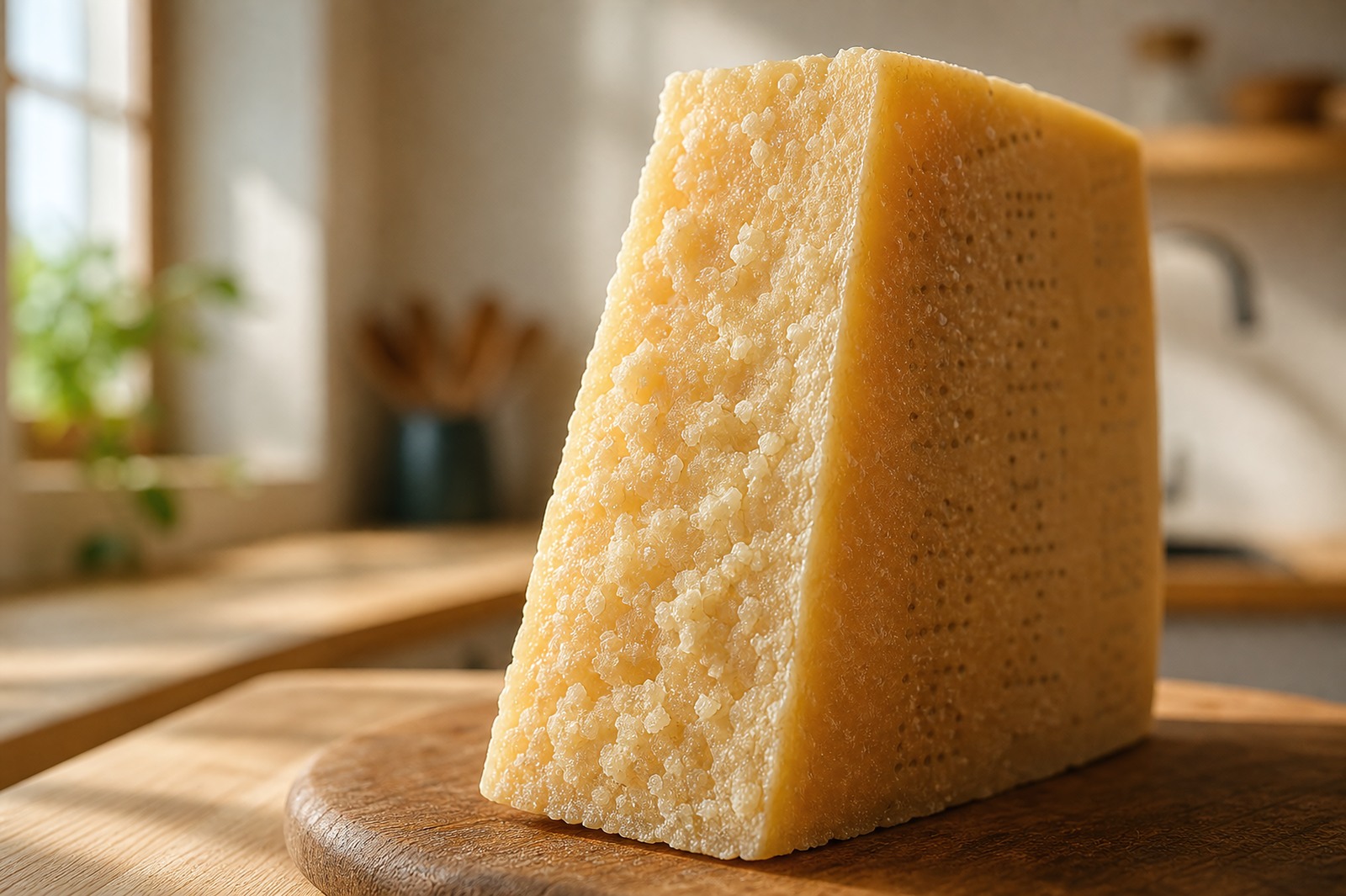
You will also see a batch mark, the caseificio number, and the month and year of production. That last stamp gives you the age. A wheel produced in March 2024 and cut in March 2026 is a 24-month. The rind should be pale straw and dry, not painted or waxed.
What real Parmigiano tastes like at 12, 24, and 36 months
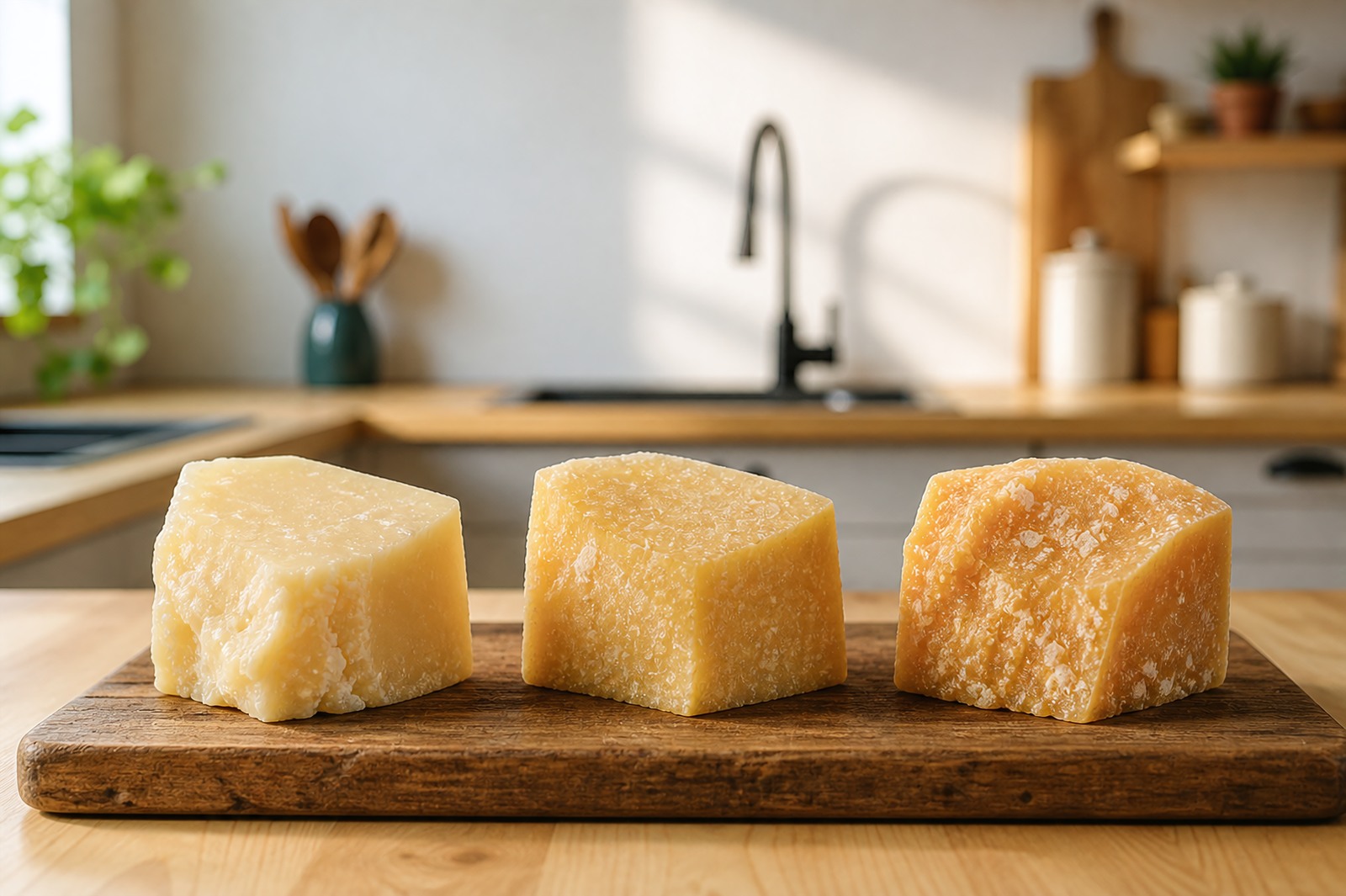
For a clean reference, line up three wedges from 4 Madonne caseificio near Modena, at 14, 24, and 30 months. The difference across two years of aging is not subtle. Here is what to look and smell for.
| Age | Texture | Aroma | Taste | Use it for |
|---|---|---|---|---|
| 12 mo (mezzano) | supple, few crystals | fresh milk, hay | mild, sweet, grassy | shavings on salad, table cheese |
| 24 mo (vecchio) | dry, crumbly, crystal-flecked | pineapple, dried fruit, toasted nut | deep umami, long salty-sweet finish | grating on pasta and risotto |
| 36 mo (stravecchio) | very dry, gravelly | pear brandy, hazelnut, bouillon | intense, almost meaty, spicy finish | chunks with balsamico, shaving on meat |
Those small white specks are tyrosine, an amino acid released as the proteins break down over long aging. When you bite one it dissolves. It does not crunch like a grain of salt. That single sensation is the strongest tell that you are eating the real thing.
The smell should be complicated. Milk, dried pineapple, wet stone, warm hay. If a piece smells only of salt, it is either underaged or something else entirely.
Why the green-shaker parmesan tastes flat
- Milk. Real Parmigiano is raw, partly skimmed cow’s milk from herds on a controlled fresh-forage and hay diet. Generic parmesan uses pasteurised mixed-farm milk with no diet rules.
- Age. Commodity parmesan is sold at 10 months or less. No tyrosine crystals, no pineapple note.
- Additives. American pre-grated tubs contain 2–4% cellulose, potassium sorbate, and often cornstarch to stop clumping. You taste starch.
- Time. Pre-grated cheese loses its aroma within hours of grating. The tub on the shelf was grated weeks ago.
- Salt. To cover the missing depth, generic parmesans are oversalted. That is why supermarket parmesan tastes only of salt and dust.
How to buy a wedge, wrap it, and revive it when it dries
At the counter, ask for a piece cut fresh from the wheel, from the heart of the wedge rather than the pointy tip. Look for the pin-dot stamp. Ask the age. For weeknight cooking, 24-month does the work. For a board with pears and Lambrusco, reach for 30 to 36.
Wrap in two layers. First cheesecloth or a lightly damp paper towel, then wax paper or parchment. Never plastic film touching the cheese; it sweats and the surface turns soapy. Store in the vegetable drawer at 4–6C (39–43F).
If the cut face dries out, do not throw the wedge away. Wrap it in a damp cloth for an hour, then rewrap dry. The moisture returns into the top few millimetres.
The rinds are gold. Freeze every piece in a bag. Drop one into minestrone, tomato sauce, or a bean stew for the last 30 minutes. It thickens the broth and adds a savoury note nothing else gives you.
When to grate, when to shave, when to let it melt in
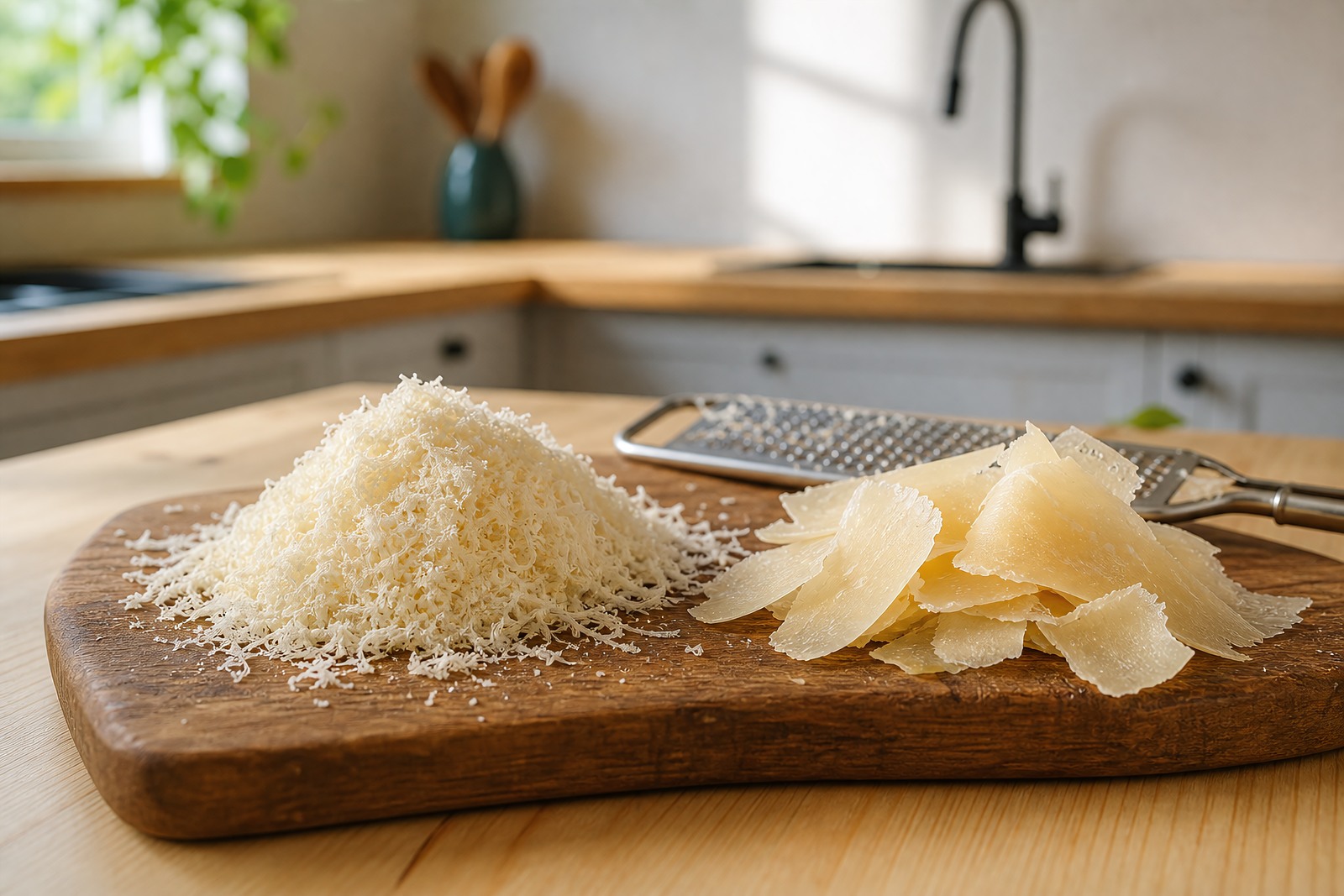
- Grate fine, at the last minute, over hot pasta, risotto, and soups. Grating even an hour early costs you the aroma. A Microplane or the small side of a box grater is right.
- Shave with a vegetable peeler over rocket-and-pear salad, beef carpaccio, or roasted squash. Shavings show the crystals.
- Break into chunks with the point of a knife, never cut in cubes, and serve with fresh figs, a drop of tradizionale balsamic, and a glass of Lambrusco. That is the Emilian aperitivo.
- Simmer the rind in brodo, ragù, or minestra. Never grate it, because the outer two millimetres are dry and bitter.
Keep green-tub parmesan away from a proper ragù. Use freshly grated Parmigiano-Reggiano sparingly, so the cheese sharpens the sauce without covering the slow-cooked meat.