
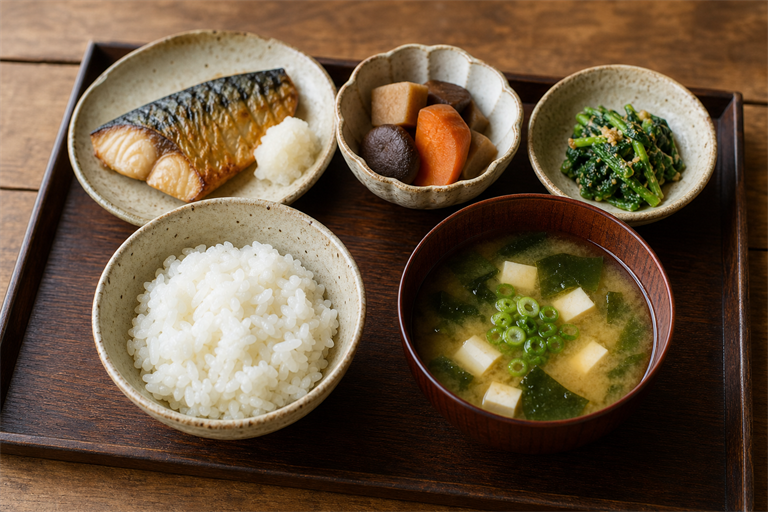
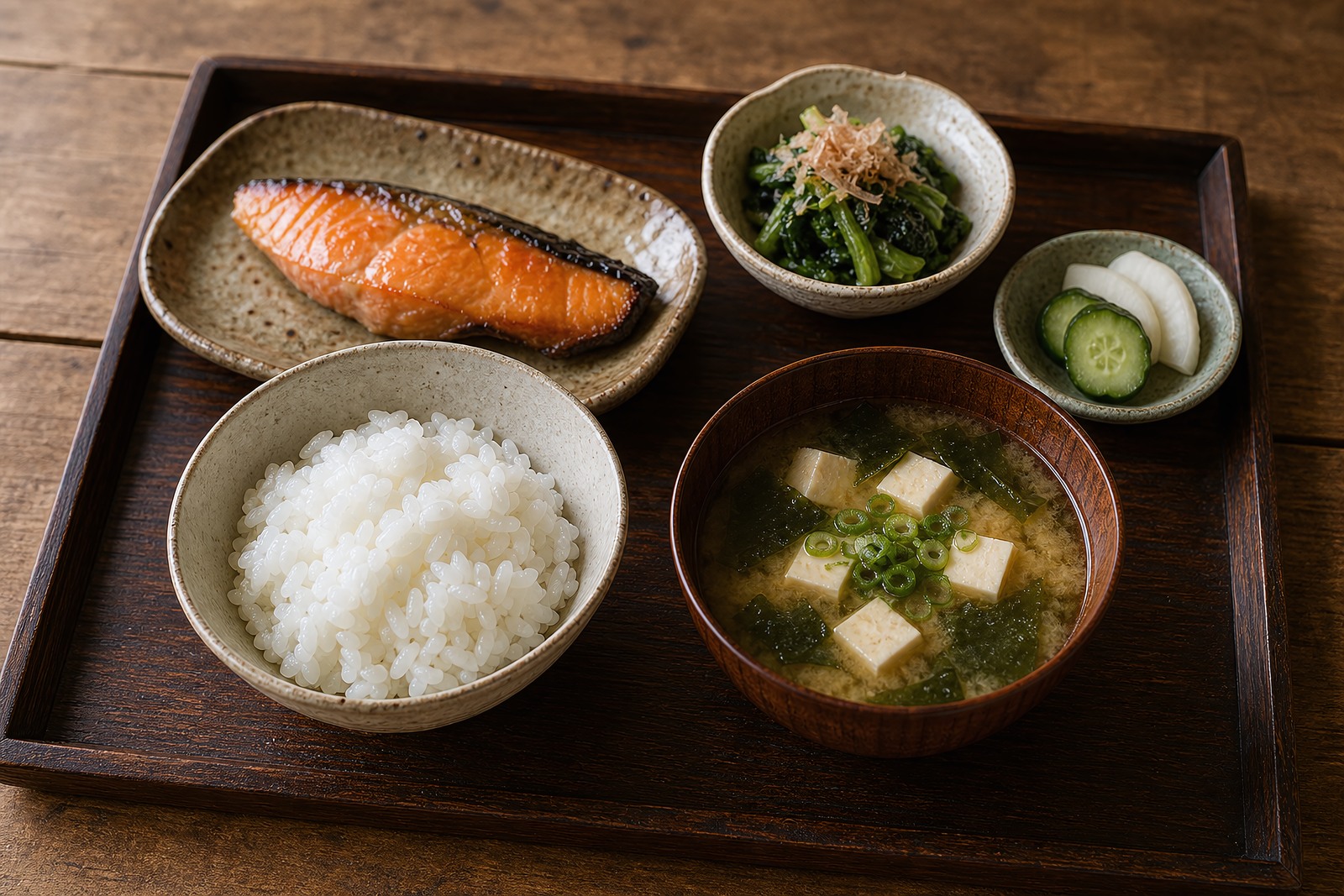
A bowl of rice, a bowl of miso soup, and a piece of grilled salmon can be cooked correctly and still look incomplete on the tray. The parts are right. The shape is not.
The answer is a word her cookbooks had skipped: ichiju sansai. One soup, three sides. Rice, always. It is not a recipe. It is the shape a Japanese home cook holds in her head before she opens the fridge.
One soup, three sides, and the rice that anchors everything
Ichiju (一汁) means one soup. Sansai (三菜) means three vegetable dishes, though in practice the three can include fish, tofu, or egg. Rice sits outside the count because rice is assumed, the way a Western table assumes a fork.
So the full tray holds five things:
| Element | Japanese | What it is |
|---|---|---|
| Rice | gohan (ご飯) | Plain short-grain rice, the centre of the meal |
| Soup | shiru (汁) | Usually miso, sometimes a clear dashi soup |
| Main side | shusai (主菜) | The protein-heavy dish: grilled fish, simmered chicken, tofu |
| Sub side | fukusai (副菜) | A cooked vegetable: simmered, blanched, or sautéed |
| Sub-sub side | fuku-fukusai (副々菜) | A small, sharp thing: pickle, dressed greens, a spoon of natto |
The hierarchy matters. The shusai is the loudest dish, the one you reach for first. The fukusai is quieter, often a nimono (simmered dish) like kabocha no nimono. The fuku-fukusai is the smallest portion on the tray, sometimes just two slices of takuan pickle in a tiny dish. It exists to reset the palate.
Why a Kyoto cook chooses these three and not three random vegetables
The traditional principle is called goshiki gomi goho (五色五味五法). Five colours, five tastes, five methods. Aim to hit all three across the tray.
The five colours are red, yellow, green, white, and black (or dark brown). A bowl of white rice and white tofu and white daikon is, in this logic, a meal missing four colours.
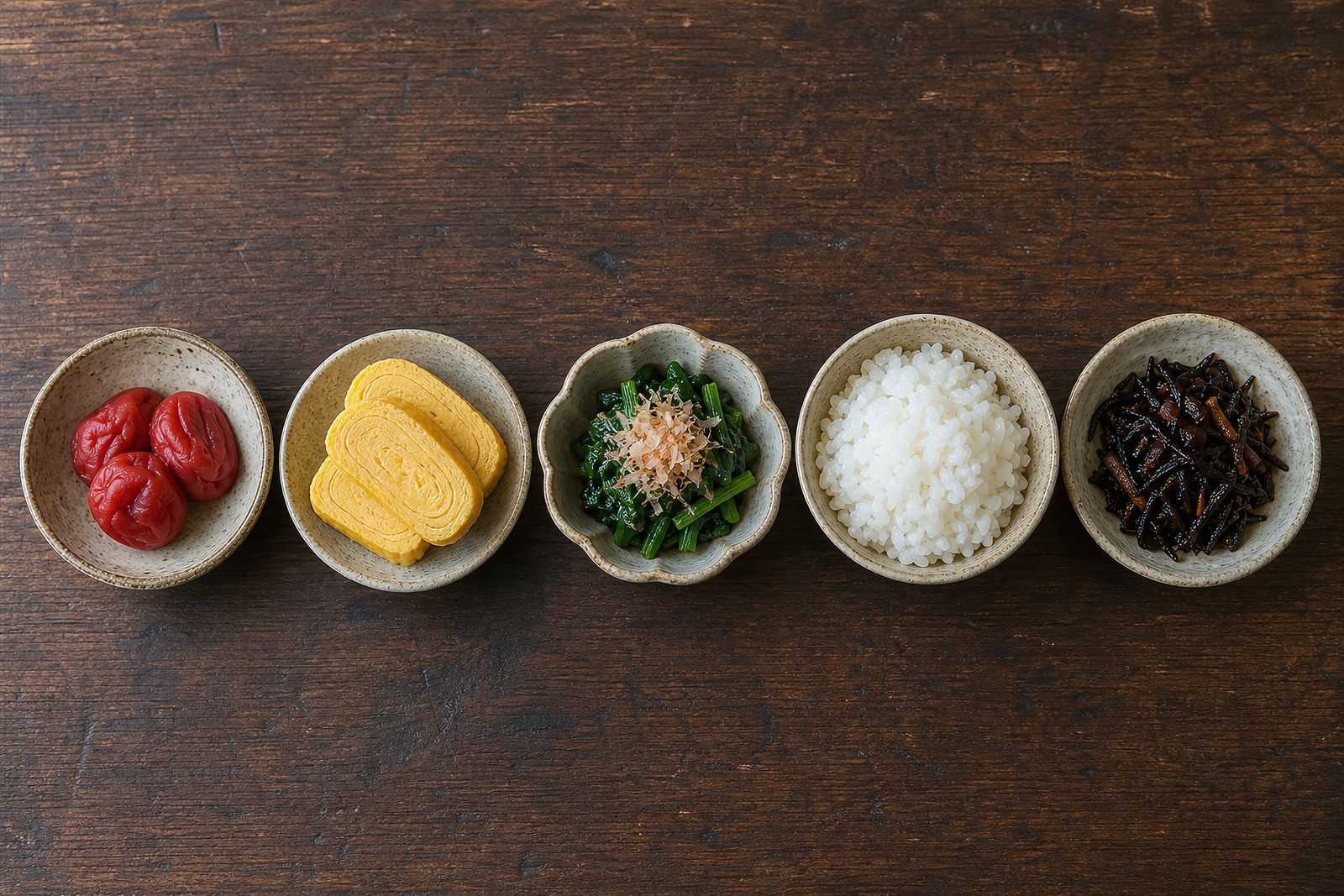
The five tastes are salty, sweet, sour, bitter, and umami. The miso soup carries the umami. A pickle carries the sour. A bitter green like shungiku (chrysanthemum greens) covers bitter.
The five methods are raw, simmered, grilled, steamed, and fried. You don’t want three simmered dishes on one tray. The textures collapse into one another.
A working ichiju sansai built around a piece of mackerel might look like this:
- Gohan: short-grain rice
- Shiru: miso soup with wakame and silken tofu
- Shusai: salt-grilled mackerel (saba shioyaki), grilled
- Fukusai: simmered pumpkin (kabocha no nimono), simmered
- Fuku-fukusai: spinach with sesame dressing (horenso no goma-ae), blanched
Five colours on the tray: orange pumpkin, green spinach, white rice, dark mackerel skin, yellow miso. Five tastes covered. Four methods (raw is optional on a weeknight). The tray feels finished without anyone calculating anything.
Where the rice sits, and why it isn’t decoration
Lay the tray out this way, looking down at it from the eater’s seat:
- Front left: rice bowl (gohan)
- Front right: soup bowl (shiru)
- Back right: the shusai, the main side
- Back left: the fukusai
- Centre back, or tucked between: the small fuku-fukusai
- Chopsticks: across the front, tips pointing left
Rice on the left is not a custom you can ignore. In traditional Japanese serving, the left side is the side of honour. Rice is the heart of the meal, so it takes that place. Soup on the right makes it easy to lift with the right hand while the left hand holds the rice bowl. The two main bowls travel to your mouth. The okazu dishes stay on the tray.
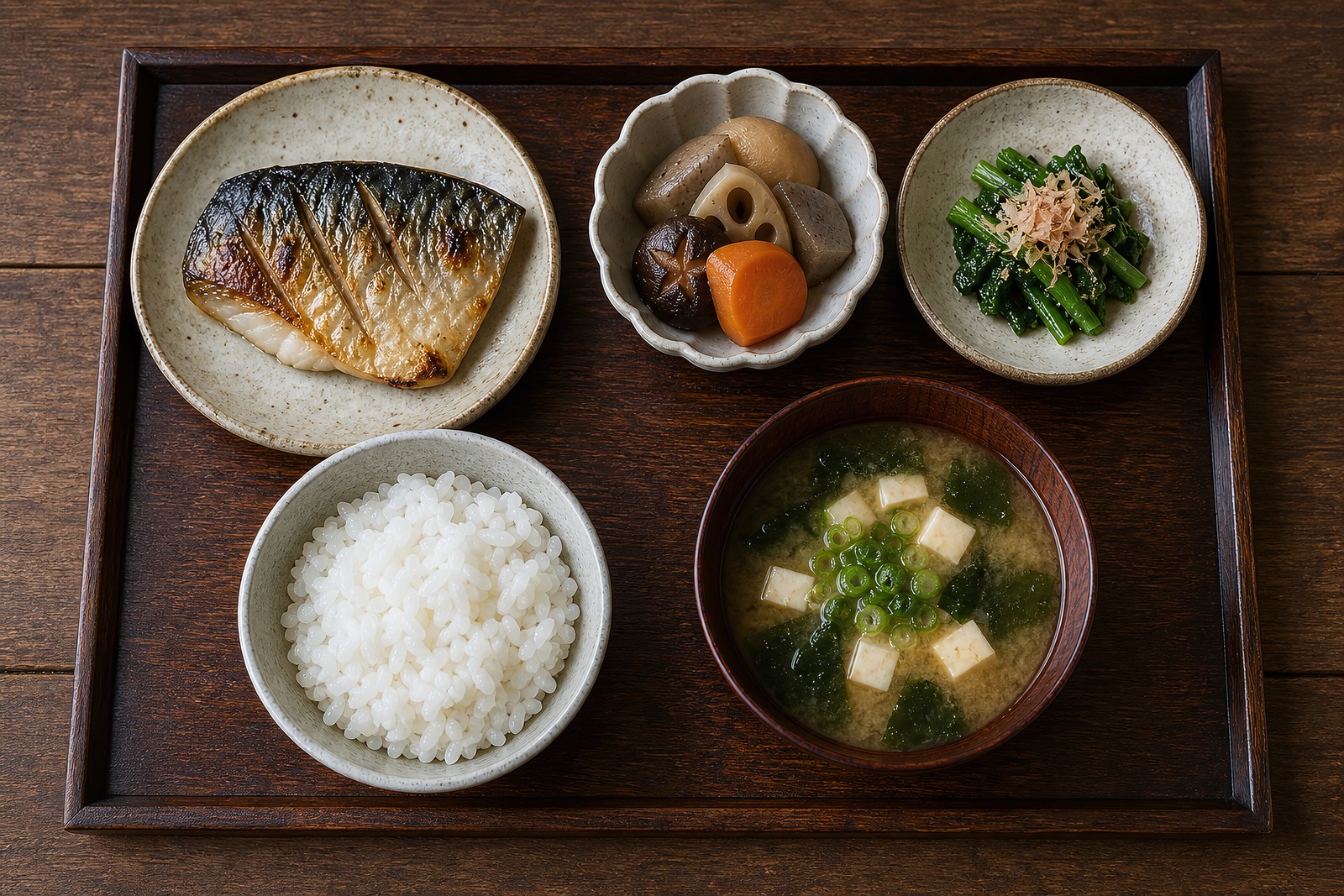
This is the structural difference from a Western plate. A Western meal centres a protein with vegetables arranged around it. A Japanese meal spreads small portions across the tray and lets the eater build each bite by alternating: rice, then okazu, then soup, then rice again.
A week of weeknight trays, built from a normal fridge
You do not need a Japanese specialty store to do this. A week from one shop:
- Monday: Rice, miso soup with tofu and spring onion, ginger pork (shogayaki), blanched broccoli with sesame, takuan pickle.
- Tuesday: Rice, miso soup with potato and wakame, salt-grilled salmon, simmered carrot and burdock (kinpira), a small dish of natto.
- Wednesday: Rice, clear dashi soup with mushroom, agedashi tofu (the protein), spinach goma-ae, cucumber sunomono.
- Thursday: Rice, miso soup with daikon, chicken and egg over the rice as oyakodon with the soup and one pickled side. This is ichiju issai, a relaxed variant.
- Friday: Rice, miso soup, simple tamagoyaki, simmered hijiki and soy beans, a few slices of cucumber pickle.
The pattern is steady. The shusai rotates through fish, pork, tofu, egg. The fukusai is whatever vegetable is in the drawer, cooked the way that vegetable wants to be cooked. The fuku-fukusai is a jar of pickle or a small bowl of something dressed.
This logic of building a meal from a fixed structural shape rather than a single recipe shows up across Asia — Korean home cooking leans on a similar grammar of banchan around a bowl of rice, and its pantry sits on a handful of fermented foundations the way a Japanese kitchen sits on dashi and miso.
What a cook from Kyoto would never do
Do not put three brown simmered dishes on one tray. Two is already pushing it. The Japanese phrase for the problem is iro ga tarinai. The colours are not enough.
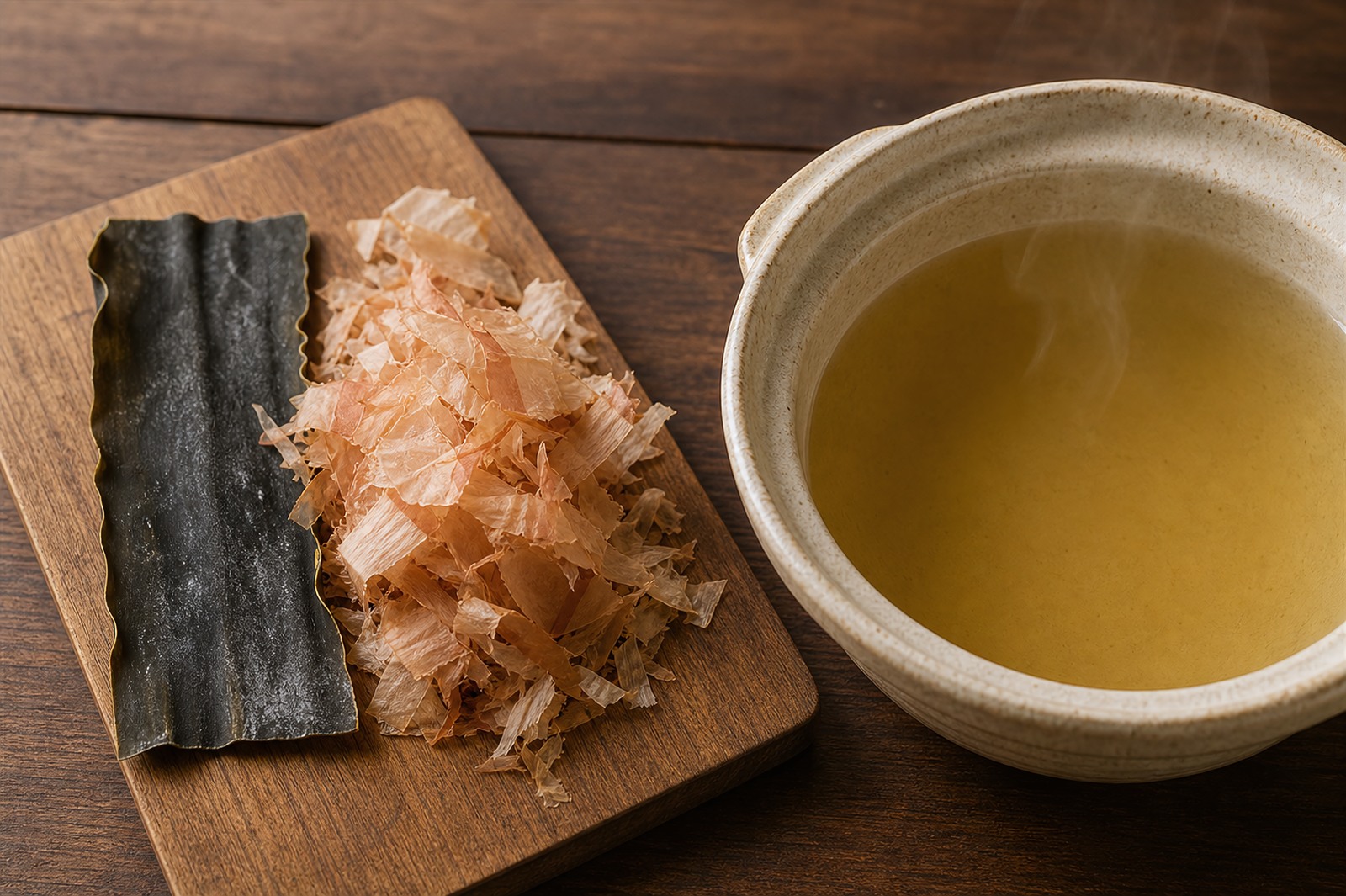
Do not skip the soup to save time. The soup is what carries the dashi, and dashi is the thread that ties the tray together. If you have ten minutes, make a quick awase dashi with kombu and a small handful of katsuobushi: 1 litre water, 10 g kombu steeped at 60C (140F) for 30 minutes, then 20 g katsuobushi steeped off the heat for 2 minutes, strained.
Do not over-portion the shusai. A piece of fish the size of your palm is enough. The whole tray, not one dish, is the meal. The same restraint runs through other classical kitchens — think of the way the French mother sauces branch into a whole map of dishes from a small set of bases.
Leftover dashi keeps three days in the fridge, or freeze it in an ice cube tray for soup tomorrow. Leftover rice becomes ochazuke: pour hot tea or warm dashi over it, scatter a pickle on top, and you have the next morning’s quiet breakfast.