
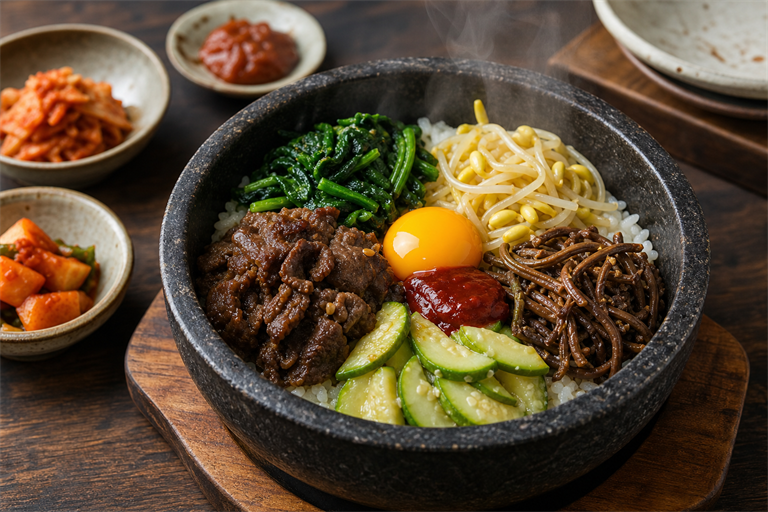

Bibimbap belongs to the end of the week, when the refrigerator holds the tail ends of several banchan: spinach from earlier prep, kongnamul from another day, gosari that has been soaking. Rice comes out of the cooker still steaming. A hot stone bowl gets a rub of sesame oil, and the kitchen smells of toasted rice and garlic before the bowls reach the table. The crust at the bottom, the nurungji, is worth chasing with a spoon.
Bibimbap (비빔밥), “mixed rice,” is not a single recipe. It is a banchan-assembly project. Short-grain rice, five seasoned vegetable namul, a spoon of gochujang sauce, and a yolky egg. The fermented spine is gochujang. The crust comes from a hot dolsot, or any heavy steel bowl you own.
| Yield | 4 servings |
| Prep time | 25 minutes |
| Cook time | 35 minutes |
| Total time | 1 hour |
| Difficulty | Intermediate |
Ingredients
For the rice and bowl
- 400 g short-grain white rice (sushi rice works)
- 480 ml water
- 4 tsp toasted sesame oil (for the bowls)
For the five banchan
- 200 g spinach, washed (sigeumchi-namul)
- 200 g soybean sprouts (kongnamul)
- 80 g dried gosari, soaked overnight (about 200 g rehydrated)
- 1 medium zucchini, 250 g, julienned (aehobak-namul)
- 200 g beef sirloin, sliced thin (or 150 g shiitake for vegetarian)
For seasoning the namul
- 4 cloves garlic, minced
- 2 spring onions, finely sliced
- 4 tbsp toasted sesame oil (divided)
- 2 tbsp toasted sesame seeds
- 1 tbsp soup soy sauce (guk-ganjang)
- 1 tbsp regular soy sauce
- 1 tsp sugar
- Fine sea salt
For the gochujang sauce (the 3:1:1:1:1 ratio)
- 3 tbsp gochujang
- 1 tbsp toasted sesame oil
- 1 tbsp rice vinegar
- 1 tbsp sugar
- 1 tbsp water
- 1 tsp toasted sesame seeds
To serve
- 4 large eggs; choose pasteurized shell eggs if serving the yolks raw or runny
Equipment
- Dolsot (Korean stone bowl), small cast iron skillet, or a heavy steel bowl per person
- One pot for blanching (1.5 to 2 litres)
- Wide skillet for stir-frying
A Saturday method, from the rice up
-
Rinse the rice in cold water until it runs almost clear, about three changes. Drain 10 minutes. Cook with 480 ml water in a rice cooker, or in a covered pot: bring to a boil, then 12 minutes on low, then 10 minutes off-heat with the lid on. A slightly firm bite holds up under the sauce. If you want to go deeper on technique, the same rinse-and-rest logic shows up in how Tokyo home cooks handle Japanese short-grain rice.
-
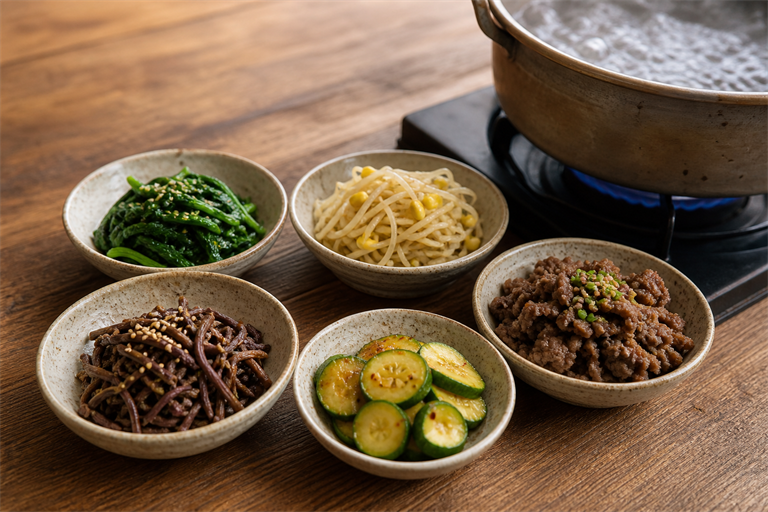
While the rice rests, set a pot of salted water (1 tsp salt per litre) to a rolling boil. This is your blanching pot. It will work for spinach, sprouts, and zucchini in sequence.
-
Blanch the spinach 30 seconds until just wilted. Lift it out with tongs into ice water. Squeeze the water out hard with your hands. Cut into 4 cm lengths. Dress with 1 minced garlic clove, 1/2 tsp salt, 1 tsp sesame oil, 1 tsp sesame seeds. Salt seasoning keeps the green colour clean. Soy would muddy it.
-
Add the soybean sprouts to the same water. Cover with the lid for the first 4 minutes. Opening the pot midway leaves a raw, beany smell that won’t cook out. Boil 5 minutes total. Drain, rinse cold. Dress with 1 garlic clove, 1 sliced spring onion, 1/2 tsp salt, 1 tsp sesame oil. Salt again, for the same colour reason.
-
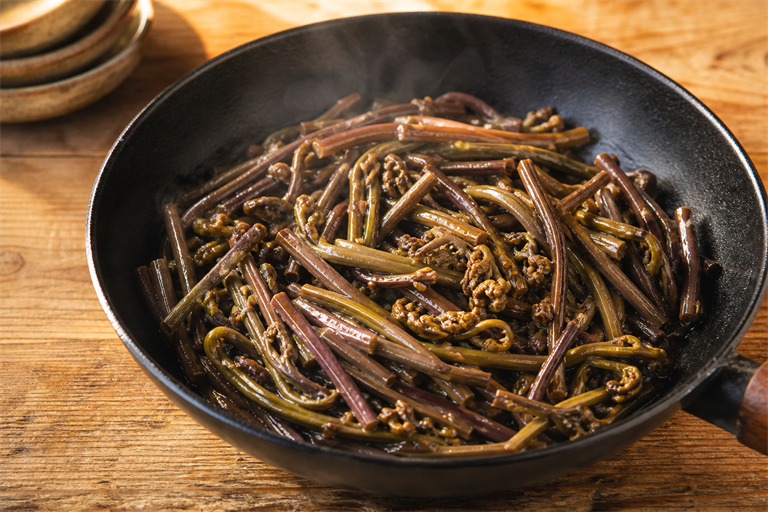
Squeeze the rehydrated gosari and cut into 5 cm lengths. Heat 1 tbsp sesame oil in a skillet over medium. Add the gosari and 1 tbsp soup soy sauce. Stir-fry 4 minutes until glossy. Soup soy here, because gosari has an earthy taste that wants depth, not brightness.
-
Salt the julienned zucchini with 1/2 tsp fine salt. Wait 8 minutes. Squeeze gently. Stir-fry in 1 tsp sesame oil over medium-high for 2 minutes, just until translucent, not collapsing. Finish off heat with 1 garlic clove and a pinch of salt. Salted, not soyed, to keep it pale green.
-
Marinate the sliced beef with 1 tbsp regular soy sauce, 1 tsp sugar, 1 minced garlic clove, and 1 tsp sesame oil for 10 minutes. Stir-fry in a hot pan 3 minutes until the edges char slightly. For the vegetarian swap, use shiitake with the same marinade and stir-fry 4 minutes.
-
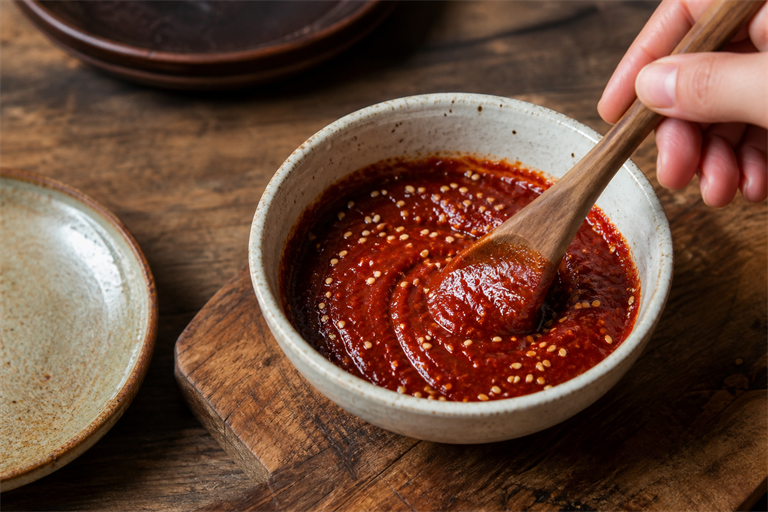
Whisk the gochujang sauce ingredients in a small bowl until smooth. The water and vinegar are not optional. They loosen the paste so it slips around each grain of rice instead of sitting in one red lump.
-
For the nurungji crust: heat the dolsot or steel bowl empty over medium-low for 4 minutes. Rub the inside with 1 tsp sesame oil. Pack 1 cup of hot rice into the bottom and press lightly. Leave it on the heat 5 to 6 minutes while you arrange the rest. You will hear a faint crackle as the crust forms.
-
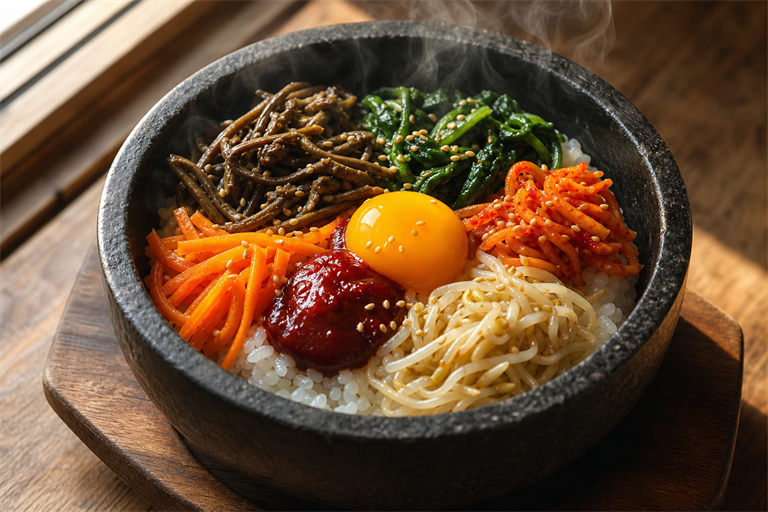
Lay the five banchan around the rice in clockwise wedges. Top with an egg cooked until both white and yolk are firm. For a raw or runny yolk, use a pasteurized shell egg, following FDA egg-safety guidance; the hot bowl alone is not a reliable cooking step. Serve fully cooked eggs to young children, pregnant people, older adults, and people with weakened immune systems. Spoon 1 tbsp of gochujang sauce beside the egg.
-
Bring the bowl to the table while it is hot. Mix from top to bottom, scraping up the rice crust and distributing the vegetables, cooked egg or pasteurized yolk, and sauce. Mixing time does not establish that an unpasteurized raw egg has been safely cooked.
Salt or soy? The colour decides
A side-by-side finish makes the point quickly: spinach dressed with fine sea salt keeps a clean jade green, while spinach finished with guk-ganjang turns the colour of old tea within about ten minutes. That is the whole rule, in one comparison.
| Banchan | Seasoning | Why |
|---|---|---|
| Sigeumchi (spinach) | Salt | Keeps the green clean |
| Kongnamul (sprouts) | Salt | Pale, neutral, refreshing |
| Aehobak (zucchini) | Salt | Stays pale green |
| Gosari (fernbrake) | Soup soy | Earthy, wants depth |
| Beef or shiitake | Regular soy + sugar | Wants colour and savour |
A few small notes to keep by the stove
Five banchan is traditional, not fixed. Carrot, lotus root, doraji, eggplant all belong. Hold the colour rule: white, green, brown, yellow, red.
Guk-ganjang and regular ganjang are different soy sauces. Soup soy is saltier and lighter in colour. Use it where you don’t want darkening.
Gosari is the dish’s gift and its trap. Under-soaked, it turns woody. Soak in cold water overnight, then simmer 20 minutes before stir-frying.
For nurungji on an induction hob, use a cast iron skillet over medium-low. Stone bowls don’t read on induction.
Memorise the sauce ratio: 3 gochujang : 1 sesame oil : 1 vinegar : 1 sugar : 1 water. It clings.
What to put beside it
Bibimbap eats with a clear soup on the side: miyeok-guk (seaweed) or a small bowl of doenjang-jjigae built the Seoul way for a fuller table. A cup of barley tea (boricha) cuts the sesame oil. On a hot day, pour cold makgeolli.
The banchan keep separately, covered, three to four days in the refrigerator. Cook fresh rice each time you serve. The gochujang sauce keeps two weeks in a jar. You will want it on eggs tomorrow, on cold tofu after that, on the bottom of a lettuce leaf with grilled pork on Saturday. Make double — the same fermented-chili logic powers dishes like a proper Sichuan mapo tofu, and once you have a jar you will reach for it constantly.