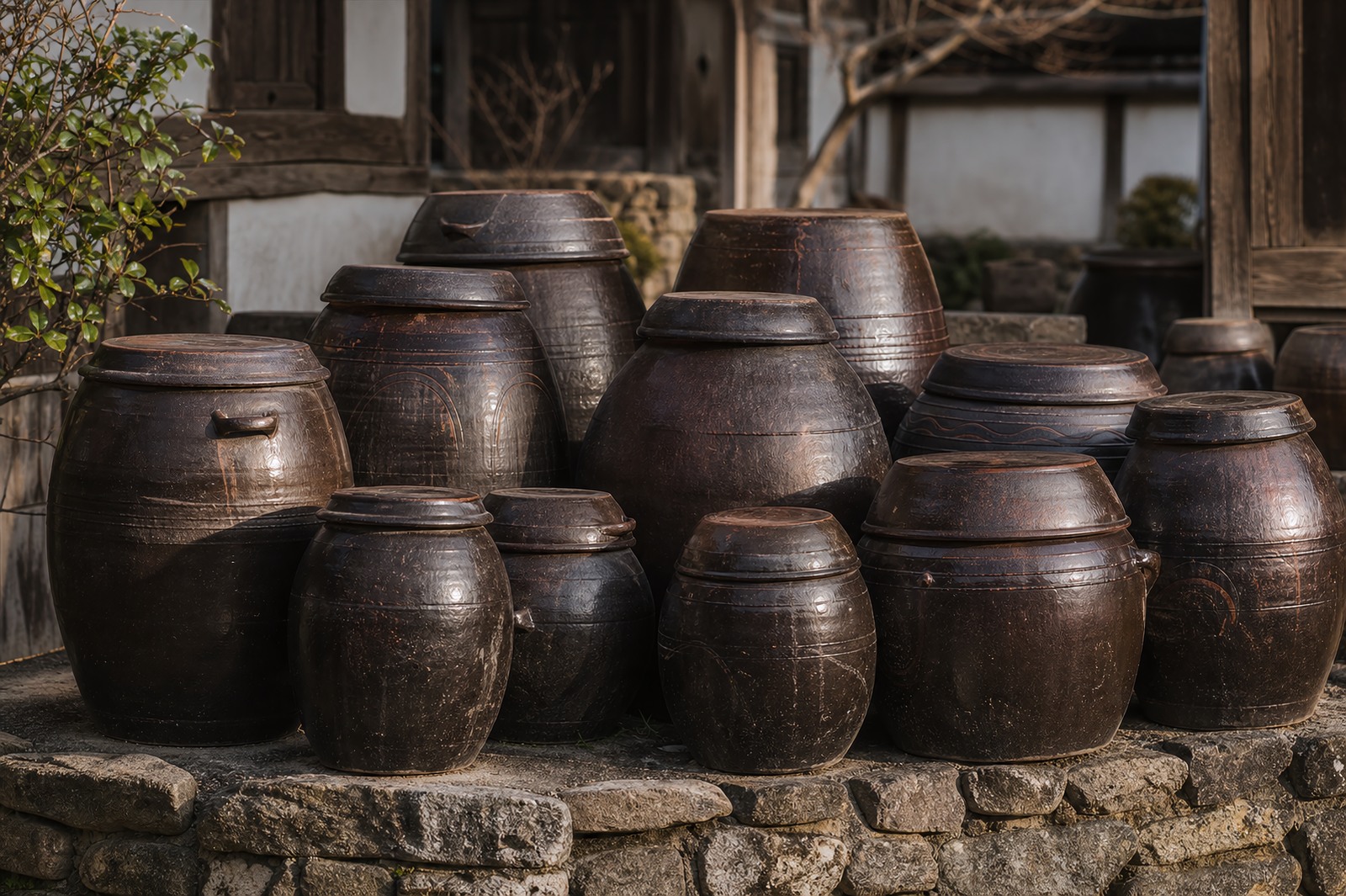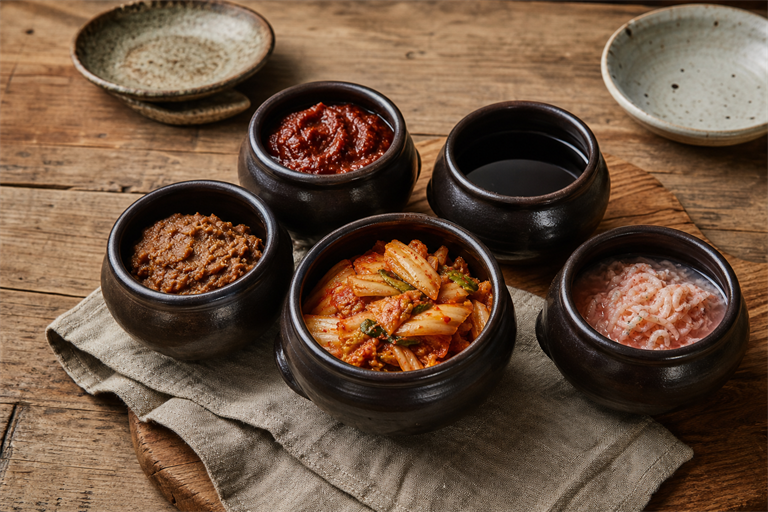

Traditional Korean home fermentation lives on rooftops and in courtyards, where onggi (porous clay jars) stand in rows through the seasons. Late February is the moment to check the doenjang. Lift the lid and the smell rises before it is fully off: deep, salty, faintly sweet, like a forest floor in summer. A thumbnail’s taste tells you it is ready. Once it is, that jar sets the flavour of every meal for the next year.
Korean home cooking rests on five fermented foundations: doenjang (된장), ganjang (간장), gochujang (고추장), kimchi (김치), and jeotgal (젓갈). They are not five condiments to memorize. They are one lineage of soybeans, grain, salt, chile, vegetables, and seafood, and that lineage touches every soup, stew, banchan, and rice bowl on a Korean table.
One Soybean Brick, Two Sauces: The Meju Origin
The lineage begins with meju (메주). Meju is made in December, when the kitchen is cold enough to slow the bacteria but warm enough to wake the mould. Steamed soybeans are mashed, packed into bricks the size of a paperback book, and hung from the ceiling to dry for six weeks. Rice straw on the strings carries Bacillus subtilis from the rice fields into the brick.
In late February the bricks go into a brine of sea salt and water, around 18 to 20 percent salt by weight. They sit in an onggi for about 60 days, the lid lifted on sunny days, closed at night. Then comes the split. The liquid is strained off and aged: this is ganjang (간장), Korean soy sauce, darker and more savoury than Japanese shoyu. The solids go back into the jar with extra salt and age longer. This becomes doenjang (된장), the soybean paste behind doenjang-jjigae.
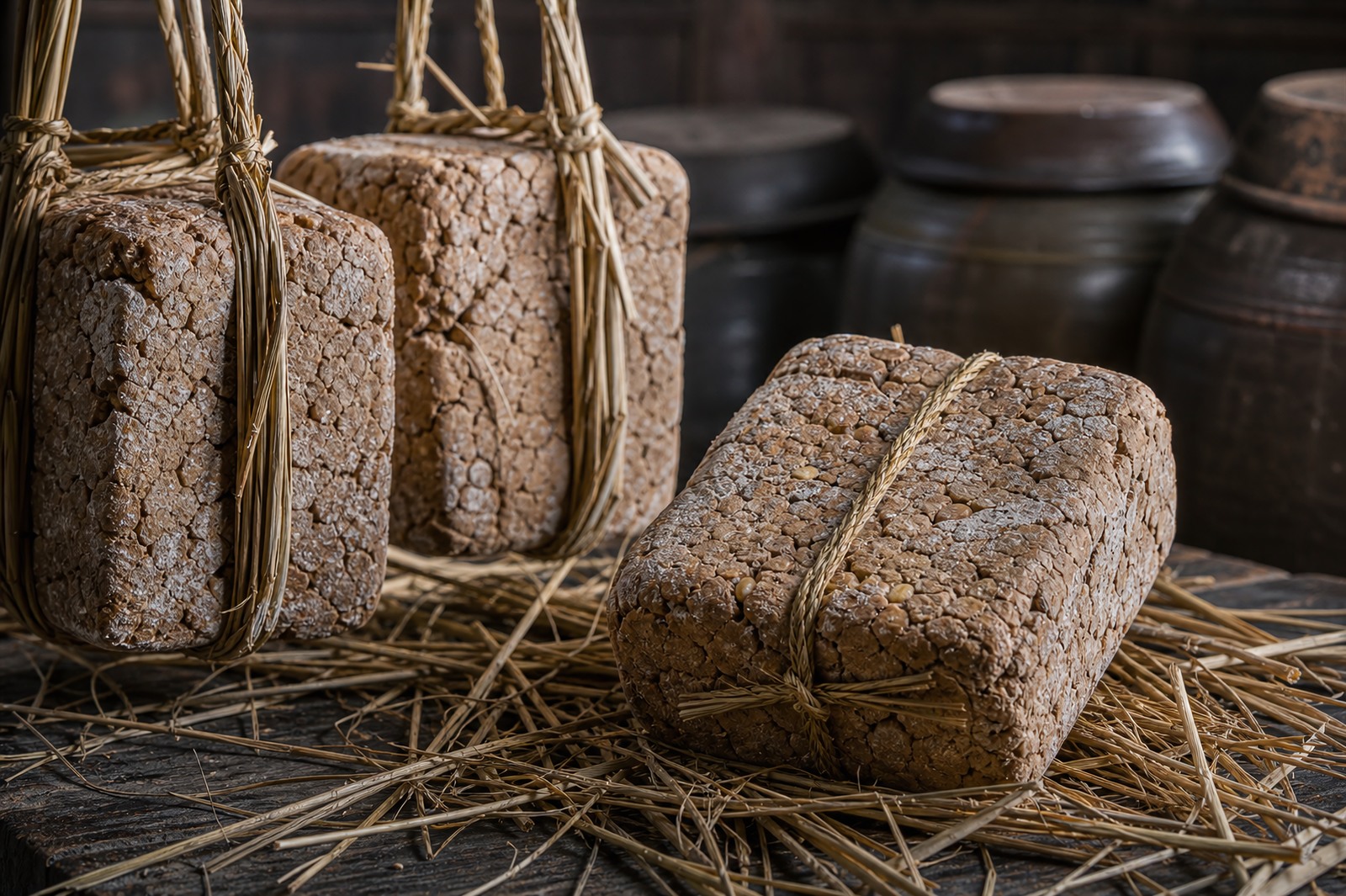
One brick. One brine. Two foundations.
Gochujang: Where Grain and Chile Meet the Meju Tradition
Gochujang (고추장) starts at the meju stage too. It adds two ingredients: glutinous rice syrup, and gochugaru, the sun-dried chile flakes that turn the paste red. Traditional gochujang uses meju powder, malted barley, rice syrup, gochugaru, and salt, fermented in an onggi for at least six months.
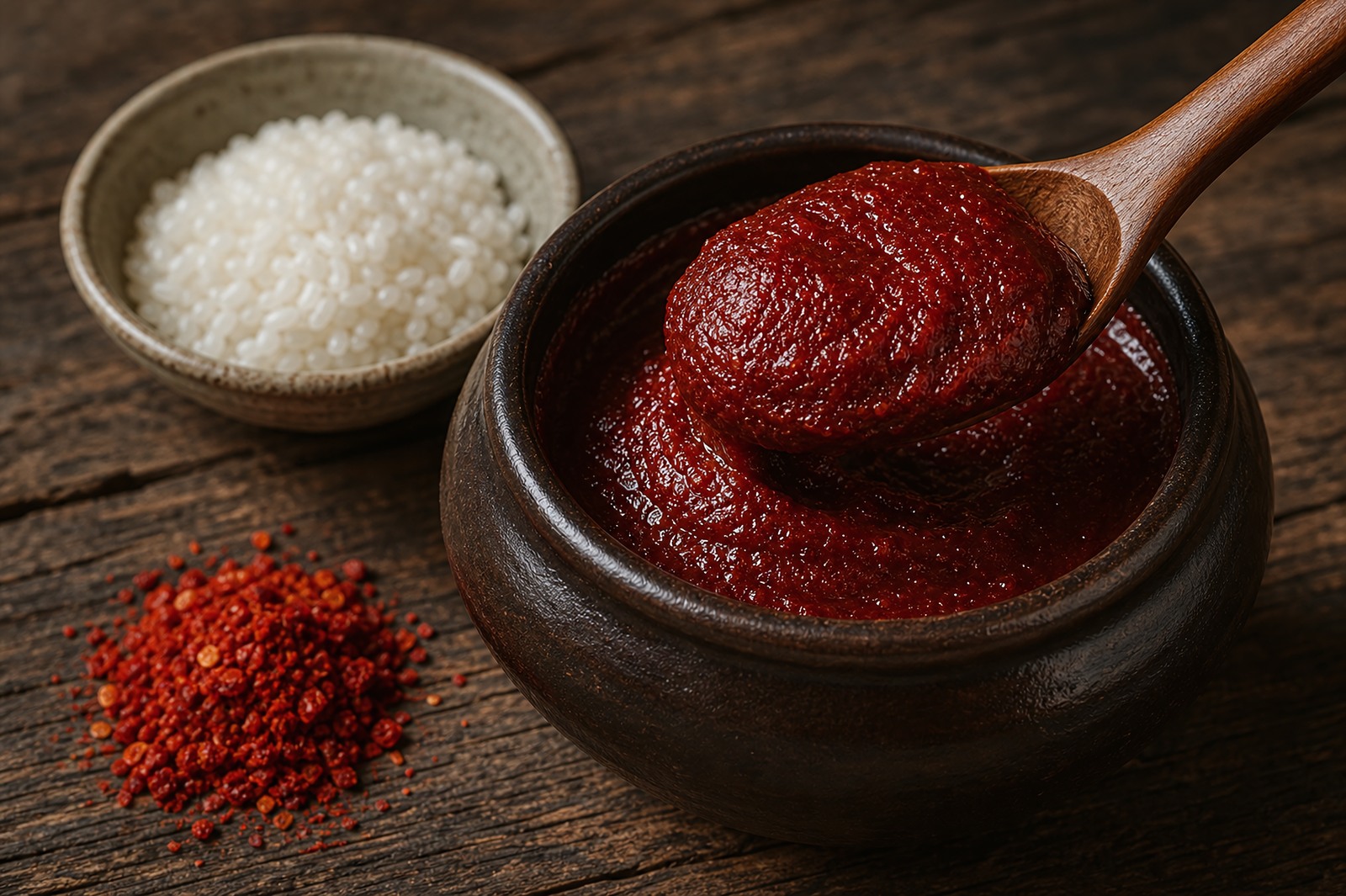
Good gochujang tastes sweet first, then savoury, then warm at the back of the throat. Cheap supermarket gochujang skips the meju and leans on corn syrup. The Sunchang region in Jeollabuk-do is the famous source. If you find a brand from there with meju listed on the label, buy it. Set a Sunchang jar with meju on the label next to a standard supermarket tub in a plain bibimbap and the difference reads as honest sweetness rather than a dull sugar edge.
Kimchi and Jeotgal: The Vegetable Pillar and Its Hidden Engine
Kimchi (김치) is the vegetable foundation. Napa cabbage is salted for six to twelve hours until it bends like a wet towel. Rinse it, then coat in a paste of gochugaru, garlic, ginger, scallions, and grated pear or radish. One ingredient surprises most beginners: jeotgal.
Jeotgal (젓갈) is salted, fermented seafood. The most common kinds in kimchi paste are saeu-jeot (tiny salted shrimp) and myeolchi-jeot (anchovy sauce, similar in colour to fish sauce but stronger). Without jeotgal, kimchi tastes flat. The amino acids from the fermenting seafood feed the lactic bacteria and give the cabbage its savoury bottom note.
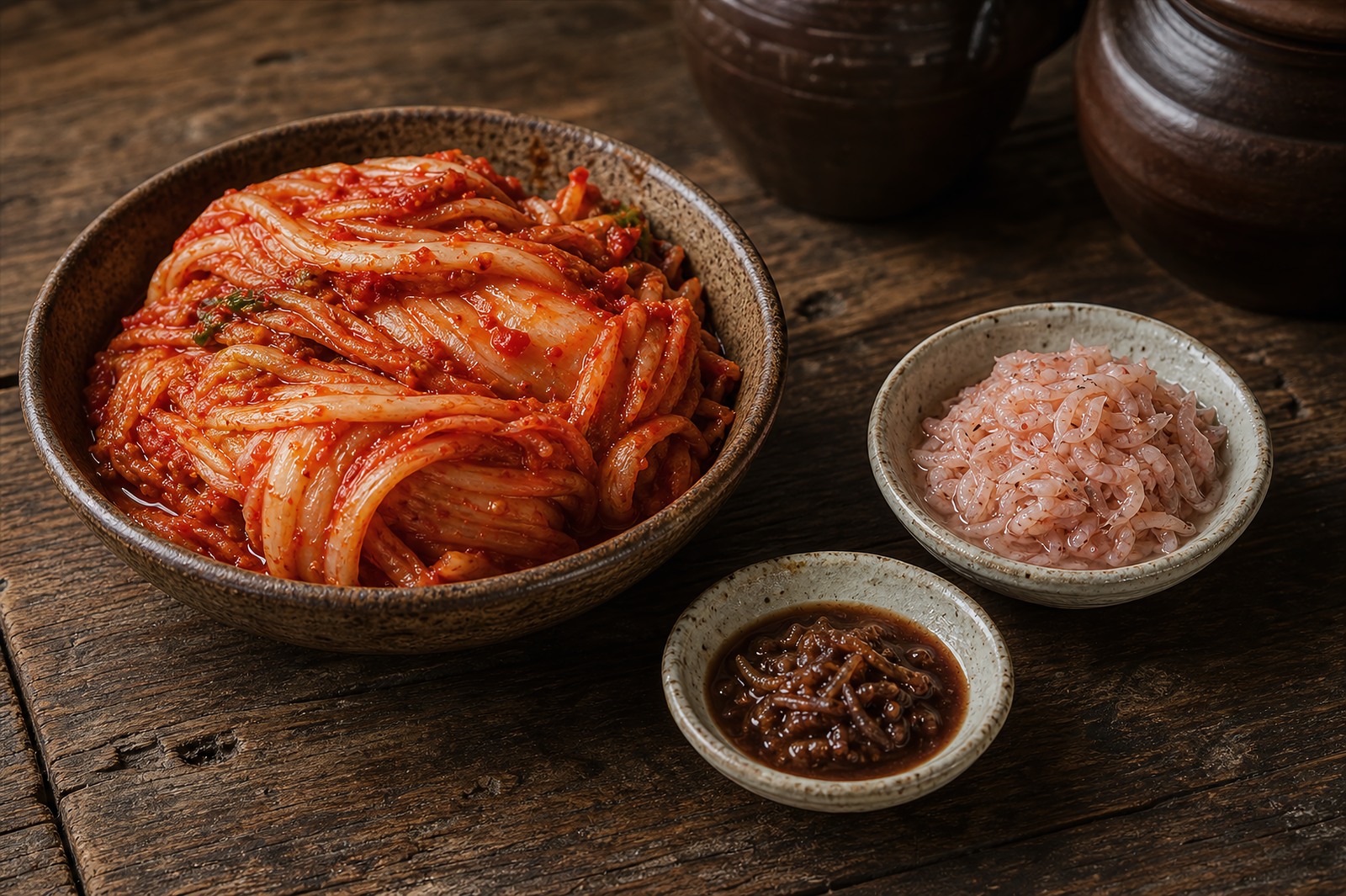
Jeotgal does more than season kimchi. A teaspoon of saeu-jeot stirred into a tofu soup will deepen it more than a tablespoon of salt. A well-stocked Korean fridge often keeps four jeotgal within reach: salted shrimp, anchovy sauce, salted pollock roe (myeongnan-jeot), and salted oysters. They are the hidden engine behind quiet, savoury cooking.
Reading a Korean Dish: How the Five Stack on the Table
Once you can see the lineage, the five fermented foundations turn into a system you can read at a glance. Here is the kind of week a Korean home cook might set out, mapped to its foundations:
| Dish | Foundation in play |
|---|---|
| Doenjang-jjigae (soybean stew) | doenjang + anchovy stock |
| Galbi-jjim (braised short ribs) | ganjang + pear + garlic |
| Tteokbokki (chewy rice cakes) | gochujang + anchovy stock |
| Kimchi-jjigae (kimchi stew) | aged kimchi + pork + the jeotgal already in the kimchi |
| Oi-muchim (cucumber banchan) | gochugaru + ganjang + a drop of saeu-jeot |
| Bibimbap | gochujang on top, several banchan underneath |
Every dish leans on one or two of the five. Anchovy or kelp stock is the second layer underneath. Garlic, sesame oil, and scallion are the third. Once those three layers live in your fridge, weeknight Korean cooking takes 30 minutes.
How They Keep, and What to Cook Tomorrow
Doenjang and gochujang keep in the fridge for a year once opened. Press a piece of plastic wrap onto the surface so the top does not dry out. Ganjang lives in the pantry for two years. Jeotgal stays good for six months refrigerated, and a small jar lasts a long time because you use it by the teaspoon. Kimchi keeps for three months in its prime, then turns sour and becomes the foundation for kimchi-jjigae and kimchi-bokkeumbap the following week. That is the rhythm of a Korean fridge: a drawer of ferments is a week of dinners, and the older jars are tomorrow’s stew.