
A small Shandong dumpling shop in Chengdu sits between a mahjong parlour and a mala hot pot place. Clear chicken stock lands over folded jiaozi. Scallion. Ginger. Nothing else. No chile, no huajiao. Against those louder flavours, the plain steam points toward the older regional traditions.
English-language introductions to Chinese food often begin with Sichuan, Cantonese and Hunan. Two older, quieter schools offer a different starting point: Shandong (Lu cuisine) in the north, and Huaiyang along the lower Yangtze.
For one weekend, one pot, and one shopping trip, which one comes first? The useful answer depends on your pantry, your knife hand, and whether you own a carbon steel wok or a heavy lidded pot.
Why these two schools matter
Shandong is the northern imperial root. It fed the Ming and Qing courts. Its scallion-forward, stock-driven cooking is the spine of Beijing court food, Peking duck included.
Huaiyang is the southern literati root, grown along the Grand Canal around Yangzhou, Zhenjiang and Huai’an. Its knife work and gentle sweetness defined banquet cooking for scholars, and later state dinners in Beijing and Nanjing.
Sichuan and Hunan came to the wider Chinese table more recently. Cantonese has its own long line. But the fine-dining spine of Chinese cooking runs through Lu and Huaiyang. Ask a Sichuan chef why she reaches for clear stock, or watch a Cantonese banquet cook fuss over knife cuts. The answer sits in one of these two kitchens.
At a glance: side by side
| Feature | Shandong (Lu) | Huaiyang |
|---|---|---|
| Region | Northern coast, Jinan and Jiaodong peninsula | Lower Yangtze: Yangzhou, Huai’an, Zhenjiang |
| Grain base | Wheat (mantou, jiaozi, hand-pulled noodles) | Rice (white rice, rice cakes, glutinous fillings) |
| Signature aromatic | Scallion, garlic, Shanxi black vinegar | Ginger, Shaoxing wine, rock sugar, spring bamboo |
| Fat | Peanut oil, rendered lard | Lard, light vegetable oil |
| Protein anchor | Sea fish, offal, lamb, chicken for stock | Freshwater fish, river shrimp, pork belly, tofu |
| Core stocks | Qing tang (clear) and nai tang (milky) | Light chicken/pork stock, ham broth |
| Key techniques | Bao (explosive stir-fry), pa (braise-glaze), stock work | Knife skills, slow steaming, rock-sugar red braise |
| Heat level | Zero chile, sharp vinegar tang | Zero chile, gentle sweet-savoury balance |
| Flagship dishes | Sweet-and-Sour Yellow River Carp, Dezhou braised chicken, Nine-Turn Large Intestine | Lion’s Head meatballs, Wensi tofu, crystal pork terrine, Yangzhou fried rice |
| Home difficulty | Medium: needs high heat and stock discipline | High: needs knife control and patient steaming |
Geography and pantry
Shandong sits on the Yellow River delta and the Bohai coast. Wheat grows well there. The staples are steamed mantou, jiaozi and hand-pulled noodles, not rice. Scallion is the defining aromatic. It goes into cong shao (scallion-braised) dishes, and into finger-length whites for bao stir-fries. Shanxi black vinegar and local rice vinegar carry the sourness that cuts heavy stocks. Sea fish, sea cucumber, lamb and offal come from the coast and inland pastures.
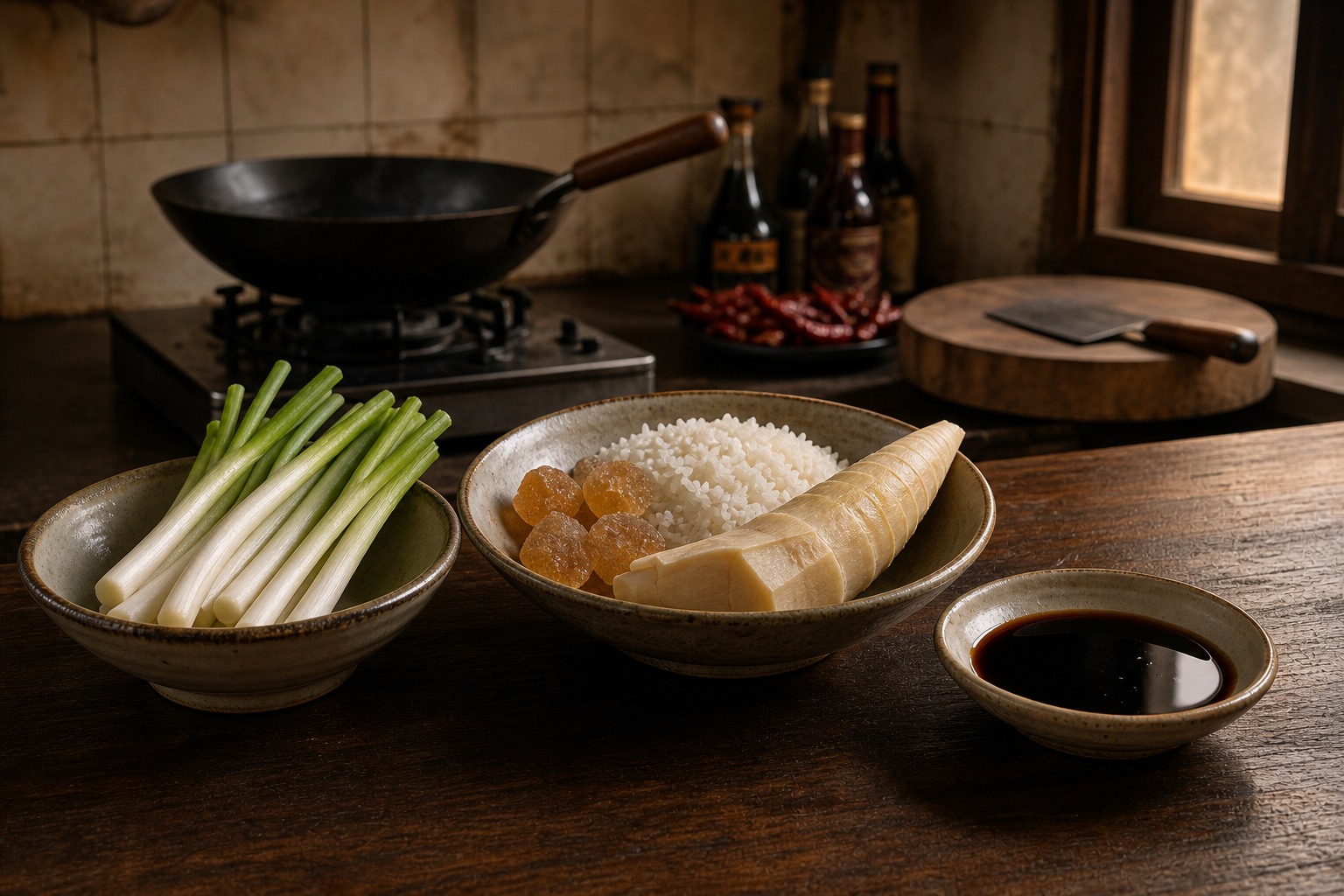
Huaiyang sits at the elbow of the Yangtze and the old Grand Canal. Rice fields, freshwater lakes and canals mean the pantry is built on carp, mandarin fish, river shrimp, hairy crab, bamboo and lotus. Rock sugar (bing tang) replaces the sharper vinegar of the north. Shaoxing wine and light soy do the seasoning work that dark soy would do further south. Lard, not peanut oil, is the fat that carries flavour through steaming and slow braising.
Signature techniques: bao, pa, knife, steam
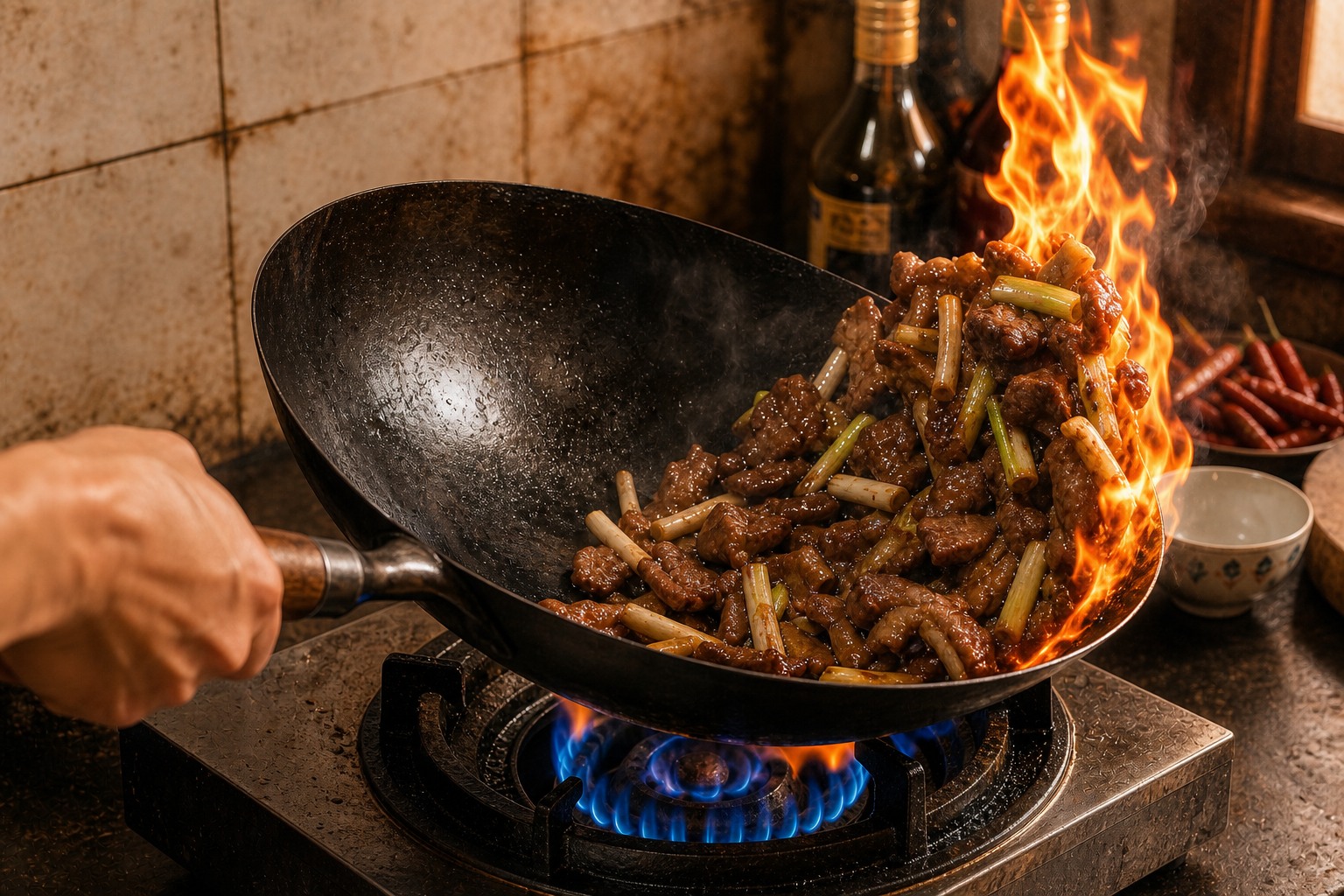
Shandong technique lives at two extremes. Bao (爆) is explosive stir-fry: a carbon steel wok pushed past 240C (465F), oil shimmering, protein and scallion tossed in for 30 to 45 seconds. Plate before the aromatics burn. Pa (扒) is its opposite. The ingredient sits still, the sauce reduces around it, and you slide it onto the plate without flipping.
Then there is stock. Qing tang (清汤) is a clear stock clarified with a raw chicken meat paste, simmered 4 to 6 hours. It is the base of the great Shandong banquet soups. Nai tang (奶汤) is the milky sibling, boiled hard until collagen and fat emulsify into an opaque broth. Done properly, a qing tang finishes the colour of weak jasmine tea, with no cloud at all, and a spoon lowered in should still read the pattern of the ladle underneath.
Huaiyang runs on knives and time. Wensi tofu (文思豆腐) is a block of silken tofu sliced into hair-thin threads and floated in clear broth without breaking. Home cooks in Yangzhou practise that cut for years with a long thin blade. Steaming is the other pillar. Crystal pork terrine (shui jing yao rou) is pork skin and hock steamed for 3 hours, then chilled until the collagen sets into a clear jelly. Hong shao here starts with rock sugar melted to caramel, not the darker soy-heavy version you meet in Shanghai.
Flagship dishes decoded
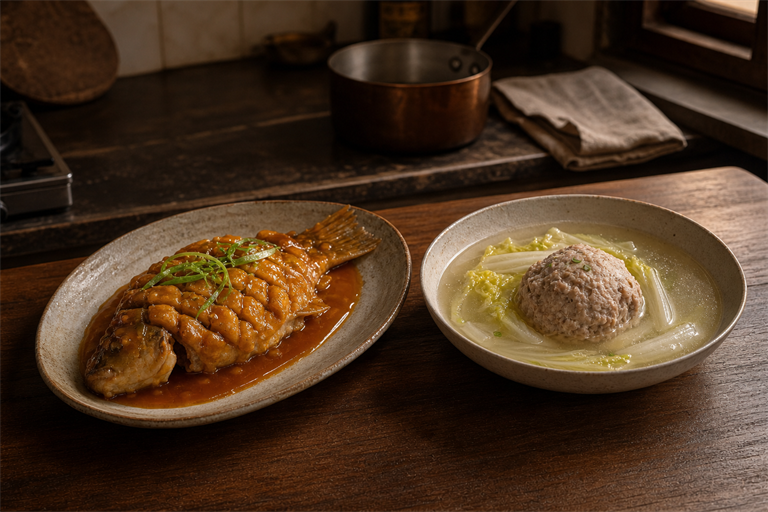
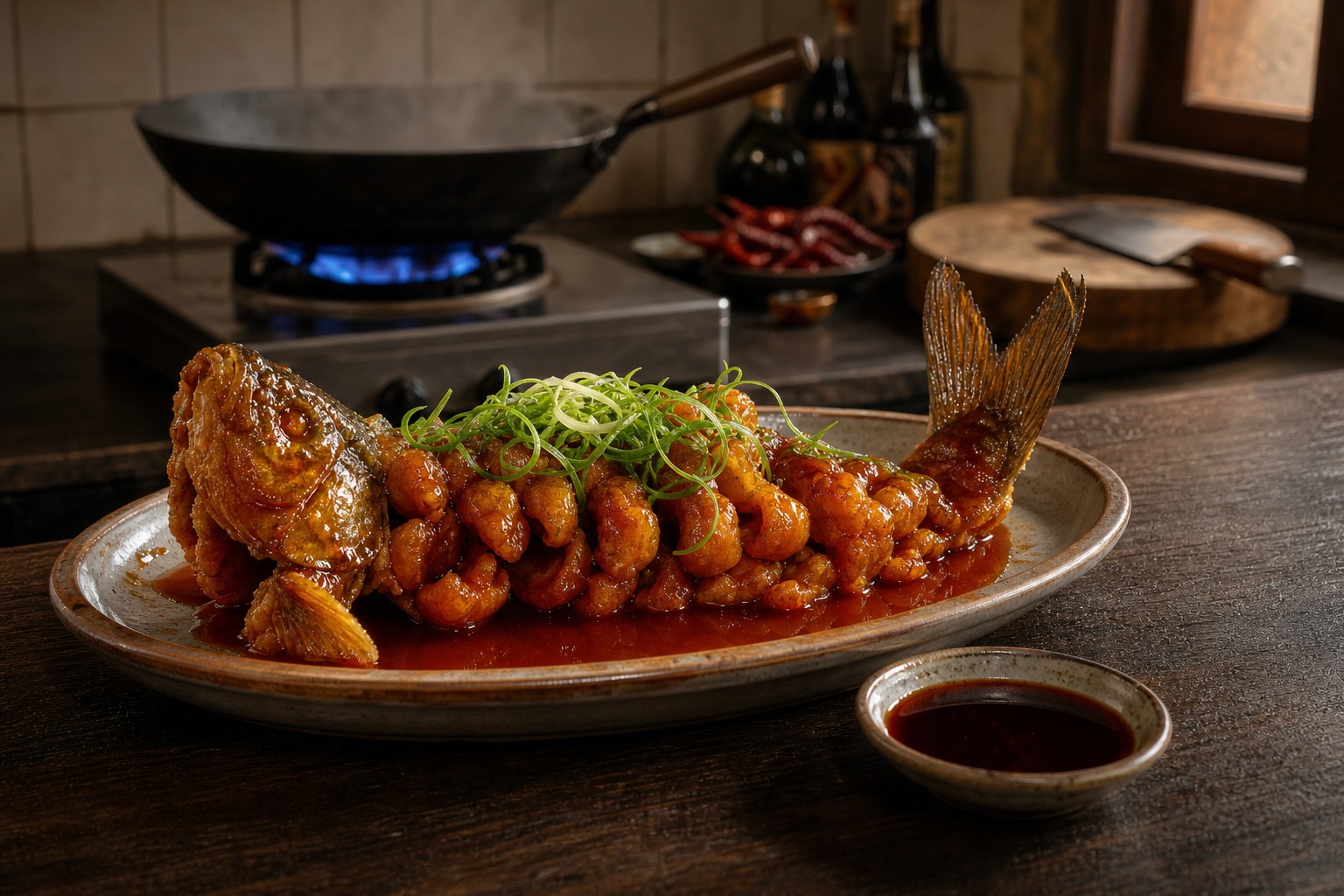
Sweet-and-Sour Yellow River Carp (糖醋鲤鱼) is the Shandong dish most home cooks recognise. A whole carp is scored, dredged in starch, and deep-fried at 180C (355F) for about 4 minutes until the flesh curls outward. It gets bathed in a sauce of Shanxi vinegar, sugar and light soy in roughly a 2:2:1 ratio. The fish reaches the plate with head and tail arched upward. Dezhou braised chicken (德州扒鸡) uses the pa method: a whole bird cooks in a spiced master stock for 4 hours, until you can pull the leg bones out clean.
Lion’s Head meatballs (狮子头) are the Huaiyang counter-argument. Hand-chopped pork belly, roughly 70 percent lean and 30 percent fat, mixed with diced water chestnut and a splash of Shaoxing wine. Shaped into balls the size of a fist. Braised in light stock with napa cabbage for 90 minutes. No searing. The texture stays loose and tender, without the tight bounce of a Cantonese meatball.
Wensi tofu, as above, is the knife dish. Yangzhou fried rice at home leans on day-old rice, diced ham, shrimp, egg, spring onion and green peas, tossed over high heat in under 3 minutes. Grains stay separate. Egg coats each one. No dark soy in the pan.
Which to cook this weekend
Cook a Shandong dish first if:
- You own a carbon steel wok and can push the burner past medium-high.
- Your pantry already has Shanxi vinegar, light soy, scallions and peanut oil.
- You want a weeknight dish in 20 minutes. Try cong bao yang rou (scallion-blasted lamb): 200g sliced lamb leg, 4 scallion whites, 1 tbsp Shanxi vinegar, 1 tsp light soy. Total wok time: 45 seconds.
Cook a Huaiyang dish first if:
- You have a Sunday afternoon and a heavy lidded pot.
- You want to practise knife work: julienned ginger, hair-thin scallion whites, tofu threads.
- You are cooking for guests who do not eat chile. Lion’s Head feeds 4 people from 500g pork belly and a small napa cabbage, about 2 hours from chopping board to table.
Pick Shandong for wintering, wheat dinners, and stock-led soups. Pick Huaiyang for spring vegetables, freshwater fish, and steamed dishes that reward patience.
The timing home cooks miss
A Shandong bao stir-fry needs the wok hot enough that oil ripples but does not smoke. Drop scallion whites first. Count 8 seconds. Then the protein. Total wok time under 60 seconds, or the scallion turns bitter and the dish tastes of raw allium instead of caramel.
A Huaiyang Lion’s Head needs stock at a bare tremble, never a simmer. Big bubbles break the meatballs open around the 30-minute mark. Keep the surface moving like breath on a mirror for the full 90 minutes. The meatball holds shape while the fat renders through the pork.
That is the line between a Shandong dish that tastes of the north and one that tastes like takeaway. It is also the line between a Huaiyang meatball that feels like silk, and one that feels like a hamburger dropped in soup.