
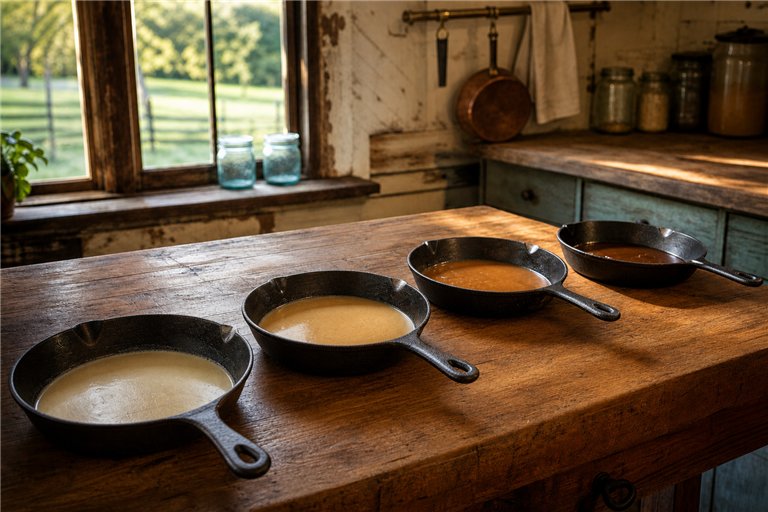

A black iron skillet on a back burner, close to forty minutes of steady stirring, and a kitchen that fills with the smell of hot flour and toasted pecans: that is the working shape of a Louisiana gumbo roux. One hand on a wooden spoon, the other free. When the flour hits the color of an old penny, the pan comes off the heat and the trinity goes in to stop the cook. That skillet, and that color, is the whole argument of this piece.
A roux is flour cooked in fat, and its color decides what dish it can carry. The four classical stages sit on a spectrum. That spectrum runs from about five minutes on low heat to nearly an hour of Cajun patience. The stages are white, blonde, brown, and brick. Louisiana pulled the darker end into its own tradition. The French mother sauces stay closer to the pale end. Knowing where to stop is the whole skill.
What color costs you in thickening
Every minute a roux spends on the heat, it loses a little of its ability to thicken. The starch granules that carry the thickening job break down as they brown. A tablespoon of white roux will set about twice as much liquid as a tablespoon of brick roux. So dark Cajun roux is really a flavor base with a small thickening bonus. Gumbo makes up for it with okra or filé. Béchamel does not have to make up for anything, because the roux is doing all the work.
Pick your color for what the dish is supposed to taste like. Then adjust the quantity to hit the body you want. That is the order the decision goes in.
The four roux stages at a glance
Here is the spectrum on one page. Times assume equal weights of fat and flour, cast iron over medium-low heat, and steady stirring. Stainless runs a few minutes slower. Nonstick runs a few minutes faster because the surface reads hotter.
| Stage | Color | Time on medium-low | Aroma | Thickening (per tbsp) | Best for |
|---|---|---|---|---|---|
| White | ivory, no browning | 3–5 min | faded raw flour, warm butter | full | béchamel, velouté, mac and cheese |
| Blonde | pale straw, wheat cracker | 5–10 min | popcorn, toasted grain | 85–90% of white | chicken velouté, sausage gravy, chicken and dumplings |
| Brown | peanut butter to milk chocolate | 15–25 min | roasted nuts, light caramel | 60–70% of white | espagnole, étouffée, red beans |
| Brick / dark Cajun | dark chocolate to copper penny | 35–50 min | coffee, toasted pecans, near-scorched | 40–50% of white | seafood gumbo, chicken-andouille gumbo |
White roux: béchamel and velouté country
White roux is where the French mother sauces begin. Equal weights of butter and all-purpose flour, three to five minutes on medium-low, stirring the whole time. The color should barely shift from raw. The smell should move from chalky flour to warm butter and nothing further.
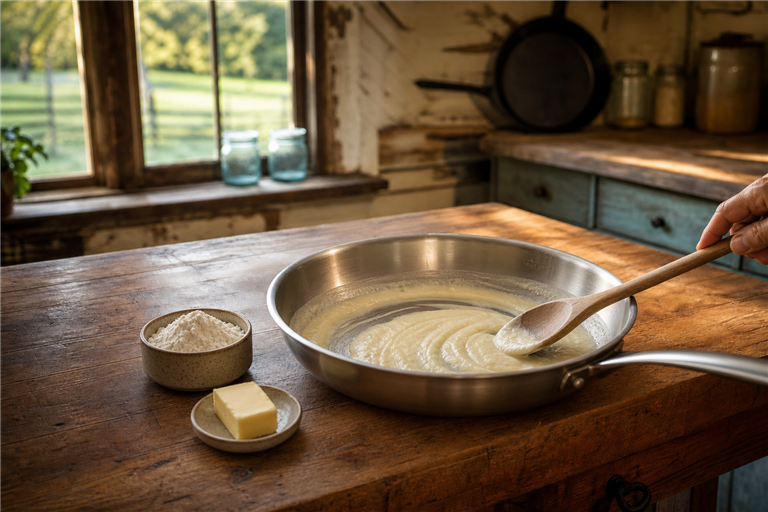
Thirty grams of flour and thirty grams of butter will set 500ml (about 2 cups) of milk into a coating béchamel. Swap milk for chicken stock and you have a velouté. Add a béchamel to shredded sharp cheddar and you have the base for a proper Nashville mac and cheese. Do not pull the roux off before three minutes. Raw flour tastes chalky in the finished sauce. The tell is a slow, quiet bubble and no more raw smell.
Blonde roux: the nutty middle for gravies and pot pies
Blonde roux is five to ten minutes past white. The color of a wheat cracker, or the crust of a good buttermilk biscuit. The smell moves toward popcorn and toasted grain. Thickening power stays high, around 85 to 90 percent of white.
Blonde is the roux for chicken and dumplings on a cold Sunday. It is also where sausage gravy lives, the kind ladled over split biscuits at breakfast. A blonde roux carries sausage fat without tasting like flour, and thickens without going flat.
Brown roux: espagnole, étouffée, and the flavor trade
Brown roux is 15 to 25 minutes on medium-low. Peanut butter at the near end, milk chocolate at the far end. The smell moves from roasted nuts to light caramel. Thickening drops to about 60 to 70 percent of white, so use more roux for the same body.
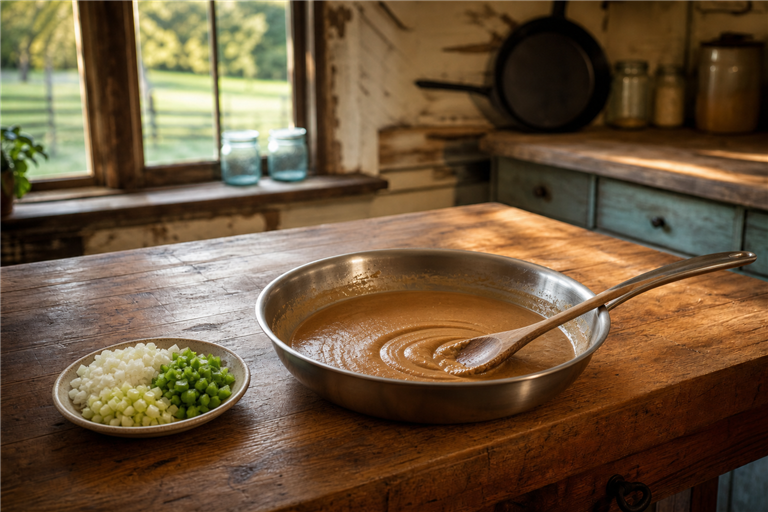
This is where Cajun cooking meets French. Espagnole, the brown mother sauce, starts here with a brown stock and mirepoix. Étouffée sits in the middle of the brown range, cooked in oil or lard, then finished with stock, the Cajun trinity, and shrimp or crawfish. Red beans and rice, cooked slow with andouille, uses a brown roux base for the pot liquor. At this color, butter will burn. Switch to a neutral oil or lard. Bacon fat also works, and adds a smoky note to a red beans pot.
Brick roux: gumbo territory, and how far is too far
Brick roux is 35 to 50 minutes of steady stirring on medium-low. The color runs from dark chocolate to the copper of an old penny. The smell moves from roasted nuts to coffee and toasted pecans. Thickening power falls to about 40 to 50 percent of white, so gumbo leans on okra or filé to finish the body.
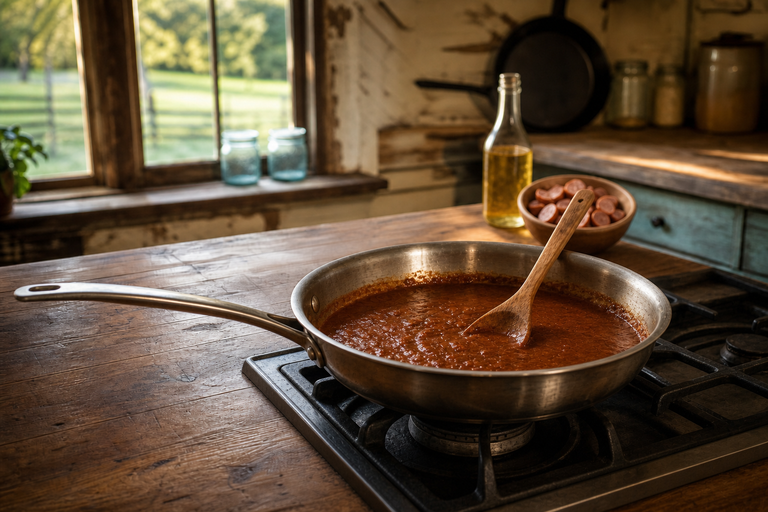
Use oil, not butter. Peanut oil is the Louisiana standard, half a cup with half a cup of flour, in a black iron skillet. Stir without stopping, and the last ten minutes move roughly twice as fast as the first fifteen. The window between right and ruined is small. If a single black speck appears, throw the batch out. One flake of scorched flour will make the whole gumbo taste burnt. A safer target for a first attempt is the shade of an old copper penny, not dark chocolate.
Reading a roux by smell, sound, and sight
Timers are a rough guide. Your senses are the real one. A roux tells you where it is, if you know what to listen for.
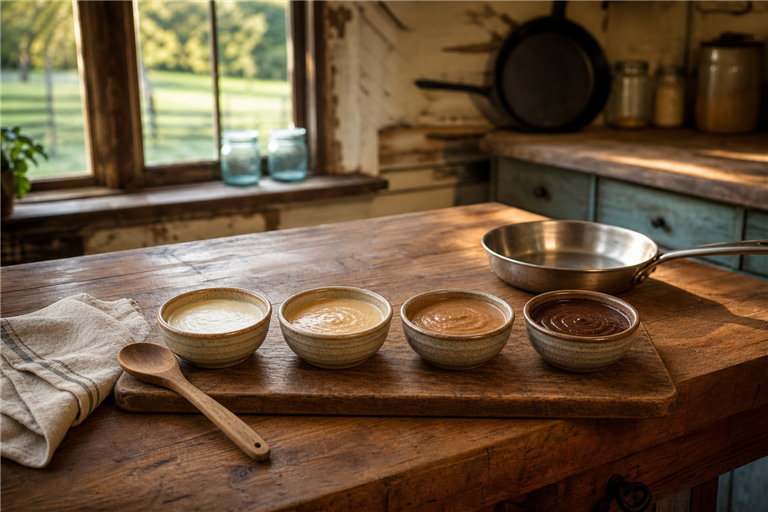
Smell moves through five stages: raw flour, warm butter, popcorn, roasted pecans, coffee. Past coffee is burnt, and burnt cannot be saved. Sound changes as water leaves the fat. Early on the pan bubbles and hisses. By the brown stage the sizzle quiets to a soft breathing. Sight is the last check. Compare the roux against something with a known color. A peanut butter jar for brown, a copper penny for brick, a dark chocolate bar for the far end.
Fat choices sort themselves by color. Butter for white and blonde, oil or lard for brown and brick. If you overshoot by a shade, drop the pan onto a cold burner and dump in your chopped onion, celery, and bell pepper. The trinity’s water content stops the cook cold. Fifteen degrees of overshoot is recoverable. Black flecks are not.
Picking a color for the dish you’re building
Match the color to the dish before you turn on the stove.
- White: béchamel, mac and cheese, cauliflower gratin, creamed spinach, chicken pot pie filling built on milk
- Blonde: chicken and dumplings, sausage gravy over biscuits, chicken velouté, chicken pot pie filling built on stock
- Brown: étouffée, red beans and rice, brown gravy for pork chops, espagnole
- Brick / dark Cajun: seafood gumbo, chicken-andouille gumbo, dark Creole gumbo
Two rules keep the choice honest. Pale sauces built on dairy need a white or blonde. Anything dark, meaty, or bayou-adjacent wants brown or brick. If you are new to the dark end, aim for old-penny brown on your first gumbo. Push a shade darker the second time, once you know what your stove does.
After the roux comes off
Once the roux comes off the heat and the trinity goes in, let the pan sit for five or ten minutes before building further. The onions sweat into the fat, the roux stops cooking, and the base settles into itself. By the time the stock goes in, the flavors have already met. That pause, taken while the pot quiets down before the andouille goes in, is the whole point. The dish is already halfway to Sunday by then.