
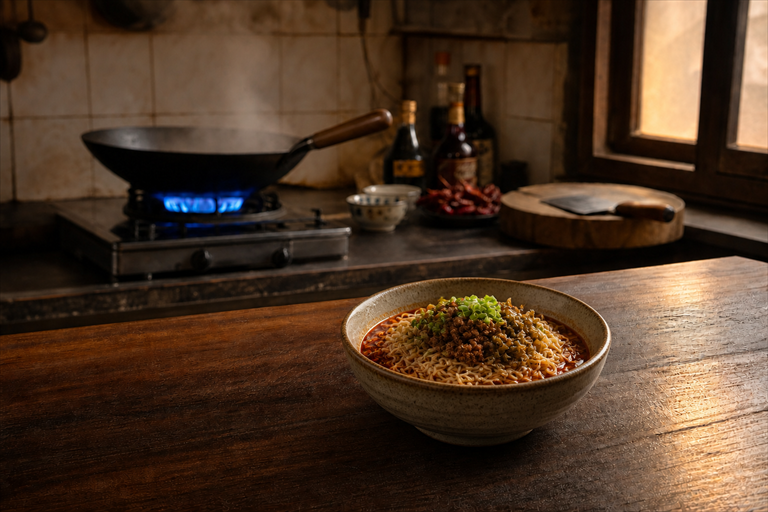
Chengdu dan dan mian arrives dry. Red chili oil pools at the bottom of a small bowl, and the noodles land on top warm and slick from the pot. Toss inside 30 seconds. Wait longer and the oil separates from the sesame paste, and the bowl goes grainy.
The Chengdu street version is not soupy. Broth is a diaspora adaptation. Real dan dan mian is a shallow bowl of chili-sesame sauce topped with pork fried crisp against sui mi ya cai. Portion the noodles at 120 g per bowl, no more.
The signature move is layering, not stirring in the wok. Sesame paste loosened with hot noodle water first, then soy, black vinegar, chili oil, ground toasted Sichuan peppercorn. Build the sauce in the bowl. Never in the wok.
| Yield | 4 small bowls |
| Prep time | 20 minutes |
| Cook time | 25 minutes |
| Total time | 45 minutes |
| Difficulty | Intermediate |
Chengdu dry-bowl vs the diaspora soup version
| Chengdu dry-bowl | Diaspora soup version | |
|---|---|---|
| Sauce | Built in the bowl | Tossed in wok or floated in broth |
| Broth | None | Chicken or pork stock |
| Portion | Xiao chi (small eat) | Main course |
| Topping | Dry-fried pork with sui mi ya cai | Ground pork simmered in sauce |
| Noodles | Thin round wheat, 120 g per bowl | Thicker, larger portion |
Ingredients
Chili-sesame sauce base (per bowl)
- 1 tbsp zhi ma jiang (Chinese toasted sesame paste, not tahini)
- 2 tbsp hot noodle cooking water
- 1 tbsp light soy sauce
- 1 tsp Chinkiang black vinegar
- 2 tbsp Sichuan chili oil with sediment (recipe below)
- 1/2 tsp ground toasted red Sichuan peppercorn
- 1 tsp sugar
- 1 small clove garlic, grated to paste
- 1 tsp scallion greens, thinly sliced
Pork and ya cai topping
- 250 g ground pork (around 20% fat)
- 60 g Yibin sui mi ya cai (preserved mustard stem), rinsed if very salty
- 1 tbsp Shaoxing wine
- 1 tsp dark soy sauce
- 1/2 tsp Chinese five-spice powder
- 1 tbsp neutral oil
Noodles
- 480 g thin round wheat noodles, fresh or dried (120 g per bowl)
Quick chili oil (makes about 200 ml)
- 40 g coarse Sichuan chili flakes, ideally er jing tiao
- 10 g fine Sichuan chili powder for colour
- 200 ml neutral oil
- 2 star anise, 1 bay leaf, 1 small piece cassia bark
- 1 tbsp white sesame seeds
- 1 tbsp crushed toasted red Sichuan peppercorn (added at the end)
Equipment
- Carbon steel wok or heavy skillet
- Mortar and pestle or spice grinder
- Small heatproof bowl for the chili oil
- Fine mesh strainer
Method
-
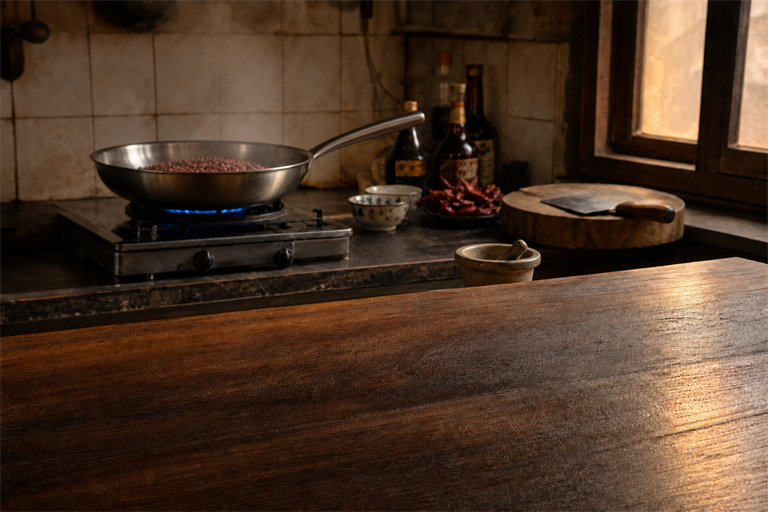
Toast 15 g whole red Sichuan peppercorns in a dry pan over low heat for 2–3 minutes until fragrant and slightly darker. Cool, then grind coarse. Peppercorn ground the same morning carries the ma numbing tingle. Pre-ground jars go flat within weeks.
-
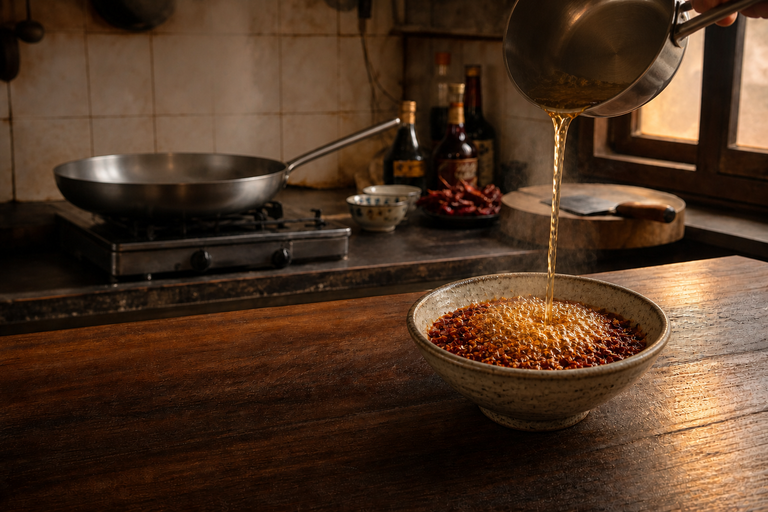
Warm 200 ml neutral oil with the star anise, bay, and cassia over medium-low heat to 200F (95C) for 8 minutes, then strain out the aromatics. Reheat the oil to 375F (190C). Put both chili flakes and sesame seeds in a heatproof bowl. Pour half the oil over, stir, wait 30 seconds, then pour the rest. Stir in the crushed peppercorn last so it does not scorch. Use once cooled, or refrigerate promptly if resting it for flavor; do not leave this homemade infusion on the counter overnight.
-
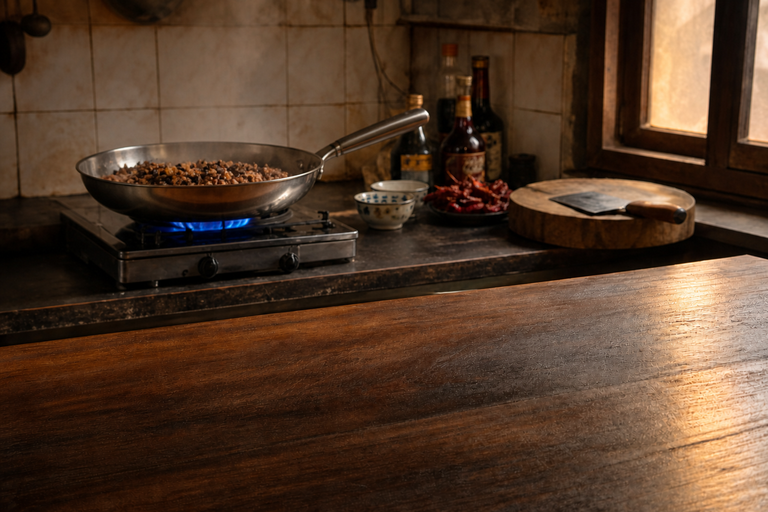
Cook the pork topping. Heat 1 tbsp oil in the wok over medium-high. Add the ground pork and break it into small pieces. Fry 8–10 minutes without stirring constantly, until the fat renders and the meat browns crisp at the edges. Add the Shaoxing wine, dark soy, and five-spice. Cook 1 minute until dry.
-
Add the rinsed ya cai. Stir-fry another 3–4 minutes until the ya cai smells toasty and the pan is dry. The topping should be crisp at the edges. Confirm that the ground pork reaches 160°F (71°C) with a food thermometer; browning alone is not a doneness check. Moisture on top will thin the sauce in the bowl.
-
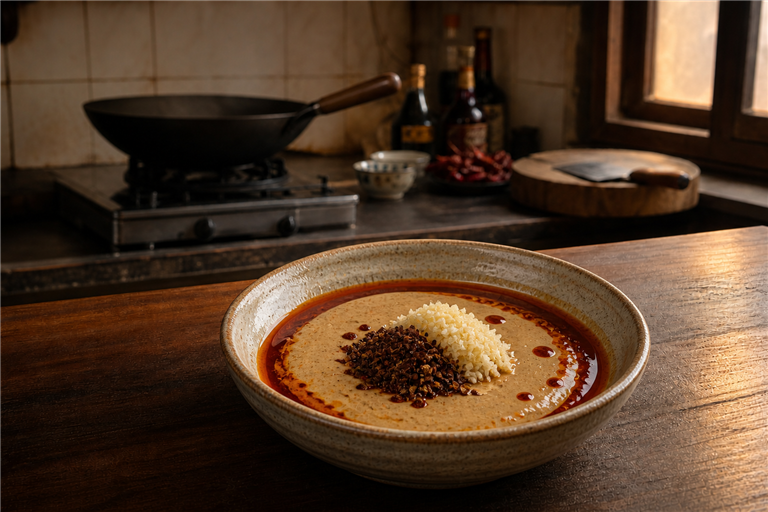
Build the sauce in each serving bowl before the noodles are done. Loosen 1 tbsp zhi ma jiang with 2 tbsp hot noodle water. Add 1 tbsp light soy, 1 tsp black vinegar, 2 tbsp chili oil with sediment, 1/2 tsp ground peppercorn, 1 tsp sugar, and the grated garlic. Loosen the sesame paste first, or it seizes into a lump.
-
Bring a large pot of unsalted water to a rolling boil. Cook the noodles al dente: 90 seconds for fresh, 3–4 minutes for dried. Chinese wheat noodles do not need salted water. Drain fast. Do not rinse.
-
Divide 120 g of hot noodles into each bowl directly on top of the sauce. Spoon 3 tbsp of pork and ya cai over. Scatter scallion greens. Serve at once. Toss at the table with chopsticks for 15 seconds before the first bite.
Notes
- Zhi ma jiang is toasted sesame paste, darker and nuttier than tahini. Sub half tahini plus half toasted sesame oil if unavailable, though the depth drops. Fuchsia Dunlop’s Land of Plenty covers the swap in more detail.
- Yibin ya cai comes vacuum-packed, labelled 宜宾芽菜. Other Sichuan sui mi ya cai is looser and saltier. Rinse and pat dry before frying.
- If the sauce tastes flat, add another 1/2 tsp black vinegar before more salt. Chinkiang vinegar carries the whole bowl.
- Skip the doubanjiang. Traditional Chengdu dan dan mian does not use it. Bean paste versions are Chongqing-style variants.
- Refrigerate the pork topping promptly and use within 3–4 days, or freeze. For the homemade chili oil, use a conservative refrigerated limit of 4 days from preparation or freeze promptly. This follows UGA Extension’s guidance for nonacidified infused oils; this particular chili-oil formula has not been validated for long storage.
What to set beside the bowl
Dan dan mian is a xiao chi in Chengdu, not a main course. Set it beside a cold cucumber smash dressed in garlic and vinegar, or a small bowl of clear white radish soup to cut the ma-la. Cold Tsingtao or jasmine tea both work.
Call the table before you drain the pot. Toss within 30 seconds of the noodles landing, or the chili oil breaks from the sesame paste and the bowl goes grainy.