
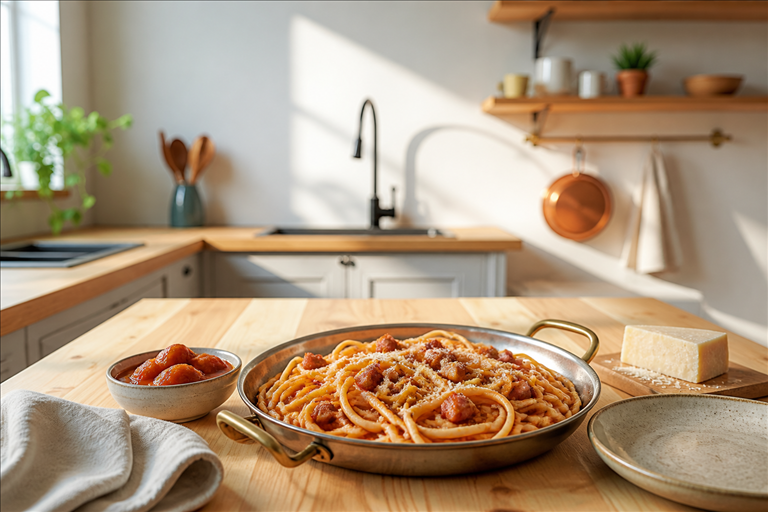

On Sunday afternoons in Bologna, the smell that climbs the stairwell is not tomato. Pancetta and butter turn golden in a wide pan, with onion and celery softening into that fat. That meaty first note of ragù builds for hours before a single spoon of tomato paste goes in. When the tomato arrives, one heaped tablespoon for a pot that feeds six, it is seasoning. Not sauce.
The Italian tomato sauce myth is easy to name once you look at what actually simmers on those stoves. Somewhere between Naples and New Jersey, red became the story instead of the seasoning.
Where the Italian tomato sauce myth actually began
The version most familiar to English-speaking cooks is Italian-American, not Italian. Neapolitan and Sicilian families built it in New York, Boston, and Philadelphia in the early 1900s. They cooked with what they could afford in bulk: canned tomato, dried oregano, cheap ground beef. Long-simmered thick red gravy is a real cuisine worth respect, but it is not what most Italian nonnas cook.
At home in Italy, tomato is used the way an English cook uses mustard or Worcestershire: a small, sharp accent inside a larger flavour. The base is fat, salt-cured pork, aged cheese, and the starchy water from boiling the pasta.
What sits in the pan north, center, and south of Rome
Italy cooks with tomato in three different accents. In the north, tomato is a whisper inside butter and meat. Move to the centre (Lazio, Umbria, Abruzzo) and tomato appears in short, sharp sauces built around guanciale and pecorino. Head south, especially into Campania and Sicily, and tomato has more room. Even there it cooks briefly and shares the pan with anchovy, olive oil, capers, or aubergine.
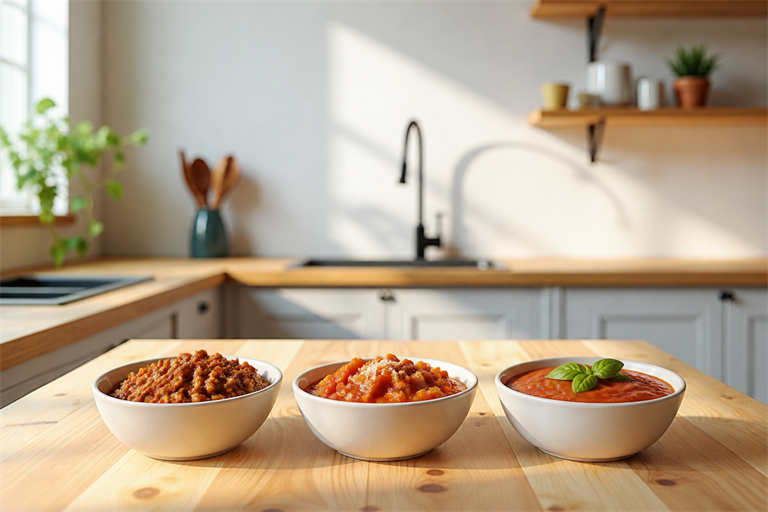
Here is the shape of it, region by region:
| Region | Typical sauce | Tomato share of the sauce |
|---|---|---|
| Emilia-Romagna | Ragù alla Bolognese | 15 to 20 percent, added after the meat browns |
| Lazio | Amatriciana, Arrabbiata | 30 to 40 percent, cooked fast around guanciale |
| Campania | Pomodoro, Napoletana | 60 to 70 percent, cooked only 20 to 30 minutes |
| Sicily | Alla Norma, Puttanesca | 40 to 50 percent, balanced with anchovy and olives |
Even the most tomato-forward Neapolitan sauce cooks briefly. A thick red sauce simmered for four hours is a diaspora invention, not a Neapolitan one.
Five classic sauces, measured honestly
Weighed against 100g of dry pasta per person, five common Italian sauces settle into steady ratios that carry less tomato than the red plate suggests.
- Aglio e olio. 0g tomato. 30ml olive oil, two cloves garlic, chilli, parsley. Pasta water finishes the dish.
- Cacio e pepe. 0g tomato. 40g pecorino romano, 2g cracked black pepper, 60ml starchy pasta water. That is the entire sauce.
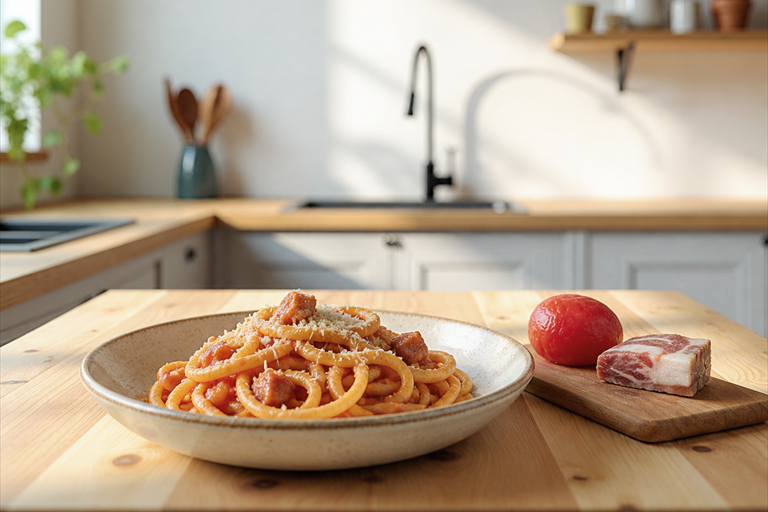
- Amatriciana. 60g guanciale, 80g peeled tomato, 20g pecorino, a pinch of chilli. Tomato is less than a third of the sauce by weight.
- Pomodoro. 200g peeled San Marzano, 15ml olive oil, one garlic clove, basil, salt. Cooked 20 minutes, not two hours.
- Ragù alla Bolognese. 300g mixed beef and pork, 60g pancetta, 100ml whole milk, 100ml white wine, 40g tomato paste, a soffritto of onion, carrot, and celery. Milk goes in before the wine. Tomato is a background note.
Two of the five carry no tomato at all. Two more use tomato as one ingredient among six or seven. Only pomodoro is genuinely tomato-forward.
The real base is fat, salt, cheese, and starchy water
Once you stop treating red as the base, the pan starts to make sense. Fat carries the flavour: guanciale for Roman sauces, butter and pancetta for Emilian ones, olive oil for the south. Salt-cured pork gives depth no tomato can. Aged sheep’s or cow’s cheese adds body and salt. And the starchy water left from boiling pasta binds all of it into a glossy coat on the noodle.
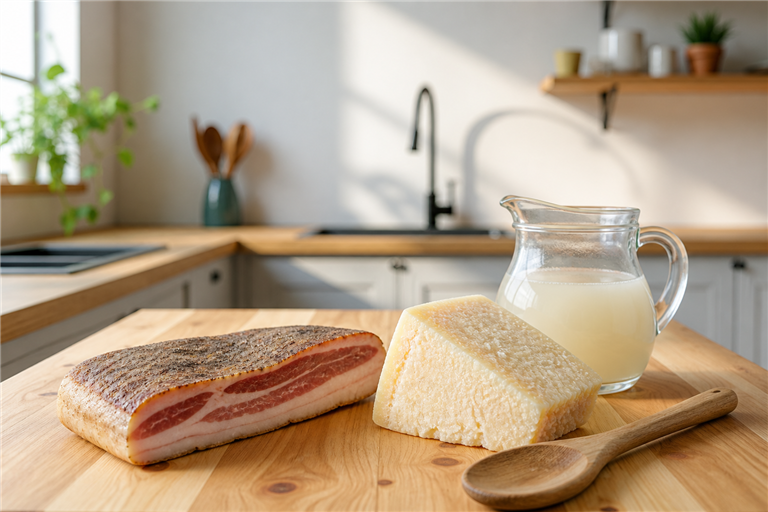
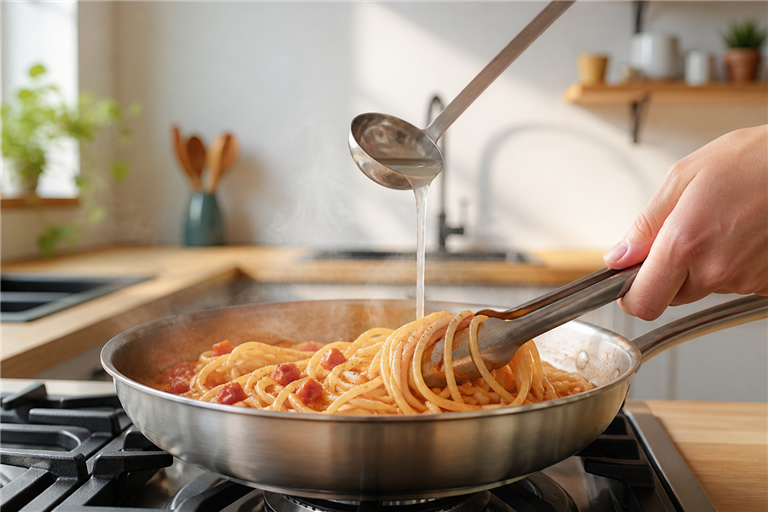
A small ladle by the stove earns its place for that last step. In Italian technique, sauce is never poured over noodles. The pasta finishes in the pan with the sauce and a splash of that cloudy water, tossed until each strand is dressed. That single move changes more dishes than any recipe.
A short checklist to rebalance your own pan
Try these adjustments next time you cook a red sauce at home:
- Halve the tomato you were going to use. Weigh what remains.
- Add 20 to 30g of cured pork, or 20ml more olive oil, to replace the volume.
- Cook the tomato 15 to 25 minutes, not 90. Fresh acidity is the goal.
- Grate 20 to 30g of pecorino or parmigiano over the finished dish, off the heat.
- Save 100ml of pasta water before draining. Use half in the pan and keep the rest for adjustment.
- Taste before you salt. Cured pork and cheese already carry plenty of salt.
The sauce will sit lighter on the pasta, and the flavours will read one after the other instead of blurring into a single red note.
A proper sauce lets you taste the pork, the cheese, and the tomato one after the other. If all you taste is red, you have made soup.