
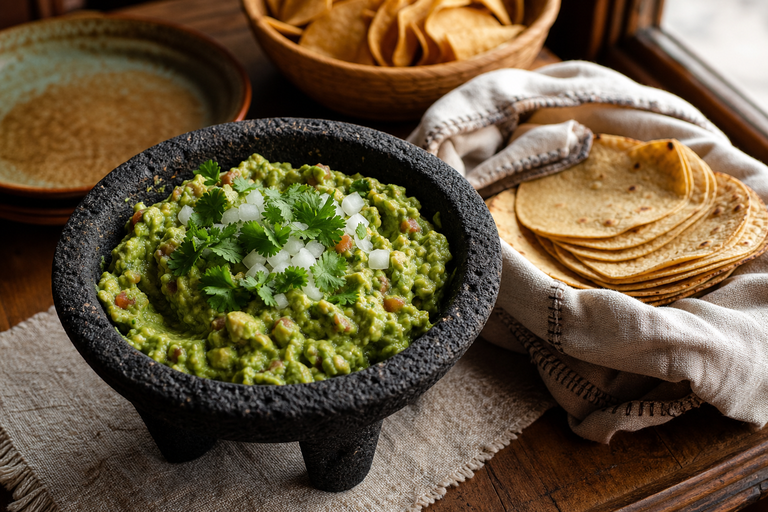
A basalt molcajete gives a low, hollow sound as you grind in it, half stone and half drum. Set it on a folded towel to keep it steady before the first pass. A teaspoon of flaky sea salt, two tablespoons of finely chopped white onion, one serrano, and the stems of half a bunch of cilantro go in first. The bowl smells green and a little hot before a single avocado comes near it.
That order is the whole dish. Guacamole as it is made in Mexico City and Michoacán begins with a paste, not chopped vegetables stirred into mashed avocado. The volcanic basalt of a real molcajete abrades the aromatics instead of slicing them, and that abrasion is what gives the salsa its weight.
| Yield | 4 servings (as a botana) |
| Prep time | 15 minutes |
| Cook time | 0 minutes |
| Total time | 15 minutes |
| Difficulty | Easy |
What goes into the base paste
- 1 teaspoon flaky sea salt (Maldon or sal de Colima)
- 2 tablespoons finely chopped white onion
- 1 small serrano chile, stemmed and chopped (use 2 for heat)
- 8–10 cilantro stems, the tender pale-green section
And for the guacamole itself
- 3 ripe Hass avocados (about 500 g of flesh)
- 1 tablespoon fresh lime juice (half a small lime)
- 1 tablespoon chopped cilantro leaves, for folding
- 1 tablespoon finely diced white onion, for folding
- Flaky sea salt to taste, starting with a quarter teaspoon
The equipment that actually matters
A seasoned molcajete and tejolote (volcanic basalt mortar and pestle), 18–22 cm wide, and a wooden spoon for folding. That is the short list.
If you do not own a molcajete, use a heavy ceramic mortar. A wooden bowl with a fork will give you a softer, looser guacamole. The flavor reads flatter because the aromatics are cut instead of abraded.
The method, step by step
-
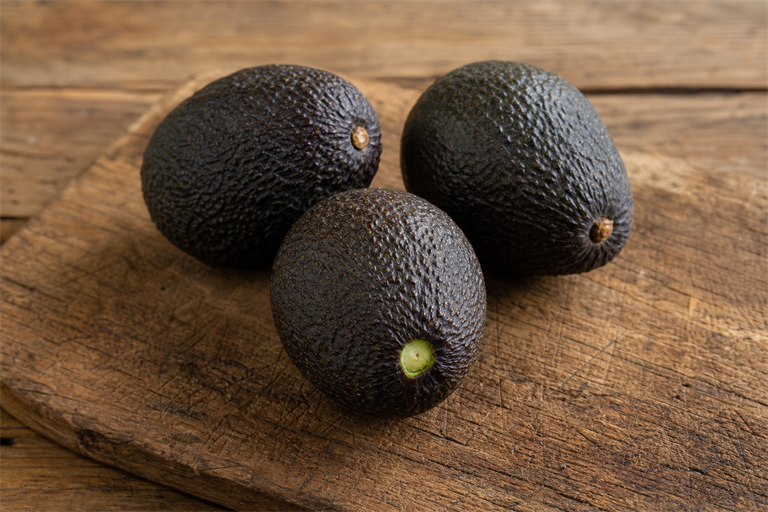
Pick the avocados the day before, or the morning of. Hold each one in your palm and press gently with the pad of your thumb near the stem. It should yield slightly, like the flesh of your forearm when you press it. Flick off the small dried stem with a thumbnail: a clean pop showing pale green underneath means it is ready. Brown under the stem means the fruit has gone too far.
-
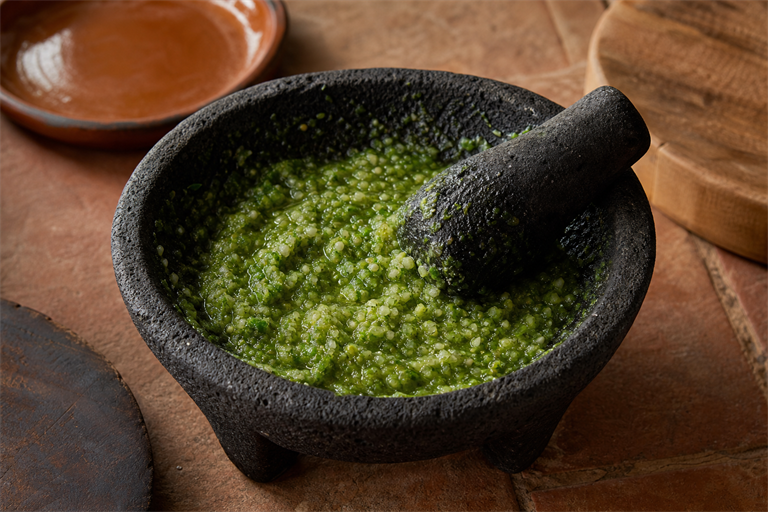
Build the base paste. Put the salt, white onion, serrano, and cilantro stems into the molcajete. Pound and grind in slow circles for 2–3 minutes, pressing down with the tejolote rather than chopping. The salt acts as an abrasive against the basalt. You are finished when the mixture looks like a wet, pale-green pesto and smells sharply of onion and chile. This is the only step where patience matters. Rush it and the guacamole tastes like avocado with stuff in it.
-
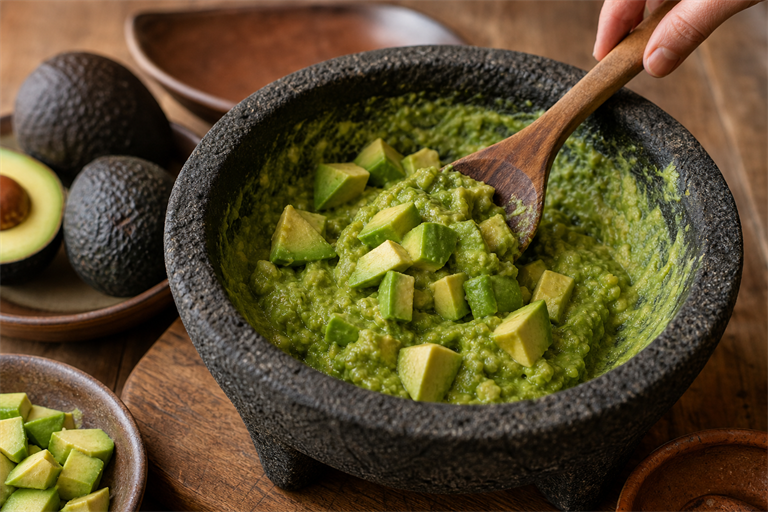
Halve and pit the avocados. Run a knife around the long axis, twist the halves apart, and tap the pit firmly with the heel of the blade to lift it out. Score the flesh inside each skin into rough 2 cm cubes, then scoop into the molcajete with a spoon.
-
Fold, do not mash. Using the wooden spoon or the side of the tejolote, press and turn the avocado into the paste in big, lazy motions. Stop while there are still visible chunks the size of a thumbnail. Texture is identity here. A smooth puree is for sandwiches, not for the table.
-
Add the lime with restraint. Squeeze in 1 tablespoon and stop. Lime in Mexican guacamole is a quiet seasoning, not a brine. Too much and the avocado tastes thin and tinny instead of buttery. Fold in the chopped cilantro leaves and the extra diced onion now.
-
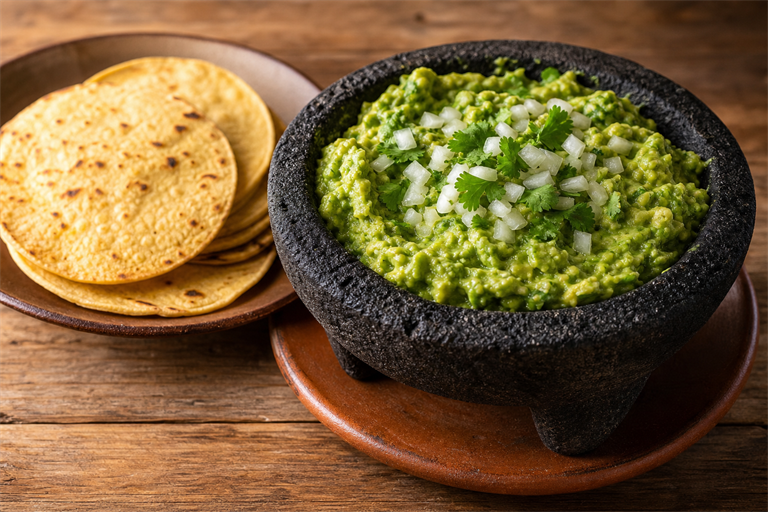
Taste with a piece of warm tortilla, not a spoon. The salt should be just shy of too much when tasted plain, because the totopos will take some of it. If the guacamole tastes flat, add salt before you add more lime. If it tastes harsh, you have too much onion and need another half avocado.
-
Serve immediately, in the molcajete. The stone keeps the guacamole cool and it holds the shape of the spoon. If you must hold it for 20–30 minutes, press a piece of plastic wrap directly onto the surface. The avocado pit trick is folklore and does very little.
What belongs and what doesn’t
No garlic, no cumin, no mayonnaise, no sour cream, no Greek yogurt. Those additions belong to diaspora versions rather than to a traditional Mexican home kitchen guacamole. If a clove of garlic reaches the counter, it goes back where it came from.
Regional add-ins are a different matter. A spoonful of finely diced ripe tomato is common across central Mexico. In Puebla, pomegranate seeds appear during the chile en nogada season of August and September. Crumbled chicharrón folded in at the last second makes a botana for beer.
For the chile, serrano is the default in Mexico City. A jalapeño is milder and slightly grassier; if that is what your market has, use one and a half. Habanero is wrong for this dish.
If your avocado is underripe, do not try the microwave. Put it in a paper bag with a banana for 24 hours on the counter. If your molcajete is new, cure it by grinding uncooked rice with garlic and salt three times until the powder comes out clean. Until then the stone will shed grit into the food.
One last thing about storage: guacamole is a fresh salsa. Leftovers turn brown and watery within hours. Make what you will eat.
What goes on the table beside it
Put the molcajete out in the middle. Beside it, set a cloth of warm corn tortillas, a basket of totopos, and a bowl of carnitas or frijoles de la olla. The drink is a cold Victoria, or a paloma made with grapefruit soda and a heavy hand of mezcal. This reads as Saturday lunch food. The bowl sits on the table while the rest of the meal is still being argued about in the kitchen.