
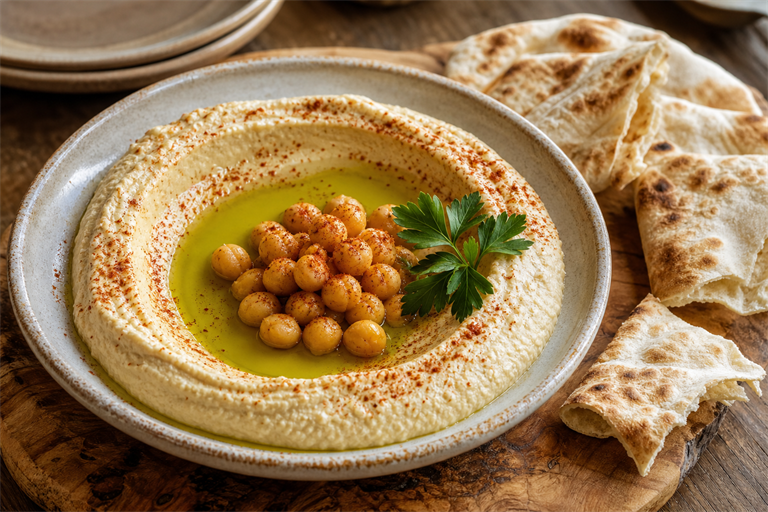
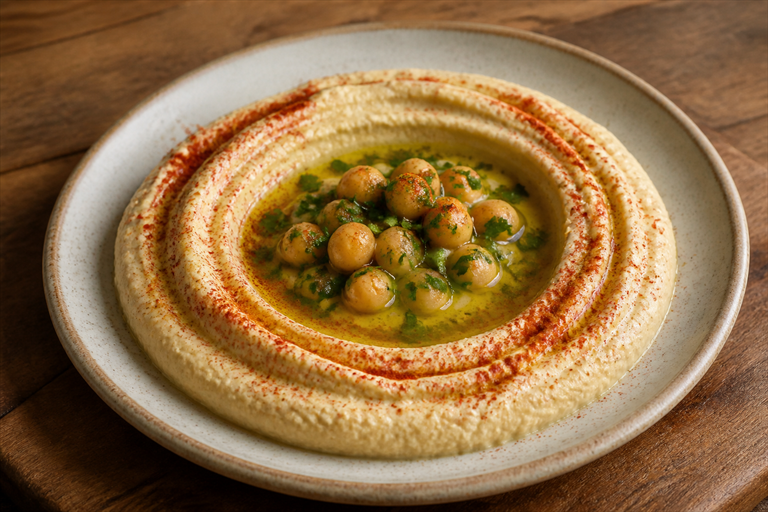
A shallow dish of Lebanese hummus can look almost lilac-pale in soft kitchen light, a small green pool of olive oil settled inside the swoop pressed into its surface with the back of a spoon. The taste arrives in a specific order: lemon first, then tahini, then chickpea. That is the Beirut version.
Lebanese hummus runs lighter, more lemon-forward, and richer in tahini than the Israeli style (which leans creamier and garlic-quiet), the Syrian (often warmer with cumin), or the Palestinian (denser, sometimes served with a deeper olive oil well and pine nuts). Four things separate a proper Beirut bowl from the supermarket paste on most shelves: peeled chickpeas, ice-cold blending, a tahini-to-lemon ratio measured by weight, and the swoop.
A jar of Al Wadi tahini and small Lebanese kabuli chickpeas give the classic result. The bowl turns pale ivory at the 3-minute blend mark, and the lemon-first taste is sharp enough that a cook may want to reach for more tahini. Wait. By the second bite the order settles into place.
| Yield | 4 servings (about 500 g) |
| Prep time | 25 minutes (plus overnight soak) |
| Cook time | 1 hour 15 minutes |
| Total time | 1 hour 40 minutes active |
| Difficulty | Intermediate |
Ingredients
- 200 g dried chickpeas (small Spanish or Lebanese kabuli, not the big bullet kind)
- 1 tsp baking soda (for the soak), plus 1/2 tsp for the cooking water
- 150 g raw tahini (Lebanese or Palestinian brand, well-stirred, runny not stiff)
- 60 g fresh lemon juice (about 2 medium lemons), plus more to taste
- 1 small garlic clove, grated on a microplane
- 1 tsp fine sea salt, plus more to taste
- 80–120 ml ice water (kept in the freezer 15 minutes before blending)
- 3 tbsp grassy extra-virgin olive oil, for the well
- 1/2 tsp sweet paprika
- A small handful of flat-leaf parsley, finely chopped
Equipment
- A heavy pot for cooking the chickpeas
- A high-speed blender or strong food processor
- A fine sieve and a large bowl for peeling
- A wide shallow ceramic plate for serving
The night before, and what the baking soda is really doing
-
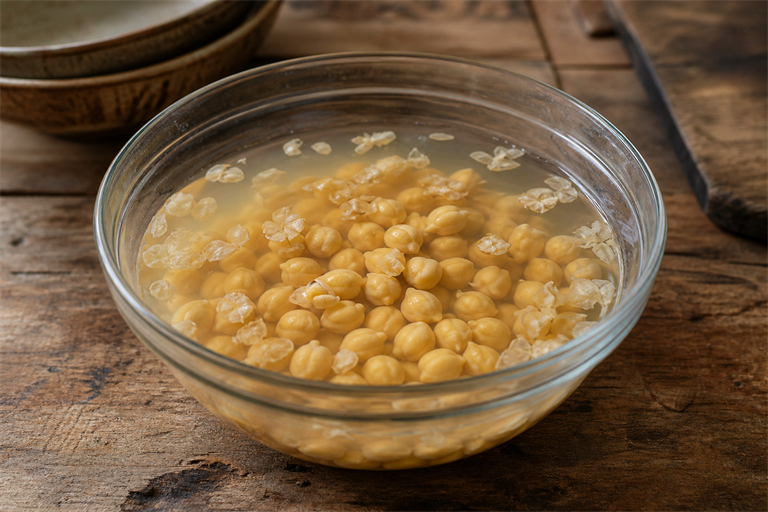
Soak the chickpeas overnight. Cover 200 g dried chickpeas with cold water by about 5 cm, stir in 1 tsp baking soda, and leave on the counter 12–18 hours until each bean has nearly doubled and the skins look loose. The baking soda raises the pH and weakens the skins. This is the single biggest reason Beirut hummus runs smoother than the canned version most home cooks default to.
-
Drain, rinse, and cook the chickpeas until they collapse. Put them in a heavy pot, cover with fresh water by 5 cm, add 1/2 tsp baking soda, and bring to a hard boil. Skim the grey foam for 2 minutes, then drop to a low simmer. Cook uncovered 50–75 minutes until a chickpea pressed between thumb and finger smears into paste with no resistance. Undercooked chickpeas will never blend silky. Go past the point where they feel “done” by a good 15 minutes.
The peeling step nobody wants to do
-
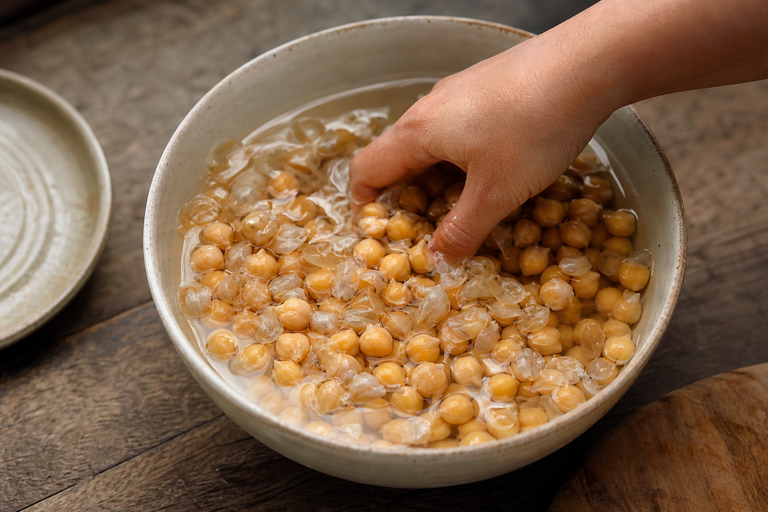
Peel the chickpeas. While they are still warm, tip them into a wide bowl of cool water and rub gently between your palms in handfuls. The skins will float. Skim them off with your fingers and discard. Drain through a sieve. This step takes about 8 minutes for 200 g and is the difference between “good homemade” and “restaurant in Hamra Street.” Skip it and the texture turns grainy on the second bite.
Building the base before the chickpeas go in
-
Build the tahini-lemon base first. In the blender, combine 150 g tahini, 60 g lemon juice, the grated garlic, and 1 tsp salt. Blend 30–45 seconds until it seizes into a thick, pale paste. It will look broken and stiff. That is correct. The ratio of 150 g tahini to 60 g lemon (a 2.5 : 1 weight ratio) is the Beirut backbone; less lemon and you slide into the Israeli register, more and it turns sharp.
-
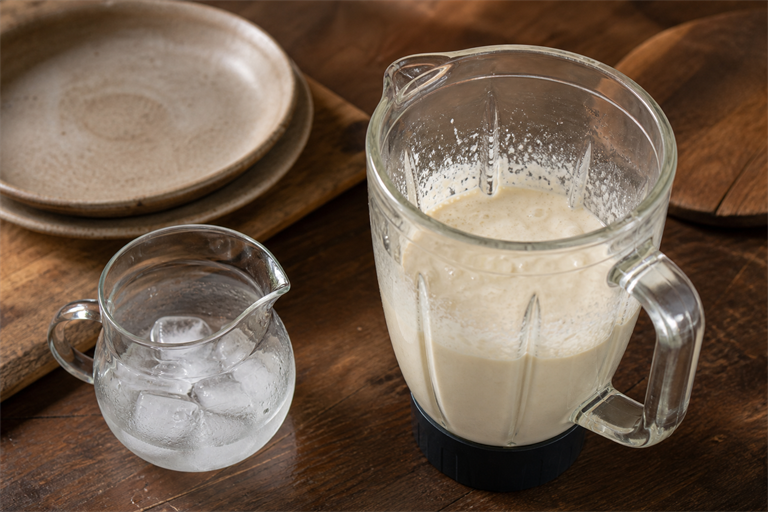
Add ice water, a little at a time, to loosen the paste. With the blender running, pour in 30 ml of the ice water. The mixture will go from broken to glossy and pale almost instantly. Add another 30 ml. You are looking for a thick mayonnaise consistency at this stage, pale ivory, almost whipped. Cold water is non-negotiable: it emulsifies the tahini oil and keeps the friction-heat down, which is what gives the hummus its airy, silky body rather than a heavy paste.
-
Add the warm peeled chickpeas and blend long. Reserve 1 tablespoon of whole chickpeas for the garnish. Tip the rest into the blender, secure the lid, and blend on high 3–4 minutes. Stop at 90 seconds to scrape down. Drizzle in the remaining ice water as needed to keep it moving. The mixture should fall off the spatula in a slow ribbon and hold a soft peak. Taste: it should read lemon, then tahini, then chickpea. Adjust with a pinch of salt or a squeeze of lemon.
The swoop, and why it matters
-
Plate the Beiruti swoop. Spoon the hummus into a wide shallow plate. Hold the back of a soup spoon flat against the centre and drag it outward in a slow spiral, pressing a deep well as you go. Pour 3 tbsp of grassy olive oil into the well; it should pool, not run off. Dust the raised edges with paprika, scatter the reserved whole chickpeas in the centre, and finish with chopped parsley.
Notes
- If the finished hummus tastes flat, it is almost always under-salted or under-lemoned. Add 1/4 teaspoon of each, blend 10 seconds, taste again.
- A grainy texture means undercooked chickpeas or skipped peeling. There is no fix after the fact; next batch, cook them softer.
- Bitter, burning-throat tahini means an old jar. Buy small jars and store in the fridge after opening.
- Canned chickpeas work in a pinch. Simmer them in fresh water with 1/2 tsp baking soda for 20 minutes first, then peel.
- Hummus thickens as it cools. If you are making it ahead, hold back 20 ml of ice water and blend it in just before serving.
- Store in the fridge up to 3 days, surface covered with a thin film of olive oil.
What to set around it
Place the hummus in the middle of a small mezze table with warm khubz arabi (Lebanese pita) torn into pieces, a dish of pickled turnips, a small bowl of black olives, and a plate of cucumber and tomato dressed only with salt and lemon. A glass of cold arak with ice and water on the side, or strong mint tea if it is an afternoon plate. It is meant to be the middle of something, not the centre. Lebanese food is plural by design.