
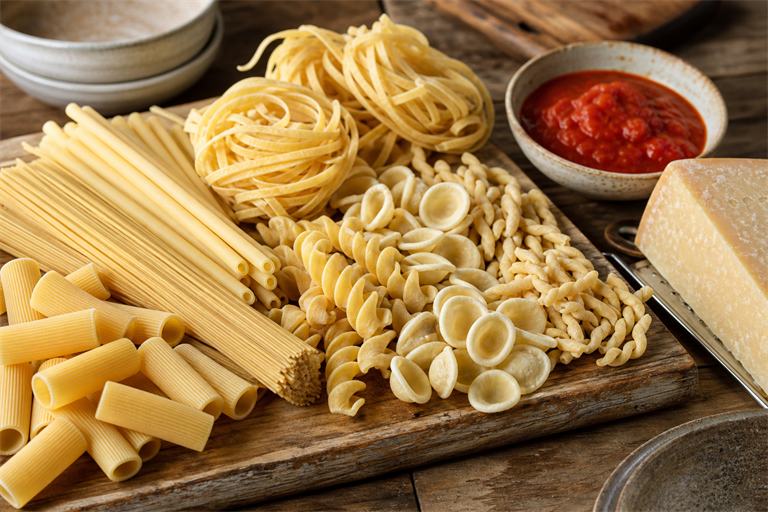

In Bologna, ragù meets hand-rolled tagliatelle almost by reflex. Ask for spaghetti instead and the sauce slides down the strands, leaving the meat on the plate while the pasta arrives half-dressed. The wide, porous egg ribbon is what holds the nutmeg-warm pork fat in place from the first forkful to the last.
Start with the practical rule: la pasta tira la salsa, the pasta pulls the sauce. The shape decides what sauce belongs with it, not the other way around. Once that lands, stop asking which pasta to buy and read the box by its geometry.
The geometry on the box, read the Italian way
Pasta shapes are tools. Each one solves a sauce problem.
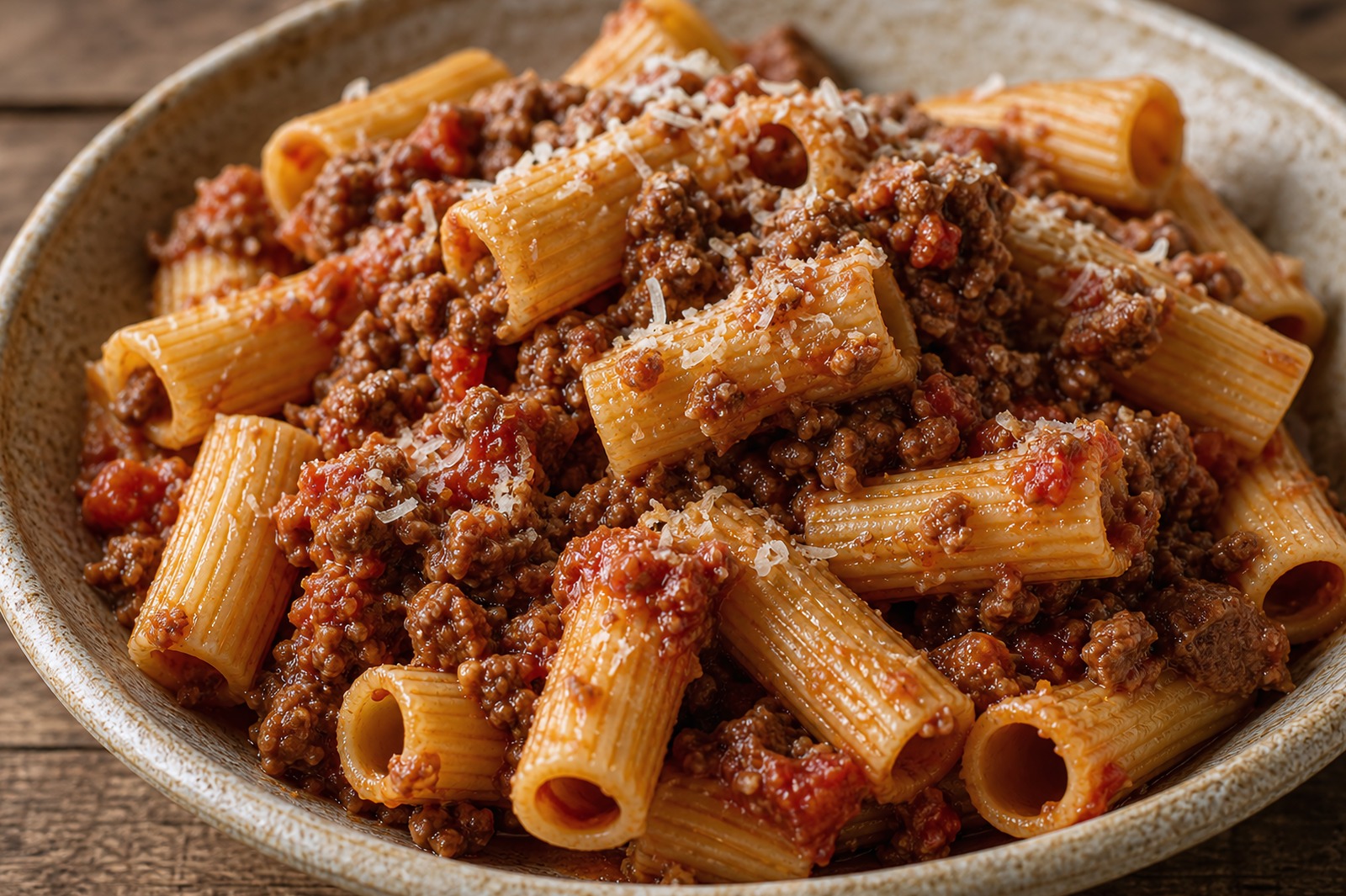
- Rigate means ridged. Those tiny grooves on penne rigate or rigatoni are not decoration. They double the surface area and trap thick sauce inside the grooves, so each bite carries meat or tomato.
- Lisce means smooth. Smooth pasta (penne lisce, ziti) lets a delicate, oily or buttery sauce coat without clumping.
- Bucati means pierced. Bucatini and ziti have a hollow tube down the middle that fills with sauce as you twirl, giving you a second hit of flavour on the inside.
- Eliche / fusilli are twists. The corkscrew grabs chunky bits in its spirals: small cubes of vegetable, capers, olives, ricotta.
- Lunga e piatta (long and flat) like tagliatelle or pappardelle has the widest surface per bite, which is why it lives with heavy meat sauces. A ribbon holds ragù the way a spoon holds soup.
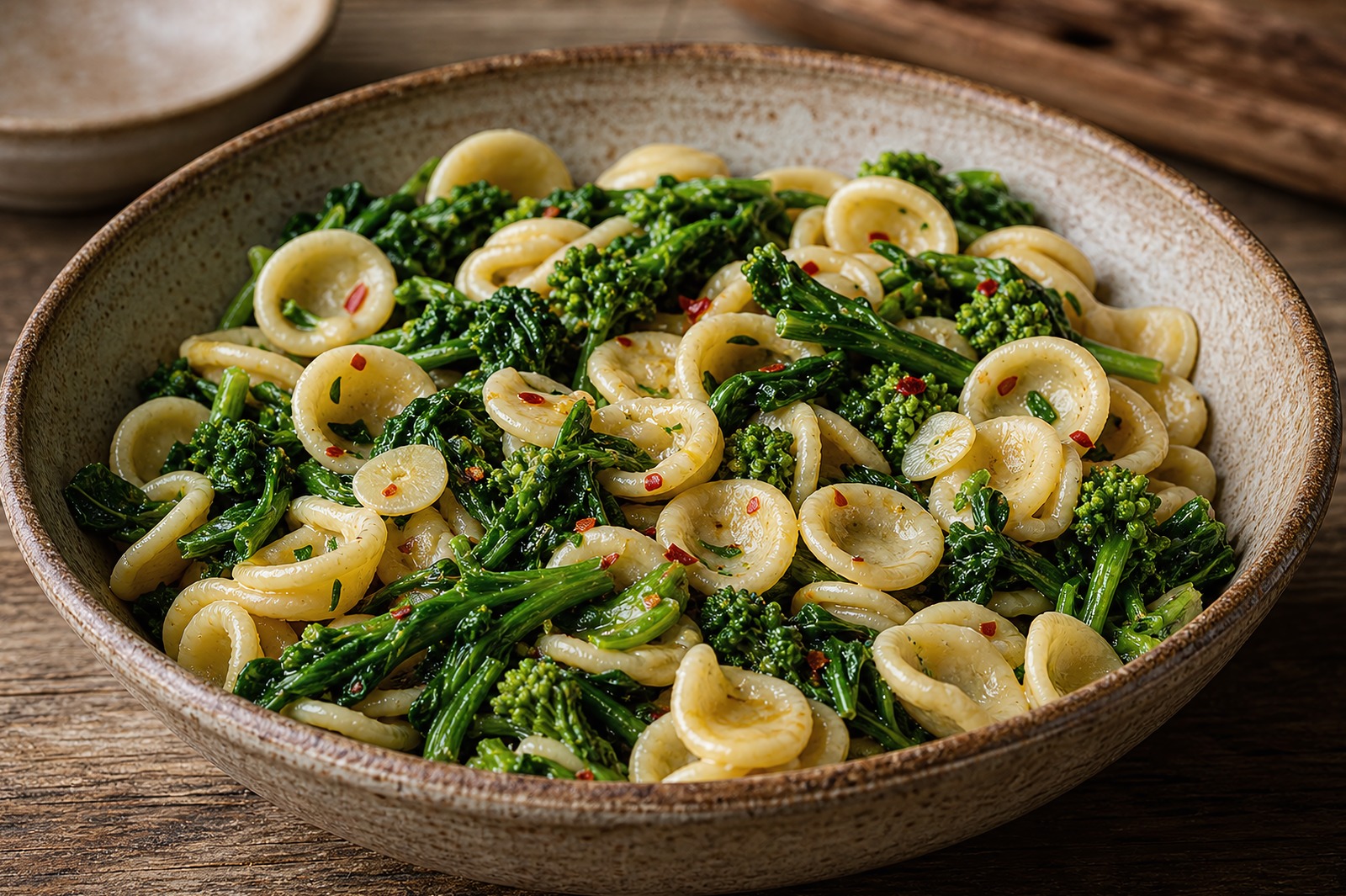
- Corta e ruvida (short and rough) like orecchiette has a cupped shape that scoops, and a rough surface from bronze-die extrusion that grips even watery sauces.
Bronze-die pasta (trafilata al bronzo on the box) has a chalky, rough exterior that holds sauce far better than the slick teflon-die supermarket stuff. If you change only one thing, change this.
The four sauce families and what each one wants
Italian cooks at home think in families, not recipes. Each family has a texture, and texture decides the shape.
| Sauce family | What it does | Shapes that work |
|---|---|---|
| Oil-based (aglio e olio, alle vongole) | Thin, slick, clings lightly | Spaghetti, linguine, vermicelli |
| Cream and cheese (cacio e pepe, carbonara, alfredo at home) | Emulsified, coats evenly | Tonnarelli, spaghetti, rigatoni, bucatini |
| Tomato, light (pomodoro, arrabbiata, marinara) | Loose, brothy, bright | Spaghetti, penne lisce, linguine |
| Meat and ragù (Bolognese, Napoletana, cinghiale) | Heavy, chunky, slow-cooked | Tagliatelle, pappardelle, rigatoni, paccheri |
Notice that spaghetti sits in three families and is absent from the fourth. That absence is the whole point.
Three regional pairings that prove the rule
In Bologna, ragù goes on tagliatelle. The egg dough is porous and the ribbon is wide, so the meat clings. Spaghetti with Bolognese is a tourist dish. You will not find it on a single table in the city.
In Rome, cacio e pepe and carbonara live on tonnarelli or thick spaghetti. The cheese-and-pepper emulsion is delicate, and it clings to a smooth, round strand. Put it on penne and the sauce pools in the bottom of the bowl while the pasta sits dry on top.
In Sicily, around Trapani, busiate (a long, hand-twisted spiral) is paired with pesto alla trapanese, a raw tomato, almond and basil pesto. The spirals catch the ground almonds. On a flat spaghetti, the almonds would fall straight to the plate.
Common mismatches in home kitchens
A handful of combinations come up again and again, and they all fight the geometry.
- Spaghetti with chunky ragù. The meat slides off the strand because there is nothing to grip it. Use tagliatelle, pappardelle, or rigatoni.
- Penne with delicate butter or oil sauces. Thin sauce runs straight down the tube and pools. Use a long, smooth shape: spaghetti or linguine.
- Fusilli with smooth tomato sauce. The spirals exist to catch chunks; with smooth sauce they just hold extra oil. Use penne rigate.
- Bucatini with cream sauce. The hollow centre fills with cream and turns claggy. Bucatini wants amatriciana (tomato, guanciale, pecorino), where the hollow carries broth.
- Orecchiette with meat ragù. The cup is built for broccoli rabe and sausage crumbles, Puglia-style. Heavy ragù overwhelms it.
Consider the same Mutti San Marzano tomato sauce, with garlic and basil, split between De Cecco penne lisce and a bronze-die penne rigate from Pastificio Mancini. On the lisce, clear sauce pools at the bottom of the bowl within two minutes and the pasta reads thinner. The rigate holds sauce in its grooves and along its ridges, so the last bite tastes like the first. One small change, a different dish.
A pairing chart to keep near the stove
| Shape | Texture | Best sauce family | Classic dish |
|---|---|---|---|
| Spaghetti | Long, smooth, round | Oil, light tomato | Aglio e olio |
| Linguine | Long, smooth, flat | Oil, seafood | Linguine alle vongole |
| Tonnarelli | Long, square-cut | Cheese emulsions | Cacio e pepe |
| Bucatini | Long, hollow | Tomato with fat | Bucatini all’amatriciana |
| Tagliatelle | Ribbon, egg dough | Meat ragù | Tagliatelle al ragù |
| Pappardelle | Wide ribbon | Heavy game ragù | Pappardelle al cinghiale |
| Penne rigate | Short, ridged tube | Thick tomato, baked | Penne all’arrabbiata |
| Rigatoni | Wide, ridged tube | Ragù, baked | Rigatoni alla Norma |
| Fusilli | Twist | Chunky vegetable, pesto | Fusilli al pesto |
| Orecchiette | Small cup | Greens with sausage | Orecchiette cime di rapa |
| Busiate | Hand-twisted spiral | Pesto trapanese | Busiate al pesto trapanese |
| Paccheri | Giant tube | Seafood stew, ragù | Paccheri allo scoglio |
Cook the pasta one minute short of the package time, then finish it in the sauce pan with a ladle of starchy cooking water. That last minute is where the sauce marries the shape. Skip it and even the right pairing will fall apart.
There is a phrase for the wrong box in an Italian kitchen: la salsa aspetta la pasta giusta. The sauce waits for the right pasta. Never the other way around.