
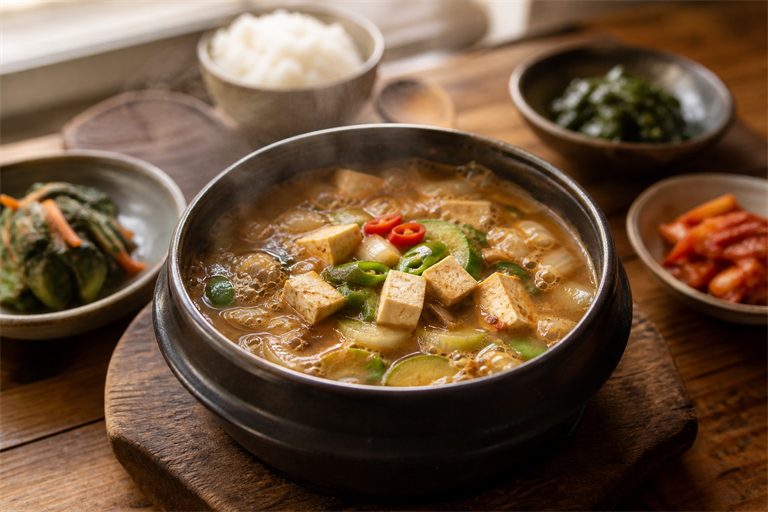

A common frustration with doenjang jjigae is a broth that tastes flat. Sometimes muddy. Sometimes weirdly bitter, even when the paste is right and the tofu is fresh.
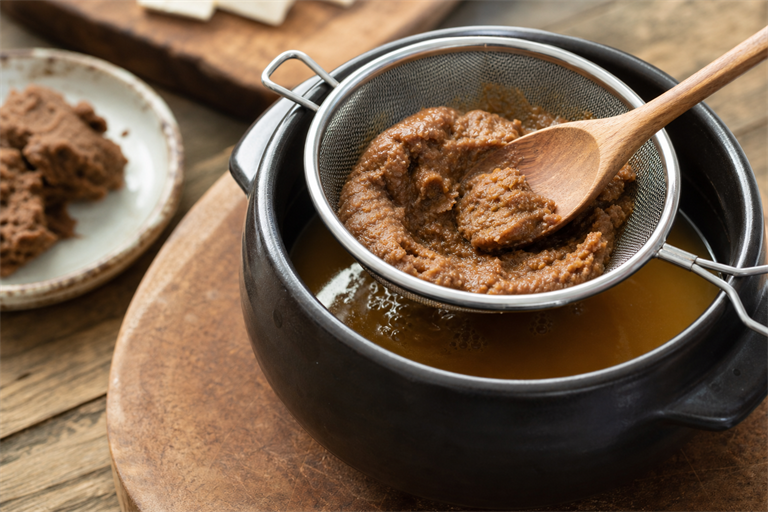
Two things are usually missing. The stock is water with paste stirred in, not a proper myeolchi-dasima yuksu (anchovy and kelp stock). And the doenjang has been dumped rather than bloomed. Press the paste through a small strainer into the simmering stock: “된장은 풀어줘야지.” You have to loosen it.
This is 된장찌개 the way Seoul home kitchens cook it: a clean anchovy-kelp stock, aged soybean paste pressed through a strainer, finished in a small black clay pot called a ttukbaegi that holds heat hard enough to keep the stew rolling at the table.
| Yield | 2 servings (one ttukbaegi for two with rice and banchan) |
| Prep time | 15 minutes |
| Cook time | 25 minutes |
| Total time | 40 minutes |
| Difficulty | Easy |
Ingredients
For the stock (myeolchi-dasima yuksu)
- 600 ml cold water
- 10 large dried anchovies (myeolchi), heads and black guts removed
- 1 piece dried kelp (dasima), about 8 cm square
- 2 dried shiitake (optional, for a rounder base)
For the stew
- 2 heaping tablespoons aged doenjang (about 40 g; look for a Korean brand with a 6–24 month ferment, ingredient list reading only soybean, salt, water, sometimes wheat)
- 1 teaspoon gochujang (optional, for a little body and colour)
- 1 teaspoon gochugaru (Korean coarse chile flakes)
- 4 cloves garlic, finely minced
- 100 g beef brisket, sliced thin (or 8 small clams, scrubbed; pick one)
- 1/2 small Korean zucchini (aehobak), half-moon sliced 1 cm thick
- 1 small potato, peeled and cut into 2 cm cubes (omit in summer)
- 1/4 medium onion, sliced
- 1/2 block soft tofu (about 150 g), cut into 2 cm cubes
- 1 green chile (cheongyang for heat, or a milder long green), sliced
- 1 spring onion, sliced on the bias
Equipment
- One ttukbaegi (Korean clay pot), 16–18 cm. Essential for the rolling boil at the table.
- A small fine-mesh strainer for blooming the paste.
A note on paste before you cook
The whole stew rests on the doenjang. Supermarket tubs labelled “soybean paste” that lean sweet, smooth, and pale brown are usually Japanese miso, or a heavily modified Korean blend cut with wheat flour and corn syrup. They give you a flat, slightly sweet stew that tastes like nothing in Korea.
Look for a Korean brand sold in a brown plastic tub, labelled 재래식 (jaeraesik, traditional) or 토장 (tojang). The paste should be dark, coarse, salty, and smell of fermented soybean: almost like a damp barn, in a good way. A jaeraesik from Sunchang aged a year or two will carry the stew on its own.
Instructions
-
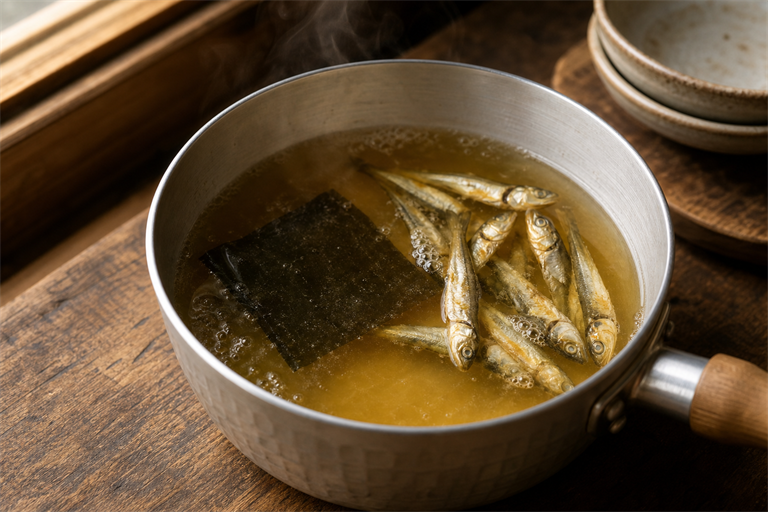
Make the stock. Put 600 ml cold water, the anchovies, the kelp, and the shiitake (if using) in a small saucepan. Bring to a gentle simmer over medium heat for 8–10 minutes, then pull out the kelp the moment the water starts to boil hard. Kelp simmered past that point turns the stock slippery and slightly bitter. Let the anchovies simmer another 5 minutes, then strain. You want roughly 500 ml of pale gold, clean-smelling stock.
-
Bloom the doenjang. Set the small strainer over the ttukbaegi, spoon in the 40 g of doenjang and the teaspoon of gochujang, and ladle warm stock through the strainer while you press the paste with the back of a spoon. Most home cooks skip this. Blooming dissolves the paste evenly and catches the coarse soybean hulls and any unfermented bits that would otherwise sit on your tongue as bitterness.
-
Layer the aromatics into the bloomed base. Stir in the minced garlic and the teaspoon of gochugaru. The gochugaru should hit warm liquid, not hot, so it blooms into colour and aroma instead of scorching. Add the remaining stock to bring the pot to about 450 ml of liquid.
-
Build by cook time. Add the beef brisket (or clams) and the potato first. Bring to a simmer over medium-high heat for 6–7 minutes. The brisket needs time to release its fat into the broth, and the potato needs the head start to cook through without falling apart. Skim any grey foam that rises in the first two minutes.
-
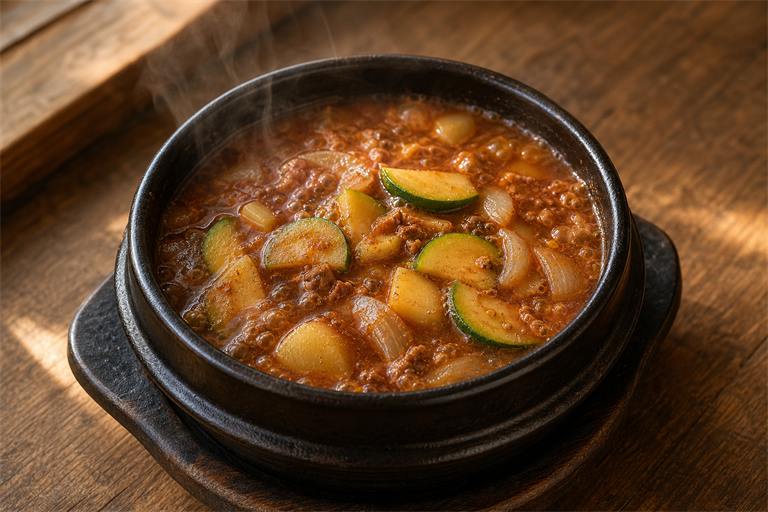
Add the onion and zucchini. Simmer another 4 minutes until the zucchini is just translucent at the edges but still has some bite. Overcooked Korean zucchini turns to mush and pulls the broth muddy.
-
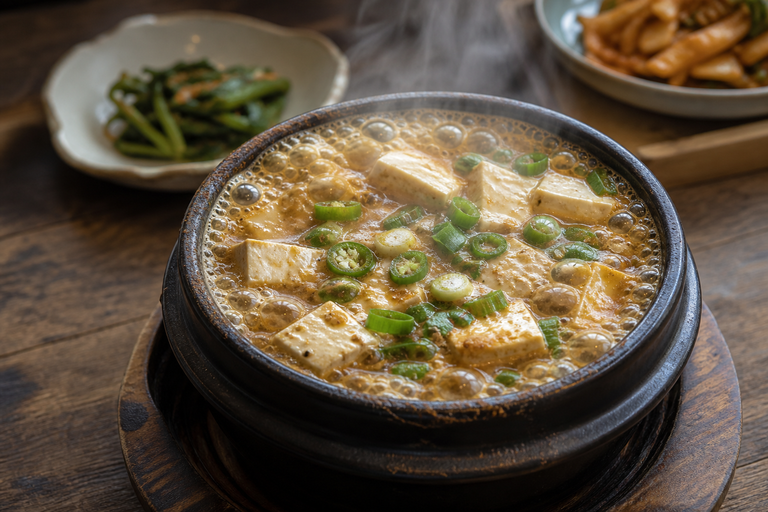
Slide in the tofu, green chile, and spring onion. Turn the heat up to high and let the stew hit a hard rolling boil for the final 90 seconds. This is the moment the ttukbaegi earns its place. The clay holds the heat so the stew keeps boiling for a full minute after you set it down at the table, and a thin savoury crust forms at the rim of the pot where the broth meets the heat. That crust is the sign of a properly finished doenjang jjigae.
-
Taste. If it is flat, the paste was young; stir in another half teaspoon and bring back to a boil for 30 seconds. If it is too salty, do not add water. Add a small splash of stock and another cube of tofu. Salt is in the paste; balance is in the volume.
Notes
- Bitter stew usually means the kelp simmered too long, or the gochugaru scorched on dry pan heat. Pull the kelp at first hard boil and add chile flakes only into warm liquid.
- Muddy stew comes from over-stirring after the vegetables go in, or from a paste with wheat flour as a thickener. Stir gently, and check your tub’s ingredients.
- Flat stew is almost always the stock. Water plus paste will never taste like yuksu plus paste. Make the stock even if you only have ten minutes.
- Vegetarian version: drop the anchovies, double the kelp and shiitake, and simmer the stock 15 minutes total. The base will be lighter but clean.
- Storage: the bloomed paste-and-stock base (steps 1–3) keeps in a jar in the fridge for 5 days. Pour it into a fresh ttukbaegi, add whatever vegetables and protein are in the drawer, and you have a 10-minute weeknight dinner.
What to serve with
A bowl of just-cooked short-grain white rice per person, and three or four banchan from the refrigerator drawer: kimchi from the jar, a small plate of seasoned spinach (sigeumchi-namul), a few sheets of toasted gim cut into squares. The stew sits in the middle of the table in its ttukbaegi, still boiling, and everyone spoons it over rice or eats it straight from the pot. It keeps three days covered in the fridge. Reheat it in the same clay pot over medium heat until it rolls again, and eat it tomorrow with a fried egg over rice.