
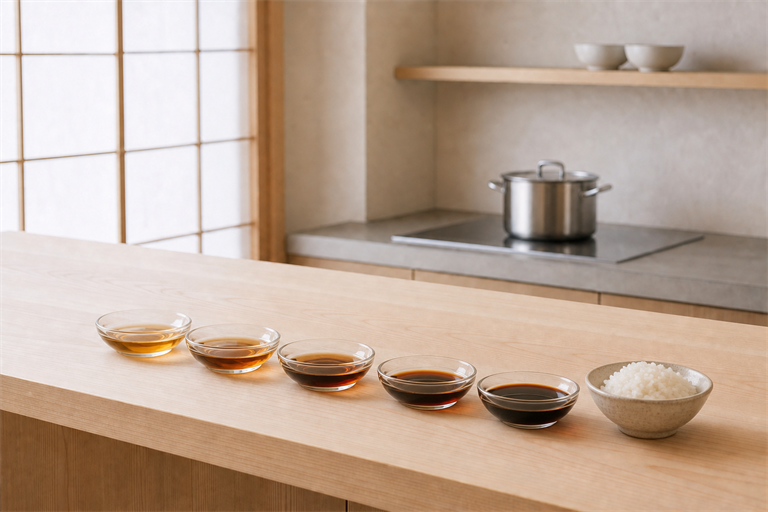

Four bottles can share the shoyu label and still do very different work. The paler one suits takikomi rice. The darker one suits grilled mackerel. The labels alone do not tell you which belongs where, and learning to choose between them takes years of steady cooking.
There are five types worth knowing. Once you can see what each one does inside a dish, the shelf makes sense.
Why the shelf holds five bottles
Shoyu is brewed from soybeans, wheat, salt, and koji mold. What changes across the five types is the ratio of wheat to soybean, the salt level, and the length of fermentation. Small changes. Different sauces.
Koikuchi uses roughly equal parts wheat and soybean. Usukuchi uses less soybean and more salt. Tamari is almost all soybean, barely any wheat. Saishikomi is brewed twice, once in salt water and once in finished shoyu. Shiro flips the ratio: mostly wheat, very little soybean.
Kansai water is soft. Kanto water is harder. That geography shaped the styles long before anyone wrote them down.
Koikuchi and usukuchi: the two you cook with every day
Koikuchi is what most people mean when they say soy sauce. Deep brown, roughly 16 percent salt, balanced between salty, sweet, and roasted. It is the default across most of Japan and holds up well under heat. Use it in teriyaki glazes, nikujaga, dipping sauces for gyoza, and any dish where you want color to land on the food.
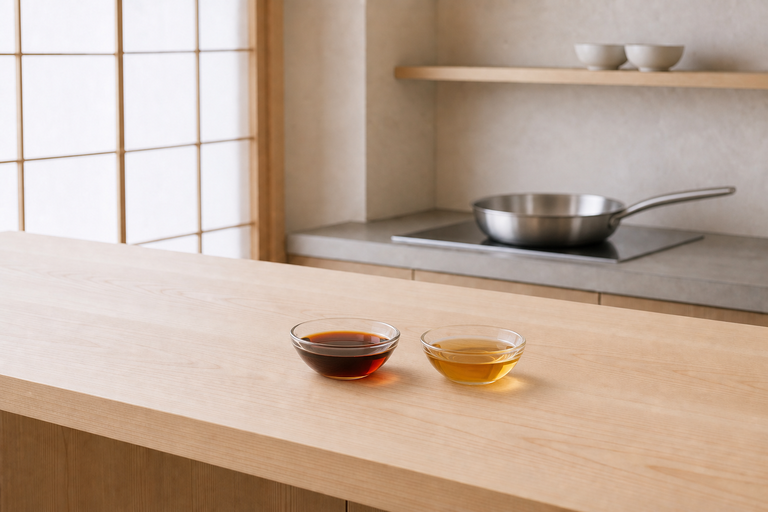
Usukuchi is the Kansai answer. Lighter in color, but higher in salt at around 18 percent. That surprises people the first time they hear it. The paler color lets a dashi-based simmer stay clear. The extra salt means you use less by volume. In Kyoto-style cooking, usukuchi suits chawanmushi, clear soups, simmered greens, and udon broth. If a dish should look like the ingredients, and not like the sauce, this is the one.
One rough regional pattern: koikuchi east of Nagoya, usukuchi west of it. Both bottles earn a place beside the mirin.
Tamari, saishikomi, shiro: past the everyday
Tamari is thick, dark, and almost pure soybean. Little to no wheat, which makes most tamari gluten-free (check the label to be sure). The flavor is deeper and less sharp than koikuchi. Brush it on grilled fish in the last minute. Serve it as a dipping sauce for sashimi where the fish is rich, like otoro or seared bonito.
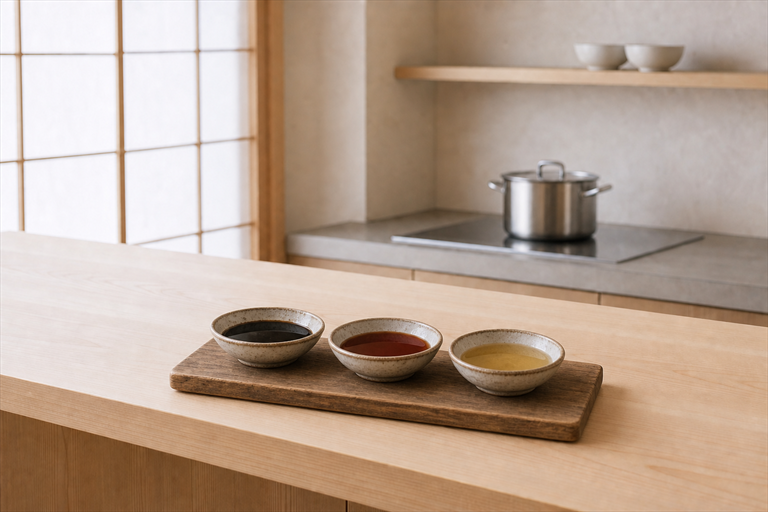
Saishikomi is the double-brewed one. Rich, slightly sweet, syrupy on the tongue. It is a finishing shoyu. A few drops over sashimi, cold tofu, or a soft-boiled egg. Cooking it away only flattens the reason you bought it.
Shiro shoyu is the pale one, almost golden. Very little soybean, mostly wheat. Delicate, faintly sweet, with no roasted notes at all. Use it in chawanmushi, dashimaki tamago, and light dressings where any brown at all would look wrong. It is also lovely in a clear sumashi-jiru with a single piece of white fish and one leaf of mitsuba.
A pairing cheat sheet for the shelf
| Dish | Reach for | Why |
|---|---|---|
| Teriyaki, nikujaga, gyoza dip | Koikuchi | Color and roasted depth under heat |
| Chawanmushi, clear soup, Kyoto simmers | Usukuchi | Keeps broth clear, seasons firmly |
| Sashimi (rich fish), grilled unagi glaze | Tamari | Deep body, low sharpness, glossy sheen |
| Cold tofu, soft egg, sashimi finish | Saishikomi | Syrupy, sweet, uncooked |
| Dashimaki, light vinaigrette, clear sumashi | Shiro | Pale color, quiet sweetness |
Substitution math when the shelf only has one bottle
Most recipes assume koikuchi. If a recipe calls for usukuchi and you have koikuchi, cut the amount by 15 to 20 percent. Accept a slightly darker dish. The salt is close enough. The color is not.
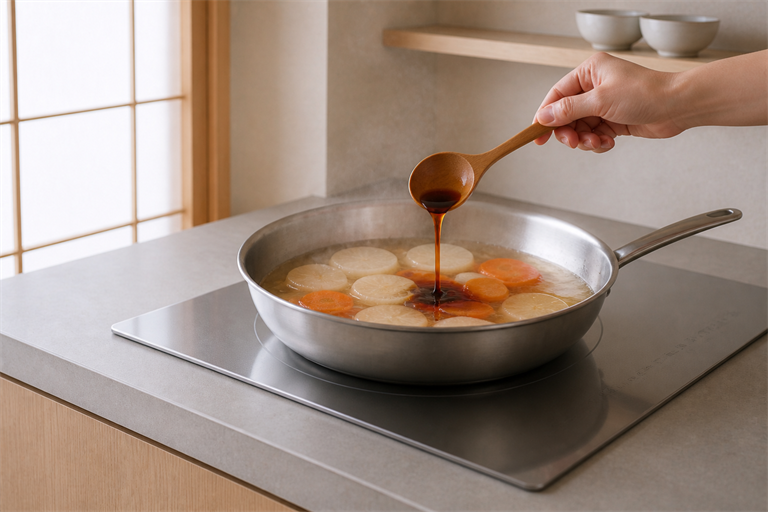
Going the other way is harder. Swapping usukuchi for koikuchi means more salt for the same weight. Cut the usukuchi by around 10 percent and add a small pinch of sugar if the dish wants that balance.
Tamari swapped for koikuchi will darken and deepen the dish. Reduce by 20 percent and taste before finishing. Shiro cannot replace koikuchi in a braise. It burns and disappears. Saishikomi is not for cooking; use koikuchi and finish the plate with a few drops of something better.
One swap almost always works. Thin koikuchi with a little water and a small measure of mirin. That stands in for a simmering shoyu when the pantry is thin.
Once the bottle is open, keep it in the fridge. Shoyu oxidizes, and the flavor fades in about a month. Buy small bottles, use them through, and let the shelf turn over. If any usukuchi is left at the end of that month, pour a spoonful into your next pot of rice with a strip of konbu, and cook it as takikomi. The soy sauce you cooked with last winter is not the soy sauce you should cook with tomorrow.