
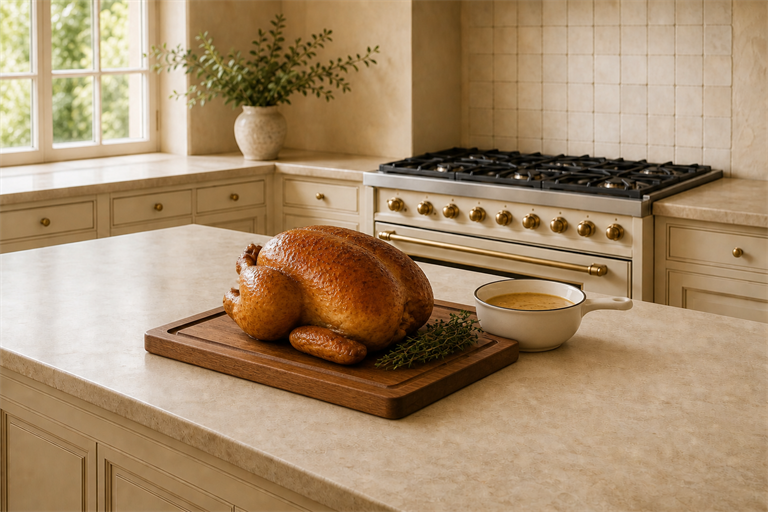
A bistro poulet rôti fills the kitchen with butter and thyme by the time it leaves the oven. Rest the bird breast-down on a plate while the jus comes together in the pan with a splash of white wine and a wooden spoon. That is the entire sauce. Two minutes. No flour, no cream.
That is what a proper bistro poulet rôti is. Not an American herb-roast, not a spatchcock. A trussed bird, butter under the skin, a hot oven then a moderate one, and a two-minute jus made from what stuck to the pan. The one detail that changes everything is resting the bird breast-down after it comes out, so the juices run back into the drier meat.
| Yield | 4 servings |
| Prep time | 20 minutes |
| Cook time | 1 hour 15 minutes |
| Total time | About 1 hour 35 minutes; cooking time varies with bird size |
| Difficulty | Intermediate |
Ingredients
- 1 whole chicken, 1.6–1.8 kg (about 3.5–4 lb), preferably farm-raised
- 60 g unsalted butter, softened to room temperature
- 8 g fine sea salt (about 1.5 tsp), plus more for the cavity
- Freshly ground black pepper
- 4 sprigs fresh thyme
- 2 fresh bay leaves
- 1 small lemon, halved
- 4 garlic cloves, unpeeled, lightly crushed
- 120 ml dry white wine (a Mâcon or Aligoté works well)
- 100 ml water or unsalted chicken stock
Equipment
- Heavy roasting tin or oven-safe skillet, roughly 25–28 cm
- Kitchen twine for trussing
- Instant-read thermometer
- Wooden spoon for deglazing
The bird, before it ever sees the oven
-
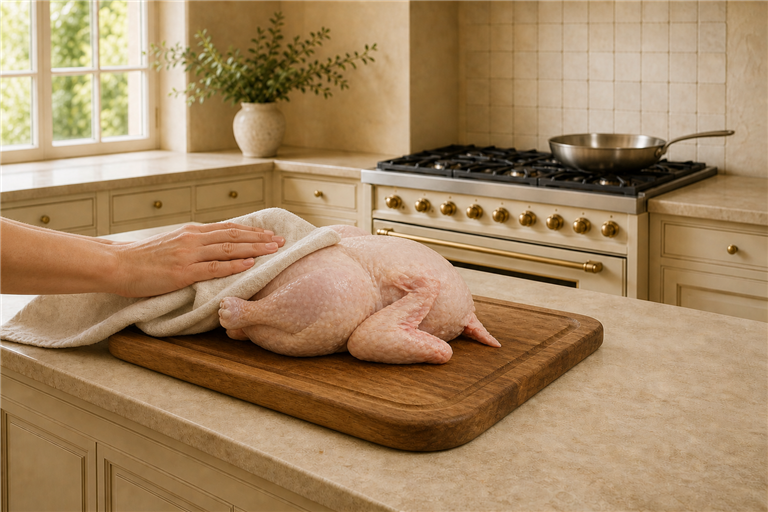
Keep the chicken refrigerated until preparation; it does not need an hour on the counter. Pat it dry with disposable paper towels, inside and out, without rinsing it. Discard the towels and wash your hands after handling raw chicken. USDA’s chicken handling guidance explains refrigeration and cross-contamination precautions.
-
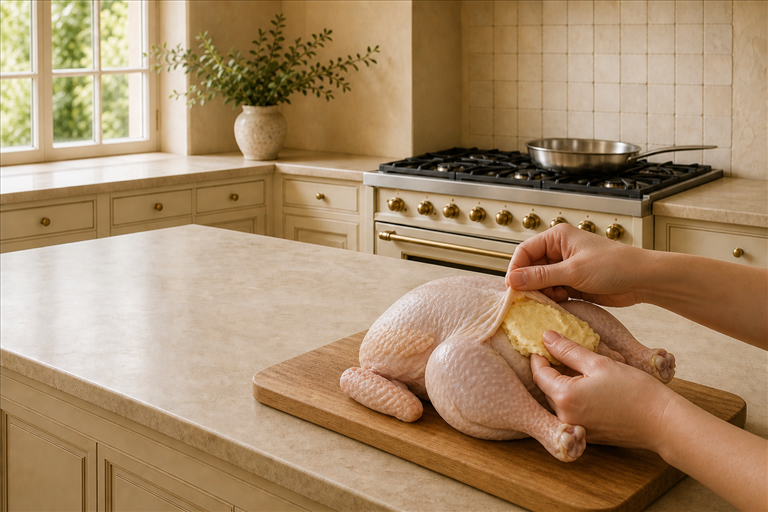
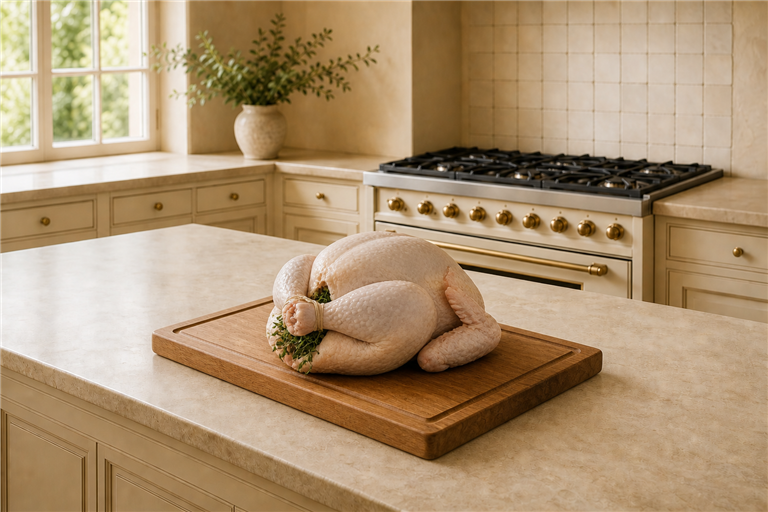
Rub the outside with 6 g of salt and a good grinding of pepper. Salt the cavity with the remaining 2 g. Slip half the softened butter under the breast skin, working carefully with your fingers from the neck end. Rub the other half over the outside. If seasoning ahead, return the bird to the refrigerator until the oven is ready.
-
Stuff the cavity with the lemon halves, thyme, bay, and two garlic cloves. Now truss the bird. Pass a length of twine under the tail, cross it over the ankles, pull the legs tight against the breast, then loop the twine forward and knot it at the neck. Trussing keeps the breast compact so it cooks at the same rate as the thighs.
Two ovens in one, and why it matters
-
Heat the oven to 425F (220C) with the rack in the lower third. Place the chicken breast-up in the roasting tin. Scatter the remaining garlic cloves around the bird. Roast for 20 minutes at 425F (220C). This first blast sets the skin and starts the fond building on the bottom of the pan.
-
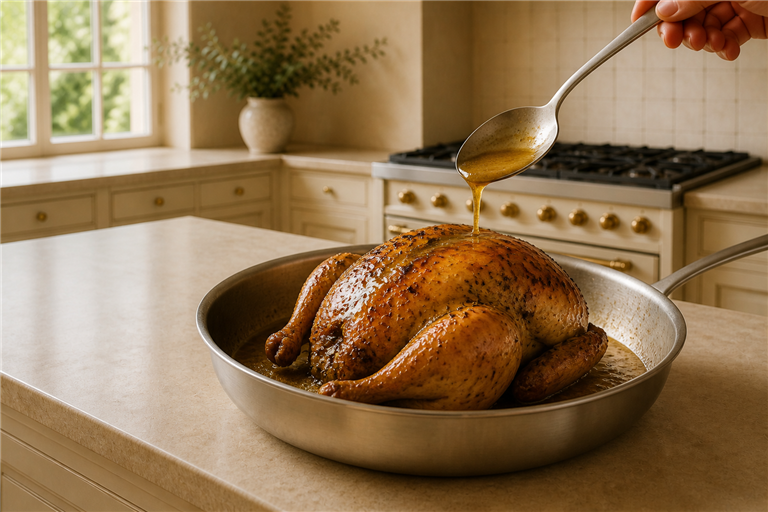
Drop the oven to 375F (190C). Baste the bird with the melted butter and juices pooling in the tin. Continue roasting for 40–50 minutes, basting every 15 minutes. Basting is not really about flavour. It is about the skin browning evenly instead of drying out on the ridge of the breast.
-
Begin checking after 60 minutes total. Use a food thermometer in the thickest breast meat and the innermost thigh and wing, avoiding bone. Continue roasting until every checked area reaches at least 165F (74C), following USDA’s poultry guidance. Clear juices or the absence of pink do not establish that the chicken is safely cooked.
The rest is not a pause. It is a step.
-
Lift the chicken out of the pan and set it breast-down on a warm plate or board. Let it rest for 15 minutes. Breast-down resting lets the juices flow back into the breast meat, which sits above the drumsticks and would otherwise drain dry. Most recipes skip this and it shows on the plate.
-
Make the jus while the chicken rests. Set the roasting tin over medium heat on the stove. Pour off all but 1 tablespoon of fat. Add the white wine and scrape the browned fond with a wooden spoon for about 90 seconds, until the raw alcohol smell is gone. Add the water or stock and reduce for another minute until glossy. Taste, adjust salt, strain into a small warm jug.
Choosing the bird
- If your bird is closer to 2 kg (4.5 lb), allow more time at 375F (190C), then repeat the breast, thigh, and wing temperature checks. Added minutes alone do not establish doneness.
- No white wine on hand? Use water and a teaspoon of Dijon whisked into the pan at the end. Never use flour. A bistro jus is thin and glossy, not gravy.
- If the skin browns too fast in the first 20 minutes, tent the breast loosely with foil for the middle of the cook, then remove it for the last 15 minutes.
- Leftover carcass goes straight into a stockpot with an onion, a carrot, and cold water. Simmer 3 hours for a light bouillon.
- Farm-raised birds (label rouge if you can find one) have firmer meat and more flavour, but any good air-chilled bird will work. A well-roasted 1.7 kg label rouge leaves a dark fond, with a caramel note already present in the jus before the wine goes in.
What goes around it
At home in Lyon this arrives with a pile of frites cooked in the chicken fat, or a simple frisée salad tossed with the warm jus and a poached egg on top. On a Sunday, roast potatoes go under the bird for the last 30 minutes so they catch the drippings. Pour the same white wine you deglazed with.
One last thing, the sort of detail a classically trained cook never skips. Save a spoonful of the jus and drizzle it over the sliced breast on the plate, not the whole platter. The meat drinks it in the last thirty seconds before it reaches the table, and that is when a poulet rôti tastes the way it should.