
Depth Over Heat: What French Cooking Chooses Instead of Spice
A cube of beef pressed into a dry skillet at 400F sizzles, then quiets as a brown crust binds to the metal. That quiet is the fond starting. It is also the first line of French flavor, the one every other layer will be measured against.
The question is simple. If Indian, Sichuan, and Mexican cooking build their signatures through spice, aromatic tempering, and chili paste, what is French cooking doing with a mostly bare rack? The short answer is this: it puts flavor into the pan, then rebuilds it out of the pan, four steps deep. Depth comes from reactions and reduction, not from heat compounds or perfumed powders.
That framing matters for a home cook. It changes what to buy, what to burn, and what to keep on the pan surface. It also explains why a French recipe with five ingredients can taste more built up than a curry with fifteen.
A Short History of Sauce Over Spice
Medieval French cooking used plenty of pepper, saffron, and cinnamon, all imported at high cost. That changed as the sauce tradition consolidated. Antonin Carême (1784–1833) organized French sauces into families in the early nineteenth century. Auguste Escoffier codified them in Le Guide Culinaire (1903) as the five mother sauces: béchamel, velouté, espagnole, tomate, hollandaise.
Meanwhile, spice trade routes had shifted. By the seventeenth century, spices were cheaper and less prestigious. French chefs moved toward veal stock, butter, and reduction as the markers of refined cooking. Harold McGee’s On Food and Cooking traces this shift clearly. What emerged was a cuisine organized around building blocks (stock, roux, reduction, emulsion) rather than spice blends.
The Four Layers, Built One On Top of the Next
Layer 1: The Fond, Where the Pan Does the First Work
Fond means base, and it also means the browned residue left on the pan. Both meanings apply. When protein touches hot metal above roughly 300F (150C), the Maillard reaction generates hundreds of new flavor compounds. Those compounds stick.
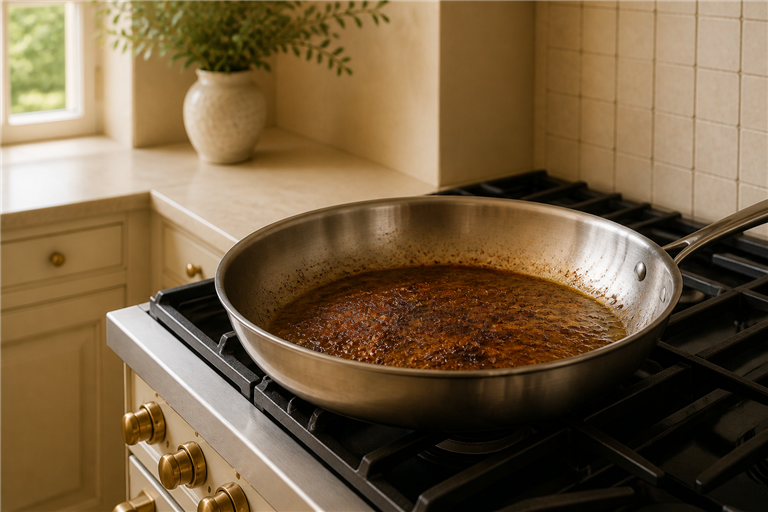
That is not a mess. That is inventory. A properly seared chicken thigh leaves a dark, matte film across the pan that will dissolve into liquid later. If the pan is nonstick or the heat is low, no fond forms and nothing is banked for the next step. The technique controls colour: aim for deep amber, not black, because carbonized fond turns bitter.
Home cooks miss this by crowding the pan. Steam pressure from too much protein lowers the surface temperature below the Maillard threshold. Sear in two batches instead. The pan needs quiet contact between hot metal and dry surface.
Layer 2: Deglaze and Reduce, Concentrating What Is Already There
Once the fond is set, liquid pulls it back into solution. Wine, stock, vermouth, cider, or even water will do the job. The alcohol or acid loosens the browned sugars and proteins so a wooden spoon can lift them clean.
Then the pan reduces. This is where French flavor doubles and triples on itself. Half a cup of white wine simmered to two tablespoons is not the same wine at a lower volume. It is a concentrated new liquid, sharper in acid, deeper in aroma, thicker in body. The technique controls viscosity: a proper reduction coats the back of a spoon in a thin, glossy film.
Reductions matter because water carries no flavor. Removing water forces every remaining molecule into closer contact with the tongue. The same stock, reduced by two thirds, tastes ten times more like itself.
Layer 3: Aromatics as Support, Not Star
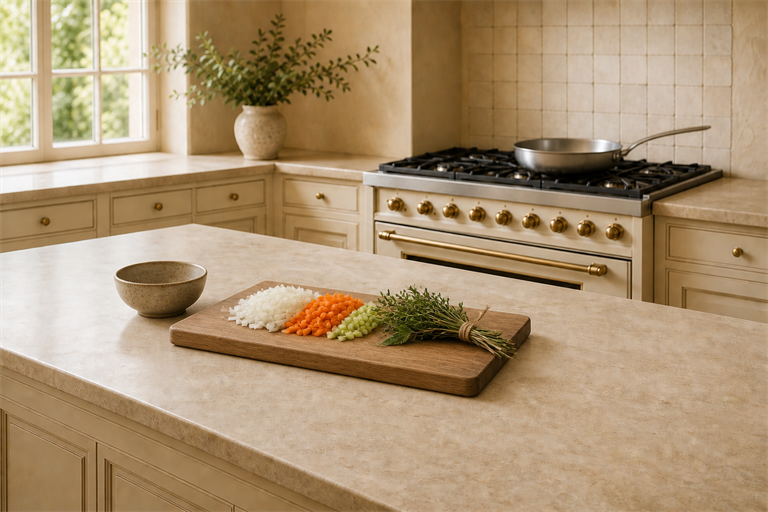
Only now do aromatics enter. Mirepoix is diced onion, carrot, and celery, usually in a 2:1:1 ratio by weight. Bouquet garni is a small bundle of thyme, parsley stems, and bay leaf, often tied in leek greens. Neither dominates. Both extend and soften the base already built.
Compare this to a Punjabi tadka, where whole cumin and mustard seeds bloom in ghee at 340F and shape the dish’s identity. Or a Sichuan zao, where doubanjiang and dried chili define the first breath. French aromatics are structural, not headline. They round the fond’s sharpness and give the reduction somewhere to sit.
The bouquet garni is pulled before service. That deliberate removal is the tell: the herbs did their work at the perimeter, not at the center.
Layer 4: Monter au Beurre, Cream, Acid, and the Final Lift
The last layer is emulsion and adjustment. Monter au beurre means mounting with butter: cold butter, cubed, whisked into a hot but not boiling sauce off the direct heat. The butterfat coats the sauce with gloss and body. It controls mouthfeel more than flavor.
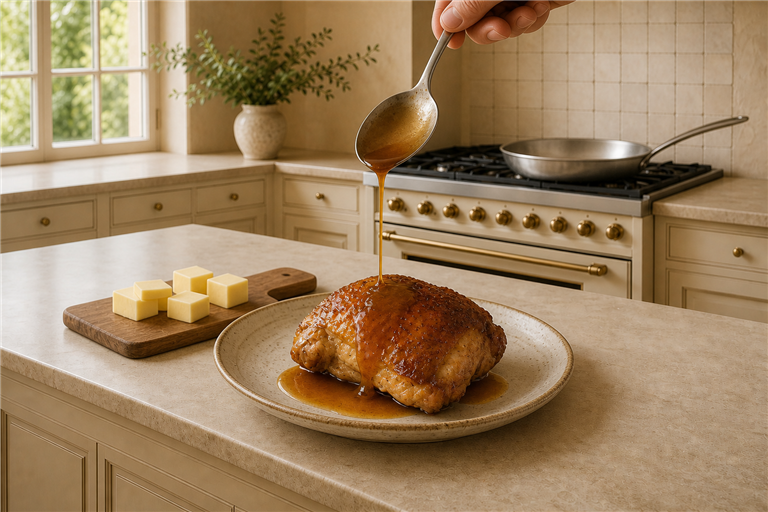
Cream reduces the sauce further while softening acidity. A squeeze of lemon or a splash of vinegar at the end sharpens the whole build back up. Salt is adjusted last, because reduction concentrates whatever salt was already there.
This finishing stage is what separates a home pan sauce that tastes flat from one that tastes finished. The gloss on the spoon is not decoration. It is proof that the fat has emulsified with the reduced liquid, and the sauce will cling to protein when plated.
Layered Cuisine Beside Its Spice-Driven Neighbours
Here is how the same axis of “where does flavor come from” looks across four traditions the blog covers.
| Cuisine | Primary flavor source | Signature step | Time investment | Spice rack size |
|---|---|---|---|---|
| French (classical) | Reactions and reduction | Fond, deglaze, mount | 30–240 minutes | Small (salt, pepper, bay, thyme) |
| North Indian | Tempered spices in fat | Tadka, bhuna | 20–90 minutes | Large (10–20 spices) |
| Sichuan | Fermented pastes and chili oil | Wok hei, doubanjiang | 5–15 minutes | Medium (numbing, hot, fermented) |
| Oaxacan | Toasted and ground chilies | Recado, mole base | 60–360 minutes | Large (6–30 chilies per mole) |
The pattern is legible. French cuisine invests time in the transformation of a small ingredient set. Spice-driven cuisines invest time in the sourcing and layering of a large ingredient set. Both are labor. The labor is spent differently.
The strongest case for layering is efficiency of pantry. A home cook with butter, onion, wine, stock, and thyme can produce dozens of distinct sauces. The technique carries the variety, not the shelf. Julia Child’s Mastering the Art of French Cooking (1961) devotes its opening chapter to stocks and sauces before touching a single main course, and the reason is exactly this.
The strongest case against comes from cooks who find layered cuisines monotone in flavor register. Food writer Madhur Jaffrey has argued, gently and often, that European cooking underuses the aromatic palette available since the sixteenth century. There is truth in the critique. A béchamel does not do what a Kashmiri rogan josh does. It was never trying to.
The fair reading is that these are different projects. Layering optimizes for depth, gloss, and the ability to hold a plate together. Spice work optimizes for aromatic complexity and a longer flavor tail on the palate. A serious home cook benefits from being fluent in both.
A Weeknight Proof: One Pan, Four Layers, No Spice Rack
Test the whole philosophy in about forty minutes with bone-in chicken thighs.
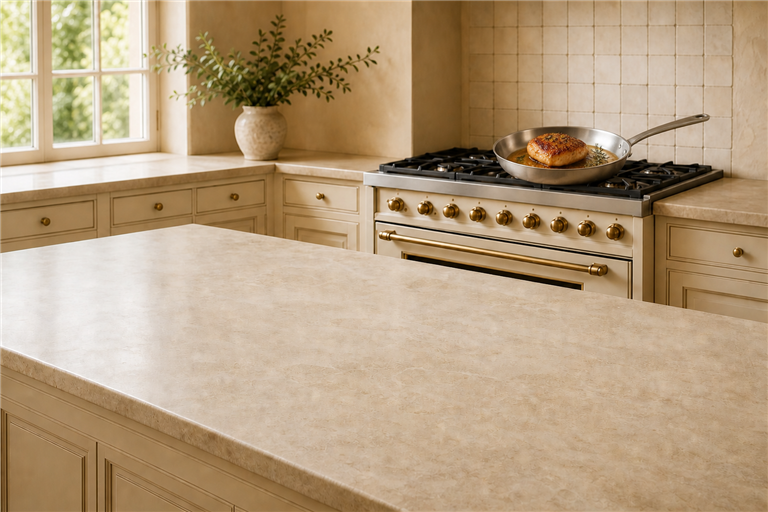
- Pat four thighs completely dry. Salt them thirty minutes ahead if possible. Sear skin-side down in a stainless or enameled pan over medium-high heat for 8–10 minutes without moving. The skin releases when the fond is set.
- Flip, cook another 4 minutes, then remove to a plate. Pour off all but a tablespoon of fat. The pan should be mahogany, not black.
- Add one small diced shallot. Sweat 60 seconds. Pour in 120 ml dry white wine. Scrape the fond clean with a wooden spoon. Reduce until the wine is syrupy, roughly 2 minutes.
- Add 180 ml chicken stock and a sprig of thyme. Return thighs skin-side up. Simmer uncovered 12–15 minutes until the stock reduces by half and the thighs read 165F (74C).
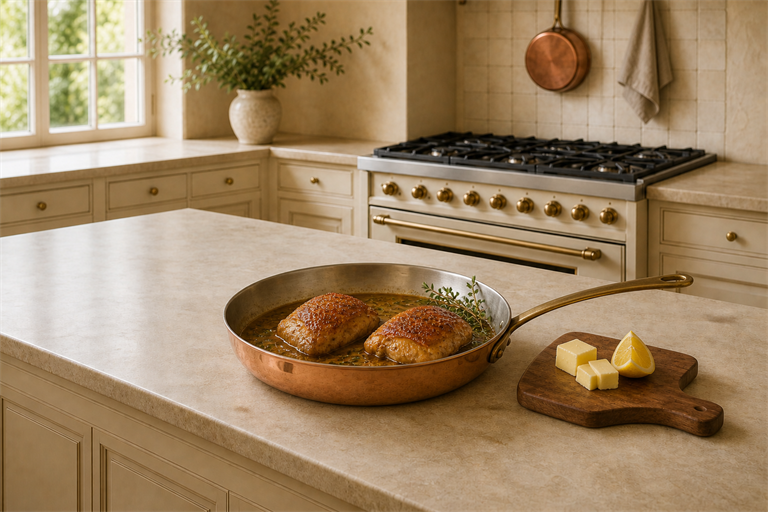
- Remove thighs and thyme. Off heat, whisk in 30 g cold cubed butter, one cube at a time. Finish with a small squeeze of lemon. Season with salt.
No spice jar was opened. Four layers were built. The sauce should coat a spoon and taste like more than the sum of its parts. That is French flavor architecture on a Tuesday.
One last thing a classically trained cook would lean in and tell you before you plate. Never let the sauce boil once the butter is in. If it boils, the emulsion breaks and the gloss goes matte in seconds.